

In a modern society dominated by science and reason, dreams are often seen as projections of the subconscious. When certain dreams not only recreate reality but also reveal events that have yet to occur, people are compelled to reconsider whether humanity truly lives only in a world of what can be seen.
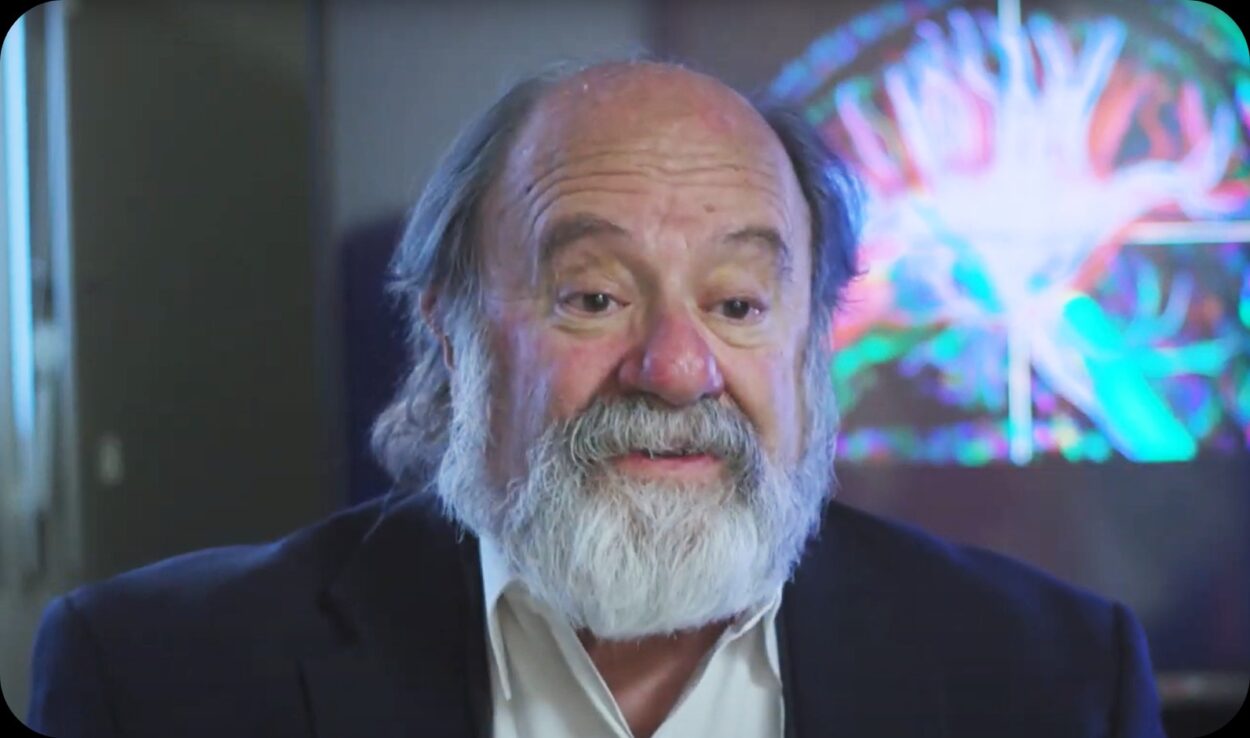
Dr. Gary Schwartz, a former professor of psychiatry and psychology at Yale University, currently serves as a professor of psychology, medicine, neurology, psychiatry, and surgery at the University of Arizona. He and his wife once experienced a car accident while driving on the Roosevelt Highway, preceded by a mysterious voice that told him: “Buckle up.” After he and his wife fastened their seatbelts, a car crashed into them from behind. This experience sparked his interest in “psychic” phenomena and became the catalyst for his later career as a parapsychologist.
The ability of dreams to predict the future
Dr. Schwartz once researched a man named Christopher Robinson, who could predict the future in his dreams. The two men conducted an experiment in which they traveled together for 10 days, visiting vastly different locations each day. In the experiment, Robinson had to predict the locations in his dreams. To ensure randomness, Schwartz established strict mechanisms so neither of them could know which locations were chosen. The experiment turned out to be highly successful.
On one occasion, Robinson predicted they would go to the Kitt Peak National Observatory. In his dream, he saw himself holding one copy each of the Sun and Mirror newspapers, rolled up like a telescope, looking up at the sky. He also saw equipment and screens with mountains in the background. Dr. Schwartz stated: “As a scientist, the only conclusion I can reach is that his ability is genuine, absolutely not a hoax or coincidence. These are not vague messages; the information he provides becomes increasingly detailed and specific, far beyond what can be explained by coincidence.”
From a higher intelligence
Dr. Schwartz noted that the experiment’s success was not definitive proof, but it served as a catalyst for scholars to investigate such supernatural abilities further. He remarked: “Once we accept the existence of this ability, the next question is where it comes from. We do not know, and the answer to this question is speculative. Regarding the complexity of conveying information, only our minds can seek out higher intelligence, which may lead us to the source of this information.” Regarding the subject of this experiment, Dr. Schwartz also had questions: “Why did this information choose Robinson?”
He suggests that these apparent abilities to predict the future may be linked to Robinson’s personal outlook and sense of responsibility. Robinson, he notes, appears to have a strong commitment to social good and shows no desire to misuse his unusual abilities, seeking instead to use them for benefit rather than personal gain. This experiment was conducted at Robinson’s own request, and he personally funded the testing in Arizona. Although he had long endured ridicule from others, he persisted despite the criticism. Dr. Schwartz noted: “He does not want his abilities to be misinterpreted and is not afraid to speak out, suggesting that ‘they’ may originate from a higher intelligence.”
Other cases
In addition to Christopher’s case, many others have reported experiencing precognitive dreams. The following are a few accounts that span family life, disasters, and personal fate.
One such story comes from a family deeply rooted in science, making the experience all the more difficult to explain. A netizen recalls that his father devoted his career to scientific work, first serving as an X-ray technician in the navy and later in various hospitals, before turning his focus to plants and insects — eventually earning the nickname “bug doctor” among local farmers. Despite his strong scientific background and rational mindset, he reportedly acknowledged that he occasionally experienced dreams in which he seemed to foresee future events.
Seemingly casual warnings — such as “don’t take the usual route” or “set three alarms” — later proved effective in helping him avoid potential dangers. The most striking example occurred when he dreamt of a relative’s pregnancy, correctly anticipating the child’s gender and even the chosen name. At the time, no one believed him; yet weeks later, when events unfolded exactly as he had described, even those involved were left without an explanation.
Such experiences were not isolated. Other elders in the family were also described as having an unusual level of intuition — appearing able to anticipate random events, calm emotional situations, and interact with animals in an especially perceptive way. While these accounts remain difficult to verify, they persist as subtle patterns within everyday life, without a clear scientific explanation.
Another account from Northern Ireland describes dreams closely associated with life and death. A man named Kai recalled that on the eve of a car bomb attack in the 1990s, he experienced a vivid dream of a crowded scene that suddenly collapsed into chaos, with people falling and screaming. The following day, he was left with a persistent sense of unease and ultimately persuaded his family to leave the city earlier than planned. Shortly afterward, an explosion occurred at the very location he had seen in his dream. He acknowledged that while the details of the dream may not have been entirely precise, the overwhelming sense of warning was enough to alter their fate.
In another account, a woman described dreams that seemed to span the passage of time itself. As a child, she experienced fragmented visions — snatches of conversation, unfamiliar scenes, and the presence of an unborn child. Years later, as events unfolded, she found striking correspondences between her earlier dreams and reality, including the hospital setting, specific phrases spoken, and the moment of holding her baby. She came to feel as though she had already lived portions of her life in dream form, with only the details — such as faces once blurred — becoming fully clear in later reality.

The limits of explanation
Taken together, these accounts suggest that dreams may not always be simple reorganizations of memory or reflections of waking experience. In some instances, they appear to align in striking detail with events that have not yet occurred, raising questions that remain unresolved within conventional scientific frameworks.
While such phenomena may be difficult to verify or replicate under controlled conditions, they continue to be reported across different contexts and cultures, often with a consistency and emotional clarity that leaves a lasting impression on those who experience them. Whether interpreted as coincidence, heightened intuition, or something not yet fully understood, these experiences remain meaningful narratives in the lives of those who encounter them — leaving us to wonder where the boundary truly lies between memory, perception, and the unfolding of events yet to come.
Translated by Joseph Wu and edited by Tatiana Denning
Follow us on X, Facebook, or Pinterest
