
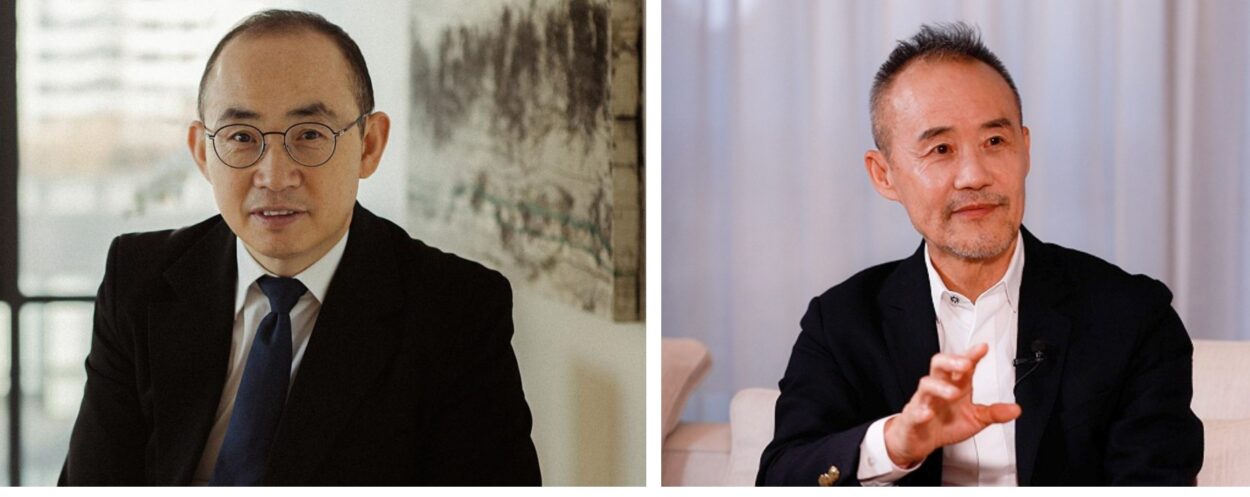
Pan Shiyi and Wang Shi are tycoons in the real estate industry, and both are making profits. However, their thinking and approach to business differ; ultimately, so do their fates.
During China’s real estate boom, too many tycoons developed a fatal illusion, believing that everything is under their control. Pan Shiyi was once caught in this whirlpool of fame and fortune, as was another figure once regarded as a role model in the Chinese business world: Wang Shi, the 74-year-old founder of Vanke, a large residential real estate developer in China. Both became successful businessmen, yet each viewed and managed their businesses differently, ultimately leading to their fates diverging.
In China, a land that once witnessed countless rags-to-riches stories, the real estate industry is undoubtedly the most frenzied and bloodthirsty arena. When the tide of the times receded, what has become of these once-powerful tycoons? Xu Jiayin is in prison, Wang Jianlin is scrambling to survive, and Wang Shi is facing a difficult situation. Only one person has managed to land safely on the other side of the Pacific and watch the drama unfold from afar: Pan Shiyi.
On April 6, 2026, after three years of silence, Pan Shiyi suddenly published an article on his WeChat official account titled: “My fate is in my own hands and in the hands of Heaven.” This was not only his first public statement after three years of silence, but also a philosophical summary of his life experiences and conduct. If the article is read in the context of China’s current bleak political and economic environment, it is a testament not only to his personal survival but also to the survival of the entire Chinese real estate industry.
An honest, conservative approach with reverence for ‘destiny’
In the article, Pan Shiyi wrote: “In life, you still have to rely on yourself. You have to eat one bite at a time and walk one step at a time. I don’t understand why honest people always have to suffer more grievances. As I get older, I realize that if you have a clear conscience, you will always have peace of mind. There may not be immediate rewards, but you can sleep soundly at night and stand firm during the day.”
The phrase “able to sleep soundly at night and stand firm during the day” is considered the ultimate luxury in today’s Chinese business world. For the past thirty years, China’s real estate industry has been heavily reliant on collusion between political and business, rent-seeking, and extreme leverage. Countless tycoons have acted as “front men” for the powerful, wandering day and night through the gray areas of law and morality to acquire land and secure financing.
Although Pan Shiyi was once caught in the whirlpool of fame and fortune, he was willing to “endure some grievances” and uphold certain bottom lines, choosing a relatively conservative financial strategy in the era of rapid expansion. While others were leveraging up and rushing forward, he was selling assets; while others were chanting “follow the Party,” he quietly transferred his family and funds overseas. The most poignant and insightful sentence in this article is not the first half, “My fate is in my own hands,” but the second half, “It is also in the hands of Heaven.”
Pan Shiyi lamented: “Heaven is a being with wisdom superior to humankind; Heaven is greater than me. Simply saying that my fate is in my own hands is not enough. No matter how hard a person tries, there are always things they cannot reach. Do your best when you should, don’t force things, and know when to let go. This is not admitting defeat but just knowing that Heaven is greater than me.”
During China’s real estate boom, many tycoons developed a fatal illusion, believing that everything is under their control, a belief instilled by the CCP (Chinese Communist Party)’s philosophy of “man can conquer nature.” They thought that as long as they were bold enough, quick enough, could tell compelling stories, cultivate smooth political and business relationships, and accurately time market trends, they could rise indefinitely, even holding the national economy hostage. However, when the downturn arrived, when the iron fist policy struck, and economic laws began to reckon, they were horrified to discover that their “defying Heaven” had collapsed.
When the wind is favorable, they think they are omnipotent wave-makers; when the wind blows against them, they realize they are nothing more than a group of ants who happen to stand on the crest of a wave. Pan Shiyi’s wisdom lies in the fact that this poor boy from rural Gansu always retains a farmer’s reverence for nature. He understood that China’s political environment is unpredictable, so he chose to let go, to accept his fate, and thus gained the leverage to survive.
Wang Shi’s ‘dignity’ disappears
In stark contrast to Pan Shiyi’s “knowing one’s destiny” is Wang Shi, the 74-year-old founder of Vanke, a large residential real estate developer in China.
In the tumultuous world of real estate, Wang Shi has always maintained an extremely restrained sense of “decency” and “dignity.” He summited Mount Everest, went paddleboarding, ran marathons, and traveled to Europe and America for study. He converses with the powerful and influential and associates with ordinary people. He once proudly declared that Vanke “never engages in bribery,” seeking to cultivate an image of an entrepreneur untainted by the corrupting influence of China’s complex business environment. However, as 2024 began, this façade of respectability, maintained for thirty years, began to crumble amid a series of revelations. Vanke was mired in a debt crisis, and its senior executives were investigated one after another.
Wang Shi once said he had “connected heaven and earth,” but now that he is facing reckoning, looking back, he realizes he is still just a pawn of the system, easily manipulated by any member of a powerful family. Although Wang Shi and his wife say they would leave it to the law, it will likely come to nothing in the end.
‘This is a society governed by the rule of law’
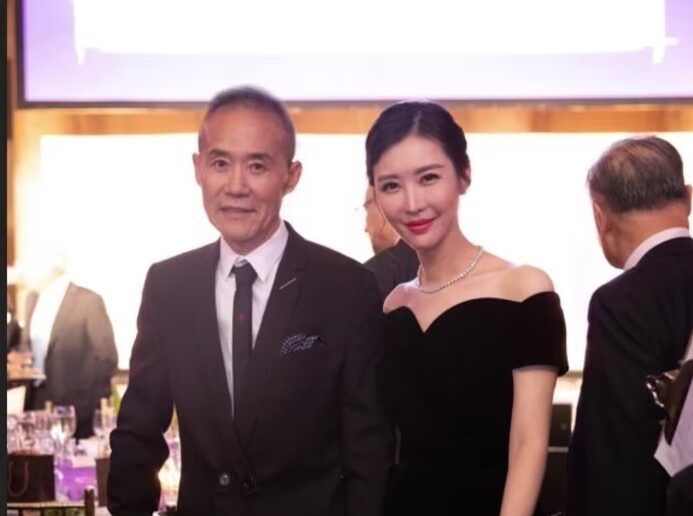
On the evening of April 12, Wang Shi’s wife, Tian Pujun, responded: “This is a society governed by the rule of law. Is spreading rumors really without consequences?” Subsequently, Wang Shi himself also spoke out: “It seems that everyone cares about my situation more than I do. Everything is fine; those rumor-mongers will be dealt with by the law.”
The couple’s statements are arguably the biggest black humor in the current Chinese business world. Tian Pujun is terribly wrong. The current environment is not a true society governed by the rule of law. As a shrewd couple who have been immersed in upper-class society for many years, haven’t the people around them offered them any guidance? Or are they still immersed in their own fantasy? In a country where even high-ranking officials and top billionaires can “disappear without a trace” without any legal procedures, where is the rule of law? Is Tian Pujun’s use of “rule of law” a shield, or is it more a cover-up?
Wang Shi’s statement, “Leave it to the law,” further exposes his and his wife’s identical cognitive limitations. Having navigated the system for decades, does Wang Shi truly believe in an independent “law”? When the guillotine of political purges falls, the law is often no shield for citizens. Are their current calls for the law a genuine expression of faith in the system, or merely a way to bolster their own courage?
Respecting Heaven and accepting one’s destiny can have a peaceful end
Pan Shiyi ultimately triumphed, not because he understood real estate better than Wang Shi, but because he understood China’s “destiny” better. In Wang Shi’s philosophy, the first half may have resembled Pan Shiyi’s, both emphasizing personal struggle and entrepreneurial spirit, but in the second half, their levels of understanding diverged dramatically.
Deep down, Wang Shi believes that “humans can overcome nature” and “my fate is in my own hands, not in the hands of Heaven.” He rose to prominence through his father-in-law’s red political background, and believed he had mastered the ultimate secrets of political and business relations in China. He was blinded by his influence and past achievements, thinking that “retirement” and “reputation” were the get-out-of-jail-free card.
His ascent of Mount Everest was essentially an act of conquest and arrogance, a conquest of nature and of fate. He thought he could control his destiny forever, only to discover, in the end, that the individual remains insignificant before a powerful system. In a system where power is unchecked, no wealth is absolutely secure, and all prosperity can be taken back at any time.
Wang Shi’s tragedy lies in his belief that the dividends of the time are his own ability, and in his vain attempt to find absolute safety in a game without a bottom line. On the other hand, Pan Shiyi’s fortune lies in his admission of insignificance and his quiet departure unscathed. This is the truest and most helpless portrayal of the Chinese business world.
Those who do not revere heaven and earth, and do not respect conscience, will eventually be swallowed up by the wave. Only by conforming to the way of heaven and getting out in time can they achieve a peaceful ending where one can “sleep soundly at night” in the long darkness.
Translated by Chua BC and edited by Maria
Follow us on X, Facebook, or Pinterest
