
When disaster strikes, people often search for meaning. Why are some lives lost while others are spared? Is survival simply a matter of chance, or are there deeper causes — some rooted in fate, and others in human choice?
Traditional Chinese culture has long viewed such questions through a moral and spiritual lens. Old stories speak of signs, unseen causes, and lives that seem to follow a path already set. Yet modern disasters also show another side of the question: the responsibility of teachers, builders, officials, and ordinary people whose decisions can save or endanger lives.
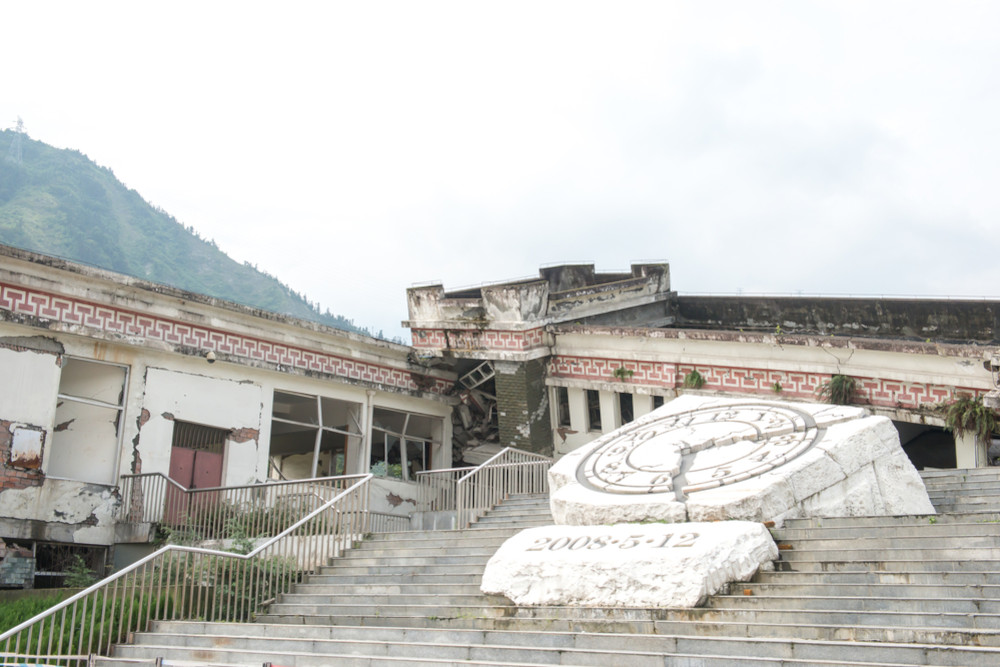
In China, two earthquakes made these questions especially painful: the 2008 Wenchuan earthquake in Sichuan Province and the 2010 Yushu earthquake in Qinghai Province. Both claimed many lives, including those of young students. Alongside those modern tragedies, older accounts offer a very different way of looking at disaster — one that asks whether what happens in this world may be connected to causes beyond what people can see.
The following stories, moving from a Qing Dynasty account to modern earthquake survival cases, explore a difficult question: When disaster comes, what belongs to fate, and what depends on conscience and human responsibility?
A child who saw something others could not
An old Qing Dynasty text, Night Talks by the Lamp, records a strange story from 1730, the year a major earthquake struck Beijing.
On the day before the quake, a man from Xinjiang carried a small child, about 3 or 4 years old, into a teahouse. Before they reached the door, the child clung tightly to the man’s neck and began to cry, refusing to go inside.
The man thought the child might be frightened by the crowd, so he carried him to another teahouse. The same thing happened again. Each time they reached the entrance of a shop, the child cried in fear and refused to enter.
The man was puzzled. “You usually love going into teahouses to eat sweets,” he said. “What is wrong today?”
The child replied that he saw iron collars around the necks of the people inside — both the sellers and the customers. He also said that many people walking in the streets were wearing the same kind of collars.
Later, the man met an old acquaintance and told him about the child’s strange words. The acquaintance laughed and said children’s talk should not be taken seriously. After they parted, the child watched the man walk away and said: “He is wearing one too, yet he laughs at others.”
When the child returned home, he was surprised to see that two of his cousins also appeared to be wearing such collars.
The next morning, around 9 o’clock, Beijing was struck by violent winds and heavy rain, followed by a powerful earthquake. Buildings collapsed across a wide area. Even the imperial palace and Yuanmingyuan were damaged, and part of the Hall of Supreme Harmony was broken.
Every teahouse the child had refused to enter was destroyed. His two cousins were crushed beneath a wall, and the old acquaintance who had laughed at the child’s words was also killed when a building collapsed.
After the disaster, people who heard the story believed the child had seen a sign from another realm — that those wearing invisible collars were already marked for death. From this view, those whose lives are meant to end cannot escape.
Teachers who acted before disaster struck
A modern example comes from the 2010 Yushu earthquake in Qinghai Province. During the earthquake, more than 2,000 people lost their lives. But at Yushu County No. 1 Ethnic Middle School, five teachers and more than 880 students all survived.
How did such a miracle happen?
At 5:40 a.m. on April 14, Vice Principal Yan Liduo was awakened by a slight tremor.
“This may be an earthquake,” he thought. Memories of the Wenchuan tragedy two years earlier flashed through his mind. “What if a larger quake follows? We must move the students quickly.”
He got dressed and rushed outside. Four other teachers, also awakened by the tremor, met him in front of the school buildings. They quickly agreed that, for safety, every boarding student should be awakened at once.
Many students were still asleep and had not felt the shaking. Some were reluctant to get out of bed. The teachers shouted, knocked on doors, and pulled sleepy children from their rooms. By the time all the boarding students had been gathered, the teachers were hoarse and sweating.
Dorje Tsering, a dormitory supervisor responsible for students’ daily care, was still worried, so he checked twice to ensure no child had been missed. He was a retired soldier who had worked at the school since its founding in 1982. Even after retirement, he had returned because he could not bear to leave the students. Though one of his hands was disabled, he moved quickly and personally woke more than 100 students.
The students gathered on the playground, where the teachers counted them one by one. Only after confirming that every boarding student was present did they begin to relax.
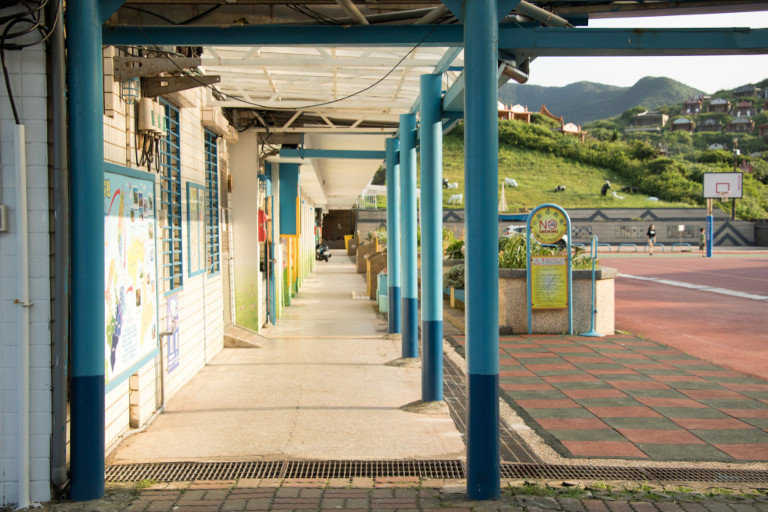
To keep the students calm, the teachers had them sit outside and read. As day students arrived, they too were kept from entering the classrooms. By 7:30 a.m., the open space between the classroom buildings and dormitories was filled with students.
At 7:49 a.m., the strong quake struck.
Four rows of old dormitories collapsed almost instantly. One classroom building from the 1980s partially collapsed. Two newer classroom buildings were less severely damaged, but they, too, became unsafe.
The students on the playground were terrified. One girl, seeing the dormitories fall, panicked and ran toward the teaching building. A teacher named Busang saw her, sprinted after her, and pulled her back. Moments later, bricks from the outer wall crashed down. One large stone landed just 4 inches from where her foot had been.
In this case, it was not an invisible sign that saved the students, but the vigilance and responsibility of teachers who refused to ignore a warning. If more schools had acted with such care, how many young lives might have been spared?
A building that did not collapse
Another example comes from Beichuan during the 2008 Wenchuan earthquake. At Dengjia Liu Han Hope Primary School, 483 students survived without a single death. The school building did not collapse, even though many school buildings elsewhere fell like dominoes and buried hundreds of children.
The question is: Why did this building stand?
The school had been donated and built about 10 years earlier. According to those involved, an unnamed supervisor from the donor company had been told to keep strict control over construction quality. The message from his superiors was clear: Money could be saved elsewhere, but not on education. If the building was not built properly and something happened, he would be held responsible.
During construction, the supervisor discovered problems with the materials. The sand contained too much mud, and some of the stones were too flat. Because he had experience in cement production, he understood the danger. Muddy sand and unsuitable stones could weaken the concrete.
He became angry and demanded that the construction team clean the sand and remove the poor-quality stones. Later, when the project slowed down, he discovered that the funds had not reached the construction company on time. Under the donation process, money first went through local authorities before being passed to the builders. The supervisor pushed hard until the funds were released.
Because of his persistence, the school was completed with a solid building and a proper playground. Ten years later, that playground became the place where hundreds of children escaped danger.
The lesson is simple but powerful: Sometimes what people call a miracle begins long before disaster arrives. It begins when someone refuses to cut corners, refuses to look away, and insists on doing the right thing.
See Part 2 here
Translated article
Follow us on X, Facebook, or Pinterest
