

In ancient China, taking an oath was a solemn and sacred act — an invocation made before Heaven, Earth, and the Divine. It was a declaration of one’s resolve, offered with the understanding that higher beings were witnessing one’s words and deeds, and would reward virtue while holding wrongdoing accountable. To underscore the seriousness of such commitments, people often held a twig while swearing an oath. Upon completion, the twig would be snapped in two. This simple yet powerful gesture symbolized the weight of their promise: if they were to break their oath, they would be as easily and irrevocably broken as the twig itself.
Fear of being surpassed
There is a story recorded in The Romance of the Sui and Tang Dynasties and The Rise of the Tang Dynasty about Qin Qiong and his cousin Luo Cheng. The two exchanged their family’s most closely guarded martial arts — the “Luo Family Spear” and the “Qin Family Mace” — and swore to one another that they would conceal nothing. Qin Qiong declared: “If I hide even the slightest detail, I shall vomit blood and die!” Luo Cheng likewise swore: “If I conceal even the smallest part, I shall surely die pierced by a hail of ten thousand arrows!”
Yet when the time came to fulfill their promises, both were gripped by hesitation. Qin Qiong, fearing his cousin might one day surpass him, only gave a superficial demonstration of the Qin family’s “Scattering Maces,” withholding its true essence. Luo Cheng, harboring the same quiet fear, likewise glossed over the “Returning Horse Spear,” revealing only its surface movements while concealing its core principles.
Neither of them gave the matter much further thought. Later, during a battle between Luo Cheng and Su Dingfang, Luo Cheng fell victim to Su Dingfang’s scheme. Riding alone, he became trapped in a muddy riverbank and was ultimately struck down by a barrage of arrows. The once-invincible general, who had never known defeat, thus met an untimely death at the age of twenty-three — just as he had sworn in his oath.
In his later years, Qin Qiong took part in a contest of strength with Wei Chi Gong to seize the commander’s seal. While attempting to lift a thousand-dan weight, he suddenly became severely exhausted and vomited blood, dying shortly thereafter. Oaths are never trivial matters. Even legendary figures such as Qin Qiong and Luo Cheng were not spared the consequences of breaking their vows — one dying pierced by a thousand arrows, the other succumbing after vomiting blood.
Oath fulfilled at the cost of blindness
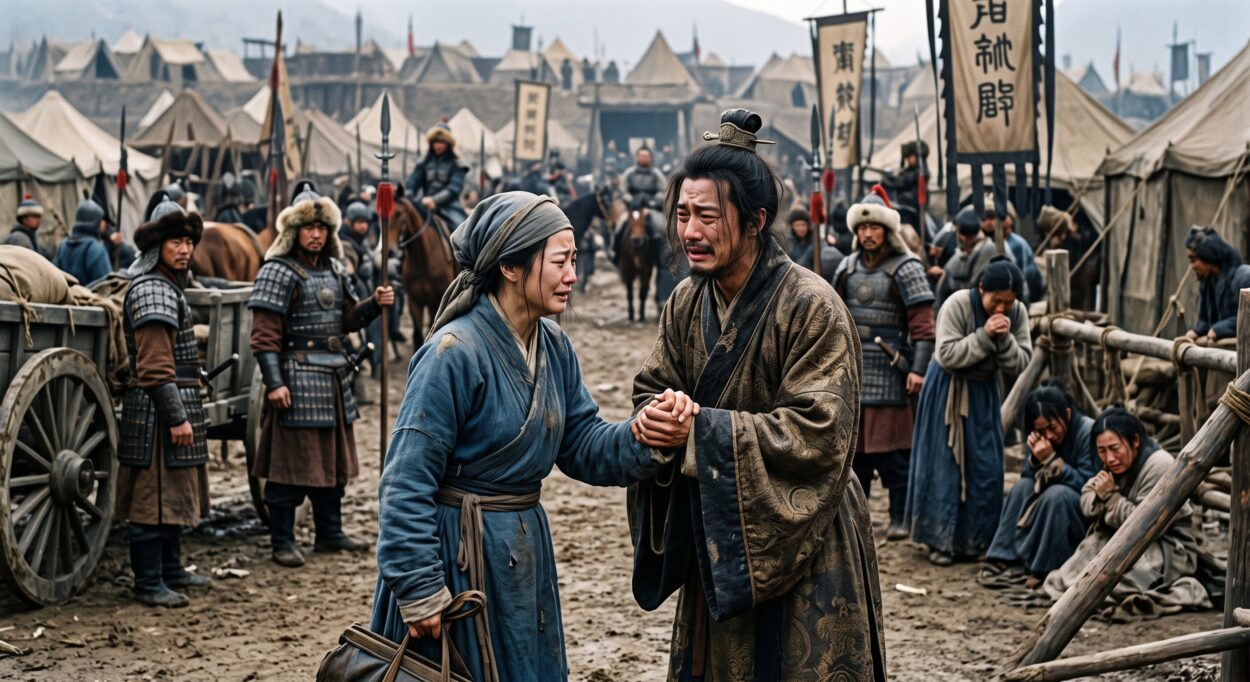
During the historical “Jingkang Incident,” Emperor Qinzong of the Song Dynasty, Zhao Huan, along with his consorts, officials, and more than 10,000 others, was captured by Jin forces and taken north. After negotiations with the Jin Dynasty, Empress Xianren was permitted to return south. As she was about to depart, Emperor Qinzong took her hand in tears and said: “If I am able to return to the south, I would be fully satisfied even if I could serve only as the Grand Palace Messenger. I have no further ambitions.”
Empress Xianren replied: “If, after I return, I do not find a way to bring you back, may I be struck blind in both eyes.” This was her solemn vow. After returning, she conveyed the matter to Emperor Gaozong. However, seeing that Emperor Gaozong had no intention of restoring Emperor Qinzong to the throne, she dared not press the issue further, and the matter was left unresolved. Soon afterward, Empress Xianren lost her sight in both eyes. Despite seeking treatment everywhere, her condition could not be cured.
A Taoist priest later used a gold needle to treat her eyes, and her left eye was restored to sight. Overjoyed, the empress asked him to restore her right eye as well. The priest replied: “From now on, you will see with one eye, and the other will remain as a fulfillment of your vow.” Once spoken, a word cannot be taken back. People must bear responsibility for their own words. The ways of Heaven observe every word and deed with impartial justice. In that realm, all are equal — there are no distinctions of high or low, noble or humble as there are in the human world.
Two princes meet their doom
In Investiture of the Gods, the two princes Yin Jiao and Yin Hong followed their masters’ instructions and descended from the mountains to assist the Zhou in overthrowing King Zhou of the Shang Dynasty. Before leaving, Yin Hong swore to his master, Li Jingzi: “If I harbor any other intentions, may my four limbs be reduced to ashes.” Yin Jiao likewise swore to his master, Guang Chengzi: “If I go back on my word, I shall suffer the calamity of the plow and hoe.”
Guang Chengzi entrusted all his treasured artifacts to Yin Jiao. However, after descending the mountain, both princes broke their original intent. Rather than aiding Zhou in its campaign against Shang, they instead turned to support Shang and fought against Zhou. In the end, Yin Hong met his demise within Laozi’s Taiji Diagram, his body reduced to ashes and dispersed like smoke. Yin Jiao was trapped at Mount Qi by several great immortals and ultimately suffered the fate he had sworn — the calamity of the plow and hoe. In both cases, the oaths they had spoken were fulfilled to the letter.
When the two immortals, Red Spirit Son and Guangchengzi, witnessed their disciples suffer such tragic consequences, both were deeply moved and shed tears. Though they wished to pardon or rescue them, they understood well that Heaven’s will could not be defied. Only by aligning with Heaven’s mandate could one remain under its protection. In Fengshen Yanyi (The Investiture of the Gods), Shen Gongbao once swore to Yuanshi Tianzun that if he continued to oppose Heaven’s will and aid forces contrary to the destined rise of Zhou, he would use his own body to plug the Eye of the North Sea.
As events unfolded, Shen Gongbao continued to act against Heaven’s order. Eventually, when his accumulated actions reached their final consequence, he was bound by the power of his own oath. He was taken and sealed into the Eye of the North Sea itself — his body physically used as the suppressing force that closed it, exactly as his vow had specified.
Sun Jian’s death by arrows
In Romance of the Three Kingdoms, a coalition of 18 feudal lords launched a campaign against Dong Zhuo. Sun Jian defeated Dong Zhuo’s forces and captured Luoyang, where he discovered the Imperial Seal in a well south of the city. However, he denied possessing it and swore before Yuan Shao and the other warlords: “If I have taken the Imperial Seal, may I die by an arrow!” Later, while pursuing Liu Biao’s general Yan Zu, Sun Jian was ambushed and struck down by a barrage of arrows, meeting the exact fate he had invoked in his oath.
Struck by lightning for four silver coins
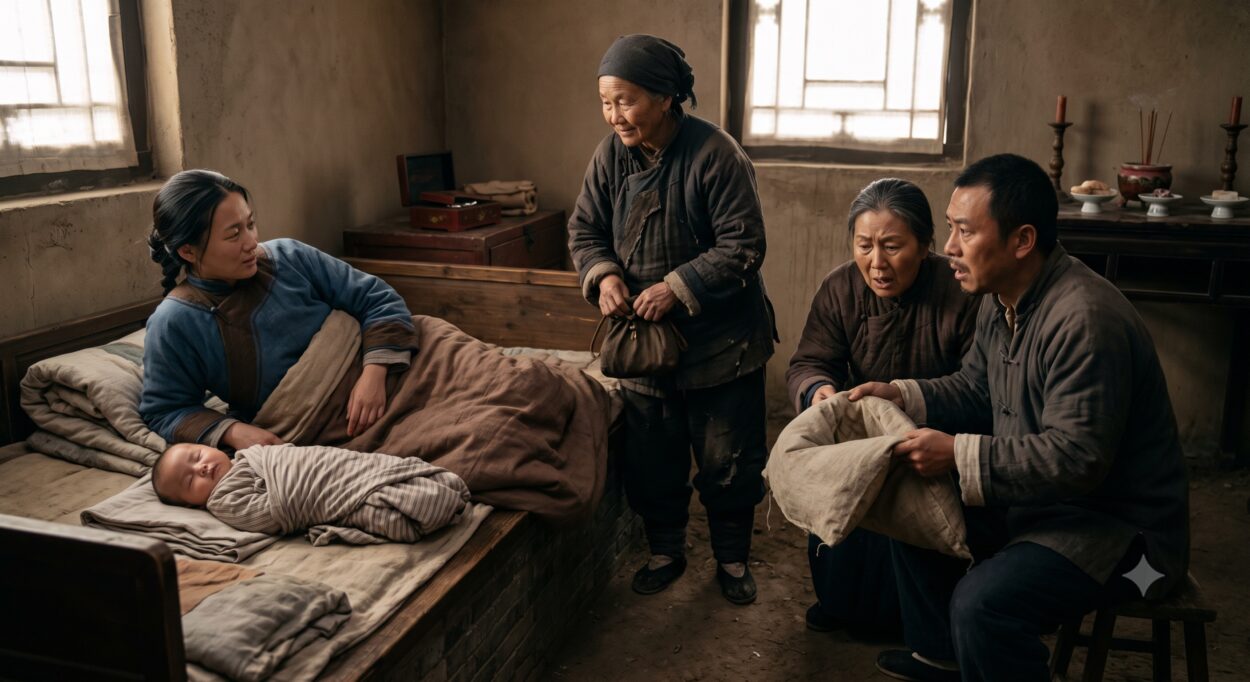
During the Qianlong reign of the Qing Dynasty (1711-1735), a pregnant woman in Andong County went into labor and summoned a midwife to assist with the delivery. The midwife stayed overnight and left the following morning. Grateful for the safe birth of the mother and child, the family prepared to retrieve four silver ingots they had stored in a pillow, intending to use them as offerings to fulfill a vow of thanks to Heaven. However, upon checking, they discovered the silver was missing.
Because the midwife had been the only outsider in the home, the husband went to question her. The midwife firmly denied any wrongdoing and swore a solemn oath: “If I stole the silver, may the Heavenly Emperor strike me dead with a bolt of lightning!” A few days later, a sudden storm swept through the village. Thunder roared, and lightning split the sky. When the storm passed, villagers discovered a charred body kneeling on the ground. In its hands were the missing silver ingots. It was the midwife, struck dead by lightning.
Reflection
Once an oath is spoken, it is said to be inscribed between Heaven and Earth, never erased or forgotten. Words are not empty sound, but binding declarations that extend beyond the human realm. Therefore, one must guard one’s speech and conduct with reverence, remain upright in intention, and never treat vows lightly. For in the end, whether in myth, history, or legend, one truth is repeatedly affirmed: What is spoken before Heaven does not disappear with time — it simply awaits fulfillment.
Translated by Audrey Wang and reviewed by Tatiana Denning
Follow us on X, Facebook, or Pinterest
