
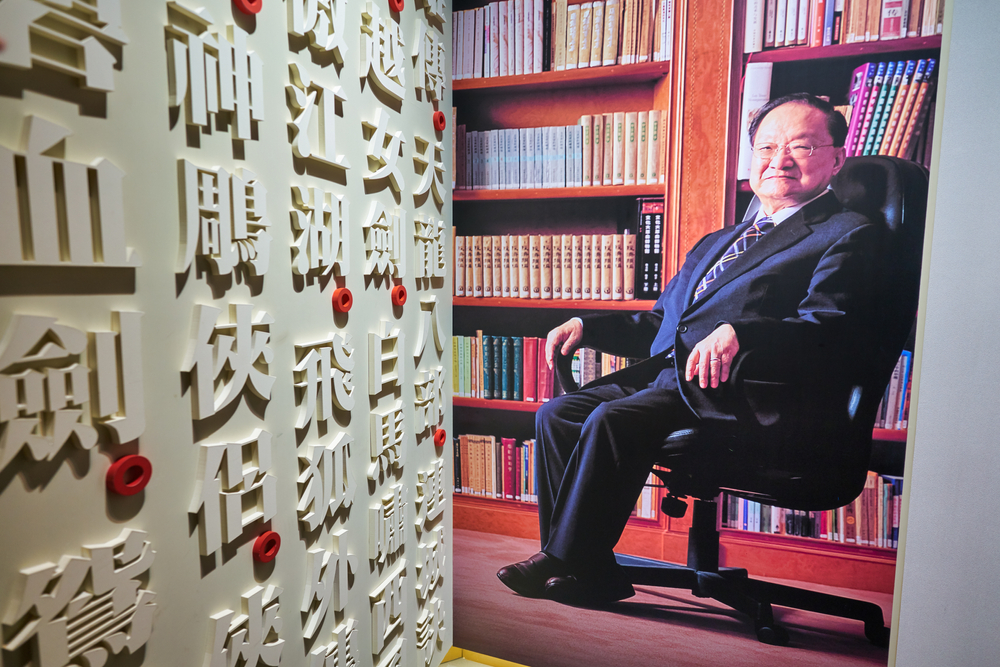
Jin Yong, the pen name of Louis Cha, was one of the most beloved Chinese-language novelists of the 20th century. His martial arts novels helped define modern wuxia fiction, a genre of chivalrous heroes, secret lineages, moral tests, and sweeping historical adventure.
But beneath the sword fights and heroic quests, one theme appears again and again: sons searching for fathers.
Many of Jin Yong’s heroes grow up without a father, misunderstand a father, lose a father, or spend much of their lives looking for one. That recurring theme was not merely a literary device. Behind it stood one of the deepest sorrows in Jin Yong’s own life: the death of his father, Cha Shuxun.
Cha was executed by firing squad on April 26, 1951, after being labeled a “reactionary landlord.” The execution took place on the playground of Longtougge Primary School, a school he himself had helped establish. Decades later, the authorities overturned the verdict and declared him innocent. But by then, the tragedy had already shaped a lifetime.
A prominent family
Cha Shuxun was, by class background, a landlord. His family was a well-known clan in Haining, Zhejiang. In the family ancestral hall hung a couplet written by the Kangxi Emperor: “Since the Tang and Song dynasties, great clans have emerged; in Jiangnan, there are but a few families.”
By the time Jin Yong was born, the family was said to have declined from its earlier prominence, but it still owned more than 3,600 mu of land, roughly 590 acres, and had more than 100 tenant households. According to Jin Yong’s younger brother, the family home was a large compound with five courtyards, more than 90 rooms, and a large garden. The family also owned businesses in town, including a private bank, a rice shop, and a sauce shop.
Yet Cha Shuxun was not an ordinary rural landholder. He had received one of the finest educations available in China at the time.
Born in 1897, he graduated from Aurora University in Shanghai, a renowned Catholic university. After the Chinese Communist Party came to power, Aurora was dismantled, and its departments were absorbed into institutions such as Fudan University, Jiaotong University, and Tongji University.
Cha was part of an educated family. One of his brothers studied Chinese literature at Peking University, while another was a scholar in the Qing Dynasty. In the China of his time, Cha represented a rare combination of traditional Chinese learning and Western education.
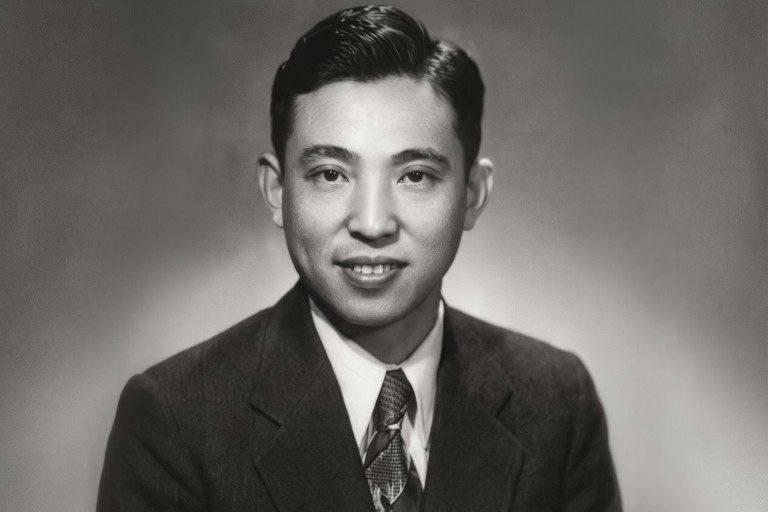
He once encouraged the young Jin Yong by pointing to their relative Xu Zhimo, the famous poet who had studied at Cambridge. “Your cousin Xu Zhimo studied at Cambridge,” he reportedly told his son. “You should go to Cambridge too.”
A father’s gift
One Christmas, Cha gave young Jin Yong a copy of Charles Dickens’s A Christmas Carol. The story of Ebenezer Scrooge, a cold-hearted miser who is awakened to kindness and compassion, left a deep impression on Jin Yong’s character.
For a father born in 19th-century China to celebrate Christmas with his child and give him a Dickens novel already reveals an unusually broad cultural vision. Even more striking was the choice of book. He did not choose one of Dickens’s longer and more famous novels, but a moral tale about repentance, generosity, and the transformation of the heart.
That gift says much about Cha Shuxun’s outlook. He was not simply a man of status and education. He cared about his son’s moral formation.
Good works in his hometown
Cha Shuxun also did many good works in his community. In the available records, there are many accounts of charity and education, and few, if any, accounts of wrongdoing.
In his later years, he devoted great effort to establishing a charitable estate, known in Chinese tradition as a yizhuang. Such estates were used to support clan members, provide relief, and fund education. Cha also continued sending books to Jin Yong, urging his son not to become cold-hearted or selfish.
According to an article by Lai Chen in Literature and History Monthly, the Cha family set aside 1,000 mu of paddy fields as charitable land for the clan. These were high-quality fields, reliable in both drought and flood. After taxes and other losses were deducted, the income was used to support clan members. Each autumn, depending on the harvest, Cha would also reduce or waive rent for tenant farmers.
He was especially committed to education. Using funds from the charitable estate, he helped establish Longtougge Primary School, where children could attend for free. In a bitter irony, this was the same school where he would later be executed.
Another story from the area concerns a poor scholar named Yang Liangfeng. When Yang’s son, Yang Deju, was admitted to Aurora University, the father was so overwhelmed with emotion that he fell ill and died. The family was so poor that they could only make a coffin from a broken box and leave the body at home.
When Cha heard of this, he went with his steward to help. He provided a proper coffin, set aside a piece of the Cha family’s land for the burial, and paid the funeral expenses from the charitable estate. He later also helped pay Yang Deju’s tuition. Yang Deju eventually graduated, worked at a bank in Nanjing, and later served as a commissioner in Sichuan.
The political storm
The upheaval came in the early 1950s.
During the Campaign to Suppress Counterrevolutionaries and related political movements, executions, imprisonment, and political control spread widely. Local personnel organized villagers to expose Cha Shuxun’s alleged crimes. But because he had long treated people well, helped the community, and was respected locally, no one was willing to accuse him.
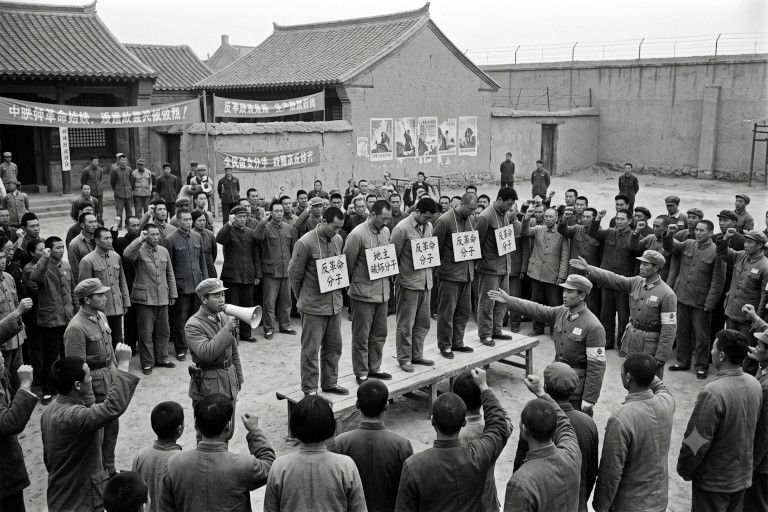
In the end, a remnant bandit from a neighboring village came forward and accused him of hiding weapons. Cha was then charged with four crimes: resisting grain collection, harboring bandits, plotting to kill officials, and spreading rumors to cause disruption. He was sentenced to death as an “illegal landlord.”
The charge of “resisting grain collection” appears to have come from events in 1948. Before the Communist victory, the area had suffered disasters, while the Nationalist government was pressing for grain collection. Local Communist underground members and farmers’ associations organized resistance to grain collection and rent payments. As a landlord, Cha became one of the targets of that campaign.
After the establishment of the People’s Republic of China, the new government began collecting public grain. But much of Cha’s grain was in the hands of tenant farmers, meaning the charitable estate turned over less than expected. The later judgment found that this charge, along with the others, did not stand.
On April 26, 1951, Cha Shuxun was taken to the playground of Longtougge Primary School. He was not allowed to change clothes or receive the customary food and wine before death. Bound and brought to the execution ground, he was shot in a group of four.
His wife, Gu Xiuying, only learned what had happened after the execution. When she arrived, her husband’s body was lying beside the playground. She and the children took him home and buried him overnight, not daring to leave a grave marker.
For decades afterward, Gu continued to petition for her husband’s name to be cleared.
A son’s grief
At the time, Jin Yong was working in Hong Kong for Ta Kung Pao. When he heard the news, he was devastated and cried for several days.
Many years later, he recalled the event in his autobiographical essay “Moon Cloud,” writing in the third person under his childhood name, Yiguan:
“Troops from Shandong entered Yiguan’s hometown, and Yiguan’s father was judged to be a landlord who oppressed peasants and was sentenced to death. Yiguan cried in Hong Kong for three days and nights and grieved for half a year. But he did not hate the troops who killed his father, because thousands upon thousands of landlords had been executed. It was an upheaval that overturned heaven and earth.”
The name “Yiguan” was Jin Yong’s childhood name.
Exoneration after 30 years
Thirty years later, Cha Shuxun was finally exonerated.
In 1981, Deng Xiaoping made a well-known comment: “I would like to meet Mr. Cha.” Soon afterward, on July 18, Deng met Jin Yong in the Fujian Hall of the Great Hall of the People. During their conversation, Deng mentioned the case of Jin Yong’s father, expressed regret, and said they should unite and look forward.
Jin Yong replied: “The dead cannot return. Let it go.”
After that meeting, local authorities in Haining, Zhejiang, quickly formed an investigation team to re-examine the case. They found that Cha Shuxun had been wrongfully convicted. The Haining County People’s Court then annulled the original verdict and declared him not guilty.
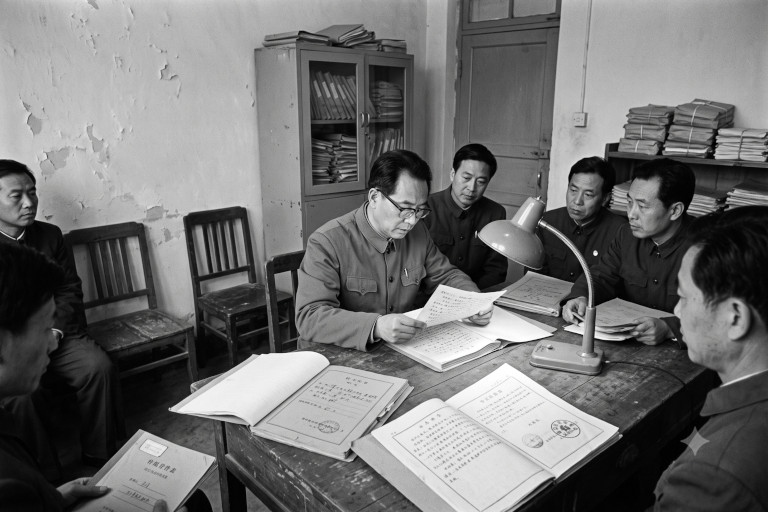
A criminal judgment issued by the court on July 23, 1985, stated that the original accusations against Cha, including resisting grain collection, harboring bandits, plotting to kill officials, and spreading rumors, were all false. The court concluded that the facts behind the original conviction did not stand and that the death sentence had been a wrongful execution.
That year, Cha’s wife, Gu Xiuying, was 73. After decades of appeals, she lived long enough to see her husband’s name cleared. She died four years later.
The father who remained absent
It is worth remembering this history when reading Jin Yong’s novels. Again and again, his protagonists are shaped by an absent father.
Yang Guo searches for his father. Qiao Feng searches for his father. Duan Yu searches for his father. Xu Zhu searches for his father. Shi Potian searches for his father. Zhang Wuji searches for his adoptive father.
Different stories, different heroes, but the same wound appears again and again: the longing for a father who is missing.
While Jin Yong was writing these novels, he reportedly kept with him the copy of A Christmas Carol that his father had given him long ago. The father who had vanished from his life remained close in another form: through a book, a memory, and a moral vision that never left him.
Translated by Joseph Wu
Follow us on X, Facebook, or Pinterest
