
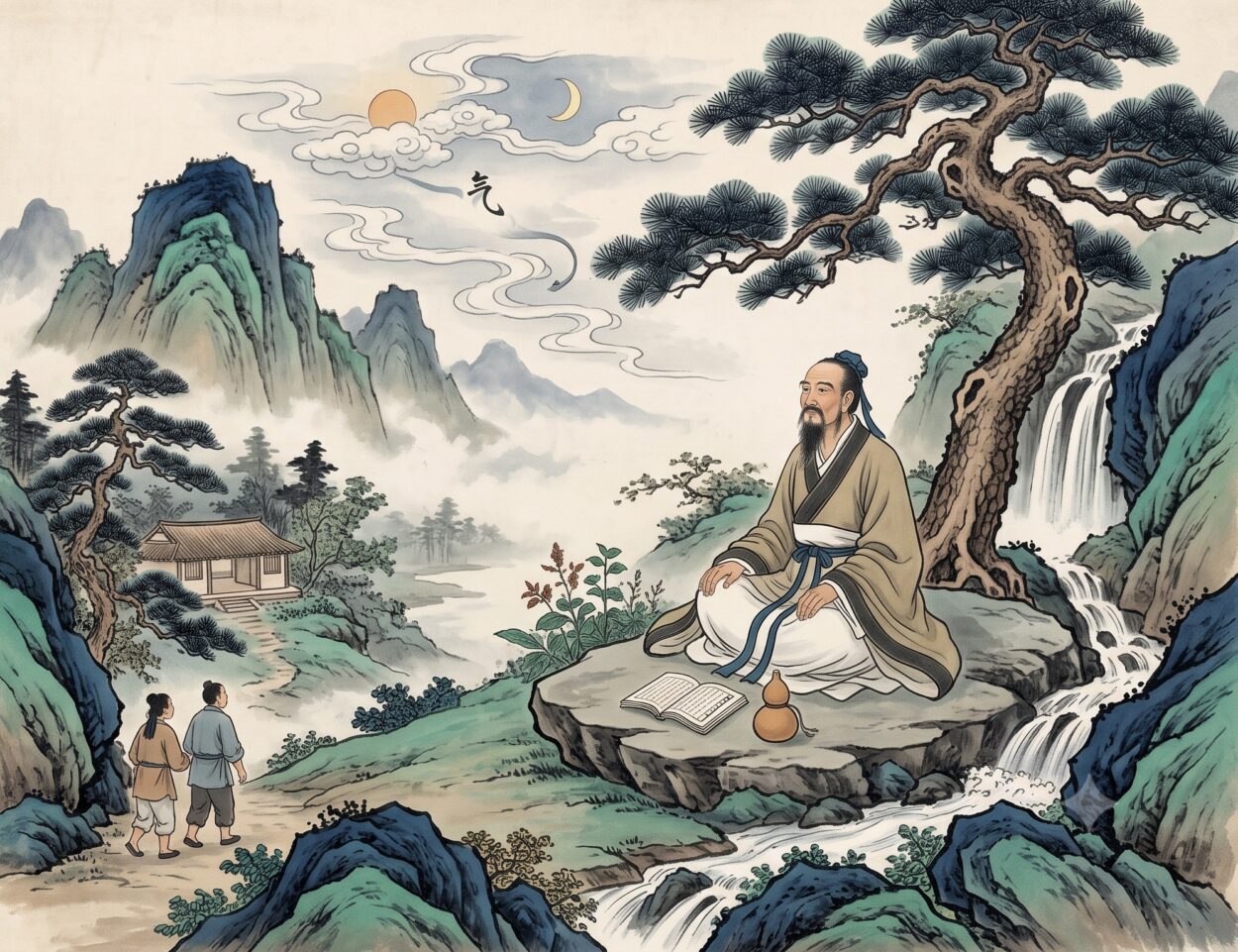
Sun Simiao is remembered as one of the greatest physicians in Chinese medical history, yet his wisdom extended far beyond treating diseases, for as a seeker of the Tao, he saw medicine as a window into the deeper laws governing life, nature, and the universe. Regarding the human body as a miniature universe, he believed that the principles sustaining individual health also preserve harmony within families, communities, and the natural world. By understanding one realm, we gain vital insight into the other, and it is this profound vision of unity among Heaven, Earth, and humanity that makes his timeless teachings as relevant today as they were over a millennium ago.
A historic meeting took place between a poet and a sage
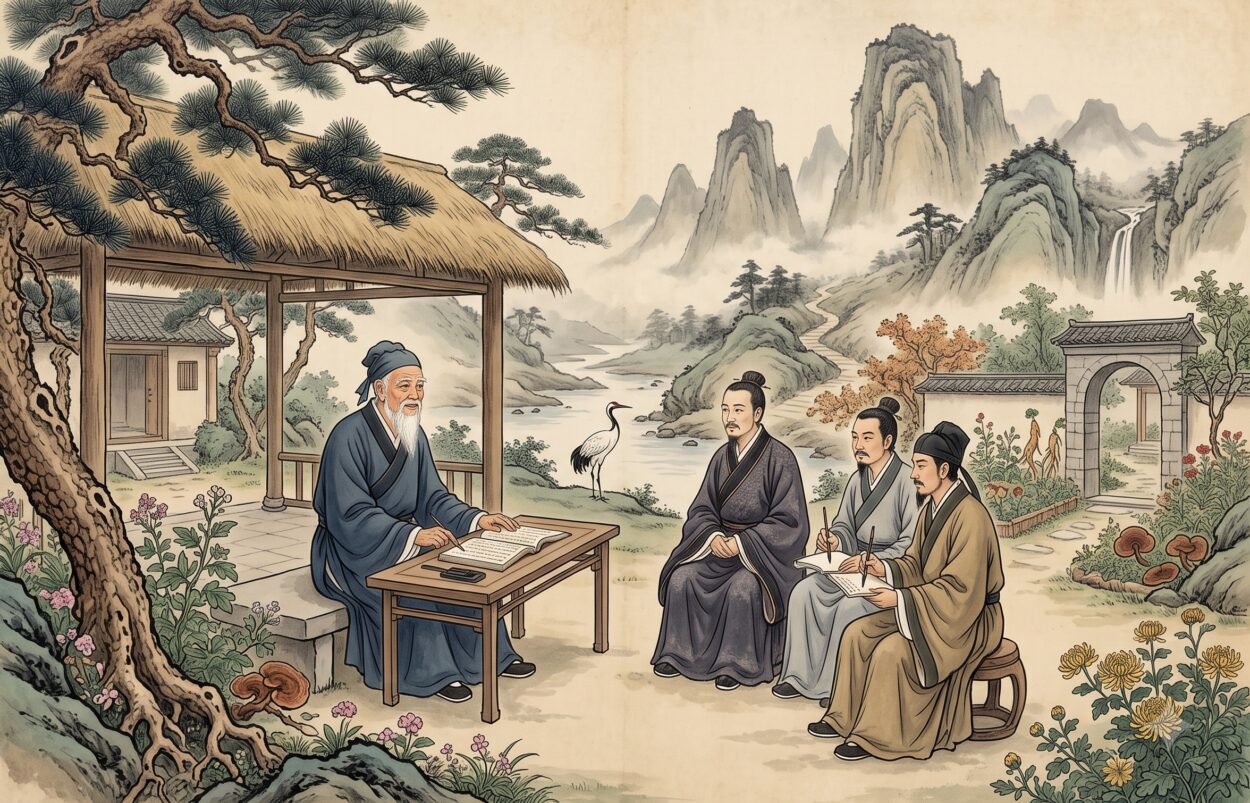
The renowned Tang Dynasty poet Lu Zhaolin deeply admired Sun Simiao, honoring him with the reverence traditionally reserved for a revered teacher. In 658 AD, during the third year of the Xianqing era, Emperor Gaozong summoned Sun Simiao from his retreat on Mount Taibai, where he had been living as a hermit. By this point, Sun Simiao’s reputation reached far beyond his extraordinary clinical skills; he was equally celebrated for his deep knowledge of astronomy, calendars, and the traditional arts of preserving health while cultivating moral character.
Such was his stature that Lu Zhaolin, alongside distinguished scholars Song Lingwen and Meng Shen, eagerly studied under his guidance. Lu, a native of Fanyang who had served as a court official, suffered from a severe chronic illness that defied every known treatment, and although Sun Simiao was already well into his nineties, his eyesight remained sharp, his hearing keen, and his mind remarkably clear. Seeing this vibrant master, Lu reflected somberly on his own plight: though still in the prime of life, years of persistent illness had left him physically and emotionally drained. Struck by the stark contrast in their vitality, Lu composed Ode to the Tribulus Tree to lament the mysterious variations of human fate, before he and his fellow scholars respectfully asked Sun Simiao what lies at the heart of genuine healing.
Heaven and humanity mirror each other in fundamental ways
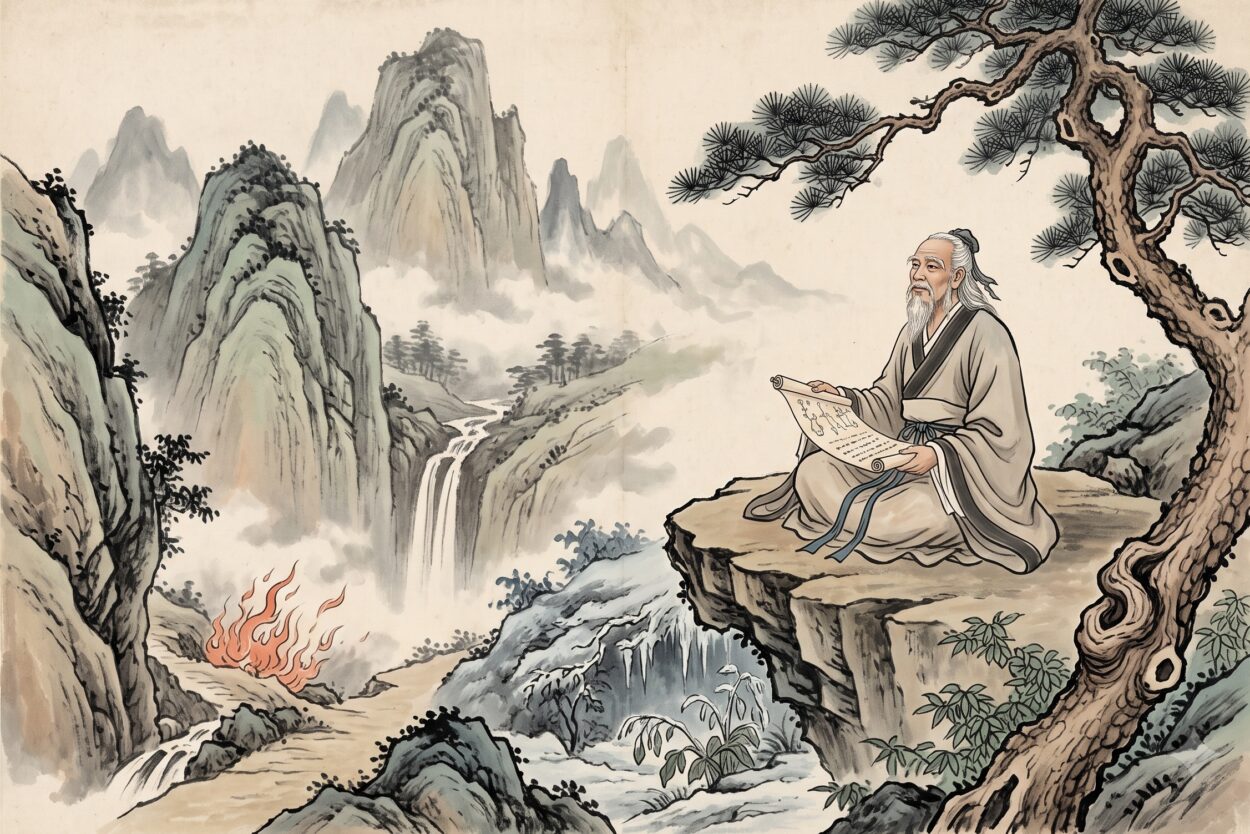
Sun Simiao’s answer did not begin with herbal formulas, acupuncture techniques, or medical procedures; instead, he spoke of the deep relationship binding Heaven, Earth, and humanity. He observed that those who truly understand Heaven perceive its patterns within the human body, just as those who truly understand humanity take Heaven as their model. He explained that just as Heaven follows the regular rhythms of the four seasons and operates through the Five Elements—metal, wood, water, fire, and earth—while day alternates with night and warmth yields to cold in an orderly cycle, the human body functions similarly.
The vital energy of nature gathers to form rain, moves to create wind, disperses as dew, grows turbid as mist, condenses into frost or snow, and stretches across the sky as rainbows. Mirroring these celestial dynamics, the human body possesses four limbs and five vital organs, so whether we are awake or asleep, breathing in and out, eliminating waste, or absorbing fresh air, the continuous circulation of essence, blood, and vital energy never ceases. When this internal energy flows smoothly, it gives rise to the systemic movement of qi and blood; when expressed outwardly, it manifests in the complexion and human voice, with Yang manifesting through vital energy and Yin taking form in the physical body.
Internal disharmony creates disease throughout the body and nature
Sun Simiao concluded that Heaven and humanity strictly share the same fundamental principles, explaining that when the body’s natural balance is disrupted, disease inevitably arises. Excessive internal heat produces high fevers; a deficiency of warmth causes cold disorders; stagnation forms tumors; and severe blockages develop into painful ulcers. When vital energy surges too violently, breathing grows labored, and when vitality drains away entirely, the body withers like scorched land, allowing a skilled physician to read internal conditions by observing outward signs.
Extending this law to nature, he noted that just as illness infects the body, disorder appears across Heaven and Earth whenever the Five Elements lose balance, stars move erratically, eclipses occur, or comets sweep across the sky as warning signs of cosmic disruption. Unseasonable temperatures mirror bodily fever or chills; towering rocks and upheaving earth resemble swelling tumors; sudden landslides parallel festering sores; violent storms simulate labored breathing; and dried rivers signify complete physical exhaustion.
Medicine and statecraft rely on the exact same universal laws
Expanding his analogy further, Sun Simiao noted that just as a skilled physician restores physical health through medicine and acupuncture, a wise ruler restores social order through virtue and the appointment of capable officials. Because bodily ailments can be cured, environmental calamities can likewise be dispelled, as both stem from the circulation of qi and the workings of destiny. To Sun Simiao, medicine and statecraft were not separate disciplines but dual expressions of identical universal laws, meaning the core duty of either healer or ruler is not merely treating surface symptoms, but restoring the underlying harmony from which health, order, and well-being naturally spring.
Wise living requires balancing courage with profound caution
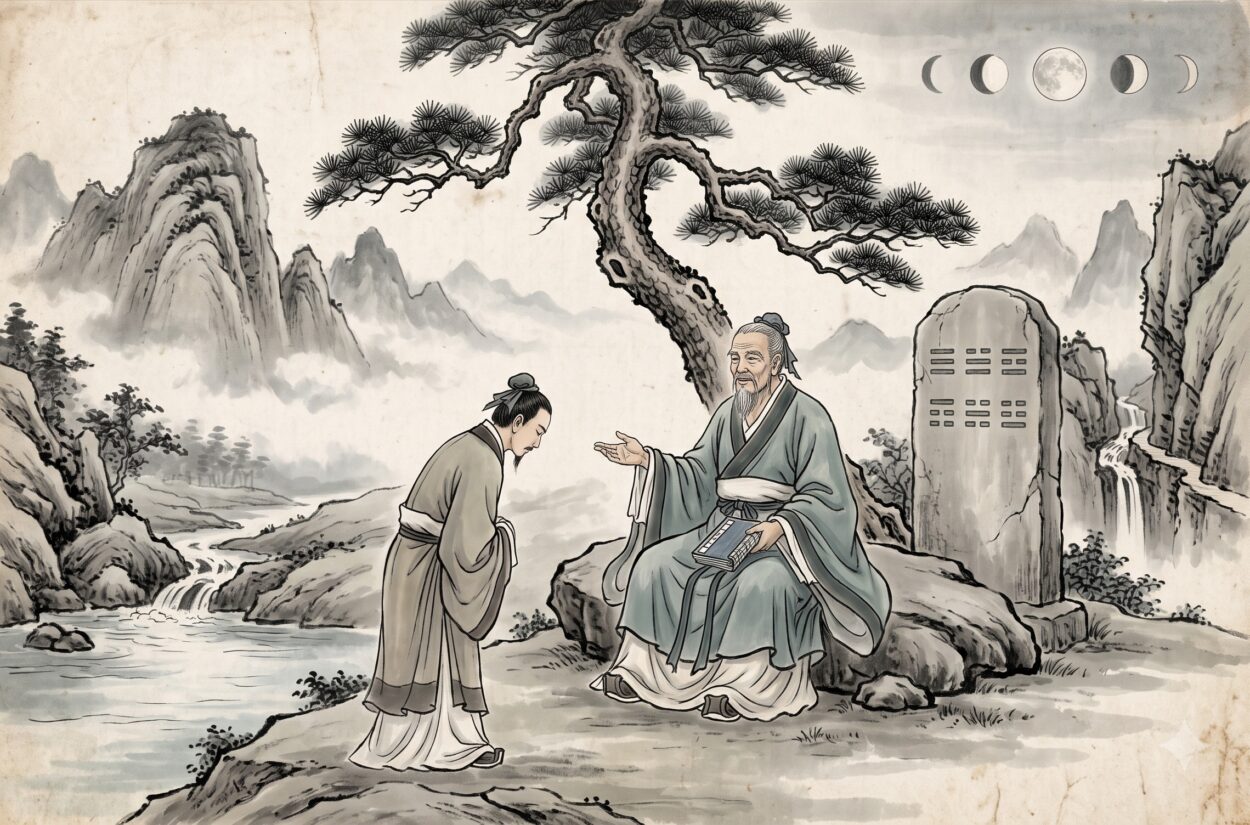
When Lu Zhaolin subsequently asked how one should properly conduct oneself in the world, Sun Simiao answered with words quoted for generations: be bold in courage yet cautious at heart, keeping wisdom flexible and adaptable while remaining upright and principled in conduct. Elaborating on this concept, Sun Simiao compared bodily organs to ministers of a state, noting that the heart serves as the sovereign and must act with great care, whereas the gallbladder acts as its general, requiring decisiveness and bravery. The truly wise possess the expansive adaptability of Heaven, whereas the genuinely benevolent embody the steadfast integrity of Earth. To illustrate proper caution, Sun Simiao quoted the Book of Poetry, advising people to walk as if standing near a deep abyss or treading on thin ice, clarifying that true caution is not cowardice, but continuous awareness of responsibility, whereas courage resembles a mighty warrior defending a realm.
True self-cultivation relies on constant mindfulness and virtue
Turning to the Book of Changes, Sun Simiao cited two complementary guidelines: the righteous never abandon virtue for profit, and when the proper opportunity arrives, one must act without delay. Together, these maxims teach the wisdom of maintaining unwavering integrity while acting decisively at the right moment. When Lu finally asked for the single most crucial principle in cultivating character and preserving life, Sun Simiao warned that because Heaven waxes and wanes while human life is filled with hardship, no one who acts recklessly escapes danger; thus, whoever wishes to cultivate life must first master caution. This mindfulness requires deep respect for governing forces, as the Book of Changes warns that when people cease fearing misfortune, Heaven sends disaster to awaken them.
Reverence forms the foundational bedrock of all human success
A healthy sense of reverence forms the bedrock of survival and prosperity, for without it, scholars abandon righteousness, farmers neglect crops, artisans drop standards, and merchants lose judgment. Children dishonor their parents, parents love carelessly, officials shirk their duties, rulers lose their wisdom, and individuals gradually forfeit mental clarity, emotional balance, and purpose. As spirit scatters and resolve weakens, flourishing endeavors decline, turning success into failure and good fortune into peril. Sun Simiao offered a timeless rule: remain careful in small matters to avoid great setbacks, and address immediate concerns wisely so future hardships become manageable.
Virtuous living grants ultimate protection against external dangers
Sun Simiao described how blessings naturally follow a disciplined, virtuous life, noting that one who understands these principles need not fear river dragons, mountain tigers, or rhinoceroses. Weapons fail to harm such a person, illness struggles to take root, slander loses potency, and poisonous insects rarely sting. These vivid images were not promises of magical protection, but expressed a deeper reality: living in harmony with virtue and nature builds an inner fortitude that external threats cannot easily breach, leading Sun Simiao to declare that mastering this concept means understanding all human affairs.
A noble life leaves behind an enduring legacy of wisdom
Not long afterward, Sun Simiao was appointed to oversee the Imperial Medical Bureau, eventually passing away during the early years of Emperor Gaozong’s Yongchun reign. Even in death he remained humble, requesting a modest burial without paper offerings, burned goods, or animal sacrifices. Over a month after his passing, his face retained the peaceful appearance of sleep, and when attendants lifted his body into the coffin, they were astonished by its weightlessness, feeling as though they carried only an empty robe. Throughout his extraordinary life, Sun Simiao devoted himself to healing others while preserving medical and moral wisdom, culminating in his thirty-volume masterpiece, Qianjin Yaofang (Essential Prescriptions Worth a Thousand Gold Pieces), which has guided physicians for over a thousand years.
The art of true healing begins long before illness appears
Sun Simiao was far more than a physician; he understood that medicine is not merely treating illness, but the high art of restoring total harmony. To him, the human body reflected the universal order governing Heaven, Earth, and society, meaning health was never an isolated physical state, but the natural result of living by timeless principles. His teachings remind us that true healing begins long before disease appears by preserving balance through daily choices and cultivated character. Over a millennium later, his message remains deeply relevant, showing that living with humility, integrity, courage, and reverence nurtures not only physical well-being, but mental clarity, peace of heart, and harmony with the world.
Translated by Katy Liu and reviewed by Tatiana Denning
Follow us on X, Facebook, or Pinterest
