
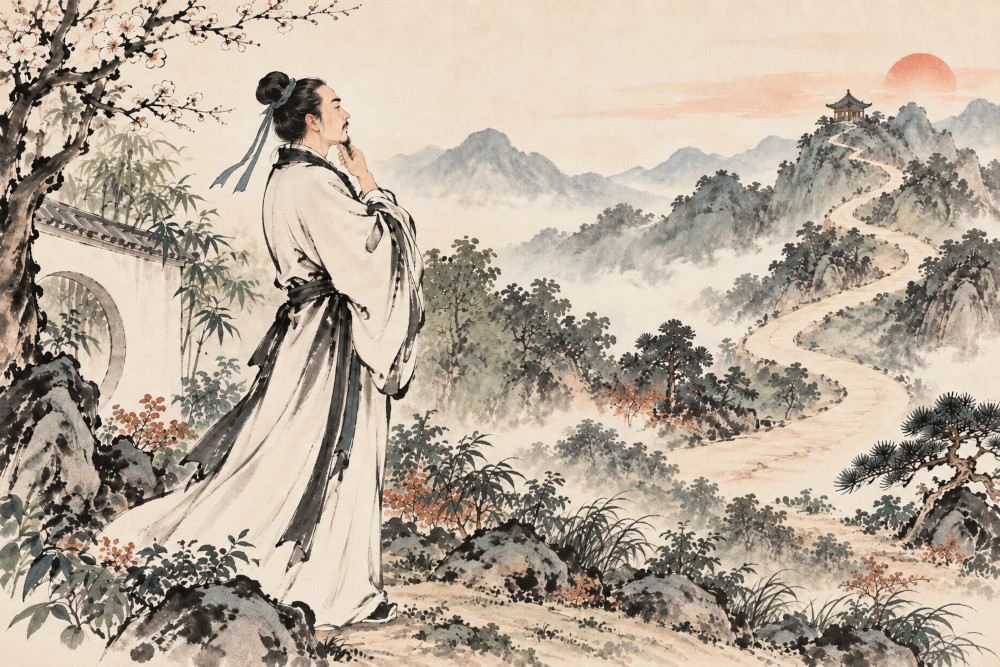
What prevents us from discovering new possibilities and creating something better is often not an obstacle in the outside world, but a barrier in our own minds.
The stubborn stone within
Long ago, a family had a vegetable garden with a large stone protruding from the ground. It was about 16 inches wide and 4 inches high, and people often tripped over it, sometimes falling or scraping themselves.
One day, the son asked his father: “Why don’t we dig out that troublesome stone?”
His father replied: “That stone has been there since your grandfather’s time. It must be enormous. Who knows how long it would take to dig it out? It is better simply to watch where you are going. At least that will train your reflexes.”
Years passed. The son grew up, married, and became a father himself, but the stone remained.
One day, his wife said in frustration: “That stone in the garden is becoming more troublesome all the time. Why don’t we have someone remove it?”
Her father-in-law dismissed the idea. “Forget it. That stone is very heavy. If it could have been moved, someone would have done it when I was a child.”
But the stone had caused her to stumble too many times. One morning, she took a hoe and a bucket of water to the garden. She poured the water around the stone and waited for the soil to soften. Then she began loosening the earth around it.
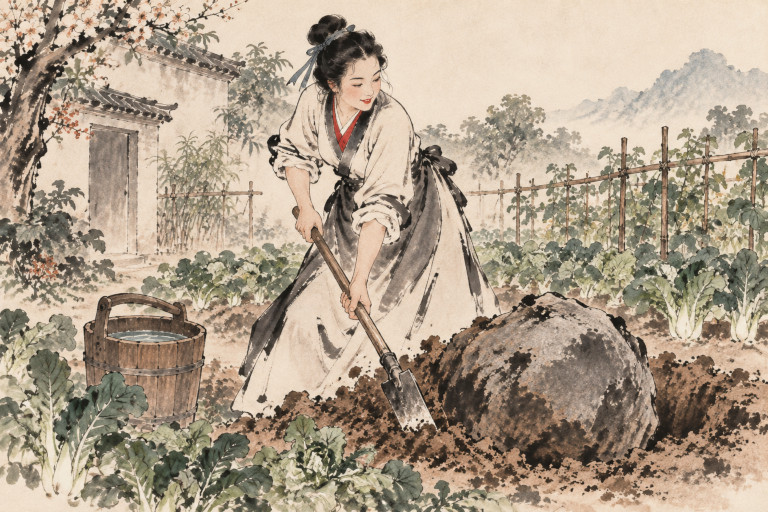
She had prepared herself for a full day of digging. Instead, within minutes, the stone came free. It was nowhere near as large as everyone had imagined. Its imposing appearance had deceived generations into assuming that the obstacle beneath the surface must be enormous.
If you approach a mountain with the mindset of going downhill, you will never reach the summit. When the world seems dull and hopeless, sometimes it is our own state of mind that makes it appear so. To change the world before us, we may first need to change the heart with which we face it.
Forgetting the self
If you think of yourself only as a mouse, you will always fear the cat.
Selma Lagerlöf was born in Sweden in 1858. As a child, she was unable to walk for a period of time. In her later memoir, she recalled a journey with her family during which she learned that a ship’s captain possessed a bird of paradise.
The child was captivated and longed to see the beautiful bird for herself. Once aboard the ship, a cabin boy offered her his hand and led her toward the captain’s cabin. So absorbed was she in reaching the bird that she did not realize what she had done until her family found her: she had walked.
From then on, she was able to stand and walk. Lagerlöf later devoted herself wholeheartedly to literature, and in 1909 became the first woman to receive the Nobel Prize in Literature.
The Chinese expression wangwo (忘我), literally “forgetting the self,” describes a state of becoming so absorbed in a worthy purpose that one temporarily forgets fear, hesitation, and the limitations one has placed upon oneself. In such moments, people may transcend their usual constraints and discover strength they did not know they possessed.
Heaven rewards diligence
No one succeeds through talent alone. God gives talent, but diligence allows that talent to bear fruit.
A well-known anecdote about Zeng Guofan, one of the most influential figures in Chinese history, tells of his struggles as a young student.
One night, Zeng was studying at home, reading the same passage aloud again and again because he could not memorize it. Meanwhile, a thief had hidden beneath the eaves, waiting for the young scholar to go to sleep.
But Zeng kept reading.
The thief waited and waited. At last, unable to bear hearing the same passage any longer, he leaped out and mocked him: “With ability like yours, why bother studying?”
Then, to Zeng’s astonishment, the thief recited the entire passage from memory and walked away.
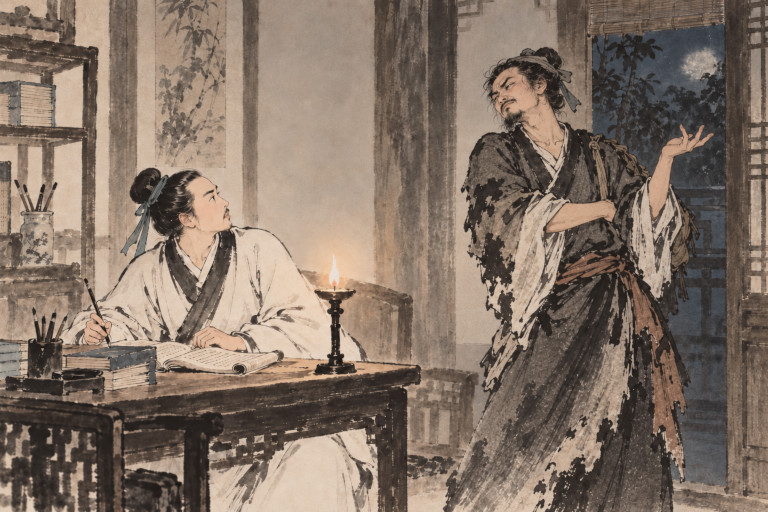
The thief clearly possessed a remarkable memory, perhaps far better than Zeng’s. Yet natural ability alone did not determine the course of their lives. Zeng persisted in his studies and eventually became a major figure in Chinese history, while the gifted thief disappeared into obscurity.
There is an old principle: diligence can compensate for what talent lacks. A little effort may seem insignificant, but effort accumulated day after day can accomplish what natural ability alone cannot.
Tiandao chouqin (天道酬勤) — Heaven rewards diligence. Great achievement is inseparable from sustained effort. With each measure of labor comes a measure of gain; accumulated over time, the small can become great, and what once seemed impossible can become a miracle.
Never tire of learning
A mouse with only one escape hole is easily caught.
One dark night, a leader took a group of young mice out in search of food. In a kitchen, they discovered a trash can full of leftovers. To the hungry mice, it was a treasure.
As they rummaged happily through their discovery, the terrifying cry of a large tabby cat suddenly rang out. The mice scattered in panic, but the cat gave chase. Two of the young mice were cornered, and just as the cat was about to pounce, fierce barking erupted nearby.
The cat froze. Hearing what sounded like an angry dog, it turned and fled.
Only then did the mouse leader emerge from behind the trash can.
“I have always told you that there is no harm in learning another language,” he said. “This time, it saved your lives.”
“One more skill, one more path.” Learning should never end. Every useful skill enlarges the range of choices available to us. Those who continue learning throughout life are better prepared when circumstances change — and sometimes, the knowledge that once seemed unnecessary becomes precisely what is needed.
Translated by Joseph Wu
Follow us on X, Facebook, or Pinterest
