
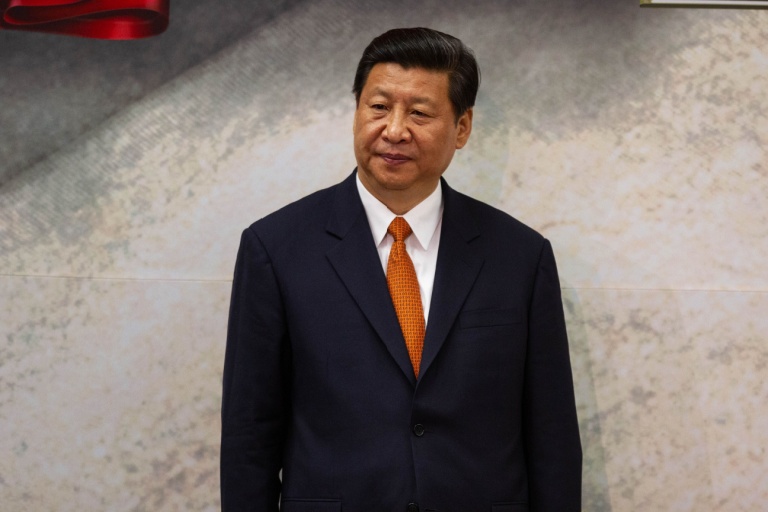
Since January 2013, when Xi Jinping launched the “anti-corruption, fight tigers” campaign at the 18th Central Commission for Discipline Inspection’s Second Plenary Session, nearly 13 years have passed. The irony, however, is that the more they fight corruption, the more corruption grows. For example, in 2024, 92 centrally managed officials were investigated — the highest number since the 18th Party Congress. Among them, 37 officials each embezzled over 100 million yuan, also the highest number since the 18th Congress.
A preliminary tally of officials investigated during Xi’s 13 years in power who were “100-million-yuan corrupt officials” shows: 100 senior officials at the vice-provincial and ministerial level or above, as well as other centrally managed cadres; 36 at the bureau-director level; 28 from other state-owned enterprises and institutions; and 3 “small officials with big corruption.” In total, 167 individuals. And this is only the official, publicized data.
Why has the CCP produced 167 corrupt officials each embezzling over 100 million yuan within just 13 years? This question warrants thoughtful consideration by anyone concerned with China’s future. This article will explore at least three possible main reasons for this paradox.

1. Absolute power inevitably leads to absolute corruption
The British political thinker Lord Acton once said: “Power tends to corrupt, and absolute power corrupts absolutely.” This phrase clearly describes the relationship between power, absolute power, and corruption. It is very fitting when used to explain why the CCP has produced the highest number of mega-corrupt officials in the world.
After Xi came to power, he initiated a process that transitioned from “centralizing power” to “totalitarian power.” In 2022, after securing his “third term” at the 20th Party Congress, Xi reached the peak of his personal totalitarianism. From the Politburo Standing Committee to the Politburo, the Central Committee, and the Central Military Commission, all key positions in the CCP’s highest organs were held by people whom Xi personally vetted.
At that point, the hallmark of Xi’s rule became “absolute loyalty” to Xi, “absolute obedience” to Xi, and “absolute protection” of Xi. Take Lai Xiaomin, who accepted bribes of more than 1.788 billion yuan. Within China, Huarong Asset Management wielded unchecked power. Lai once said, “The Party Secretary, Chairman, and legal representative were all chosen by me. Even the Discipline Commission Secretary was under my Party Committee. How much authority could he really have? He was my subordinate. It was difficult for him to supervise me.”
Wang Pinghua, former chairman of Huarong International, said, “Basically, whatever Lai said, that’s what we did. Whether you kept your official position, how much performance bonus you got, what resources you could secure for your business — all depended on Lai’s single pen. If you opposed him once, you might have a chance to survive. Twice or three times? Your post would likely be reassigned, because we saw it happen in front of our eyes.” Lai turned Huarong into his personal fiefdom, with all internal and external oversight rendered useless.
How many regulatory agencies were supposed to oversee Huarong? Let’s list them: the State Council, the State-owned Assets Supervision and Administration Commission, the Ministry of Finance, the National Audit Office, the Central Commission for Discipline Inspection, the Ministry of Supervision, the China Securities Regulatory Commission, the Banking Regulatory Commission, the Insurance Regulatory Commission, and so on. Within the company itself, there were also Party Committees and Discipline Committees. Yet, as Lai’s corruption grew from 1 million to 10 million to 100 million to 1 billion yuan, none of these agencies noticed. Only after he reached 1.8 billion did they finally “discover” it. Where were all these supervisory bodies before?
The most significant flaw of “absolute power” is the lack of adequate supervision and checks. The inevitable result is:
“Superiors suppress subordinates, one level pressing down on the next, all the way down to the farmers. Subordinates deceive superiors, one level tricking the next, all the way up to the General Secretary.”

2. The CCP’s anti-corruption campaign is not real, but selective
Xi has often made fierce remarks about fighting corruption. For example, he once said:
“Under the rule of law, no one can harbor illusions, no one can expect special treatment outside the law, and there are no ‘iron-cap princes.’” However, in reality, Xi’s anti-corruption campaign does allow for immunity and does have “iron-cap princes.” As long as Jiang Zemin and Zeng Qinghong did not oppose Xi being the “core” leader or his third term, Xi gave them leeway. This leeway created massive loopholes in Xi’s anti-corruption drive. From top to bottom, batches of “two-faced people” deceived Xi above and oppressed the people below, while engaging in massive power, money, and sex trades.
3. The 26-year persecution of Falun Gong is one of the most important reasons
On July 20, 1999, CCP dictator Jiang Zemin, fearing that the large number of people practicing Falun Gong could threaten his power, mobilized the entire state apparatus to launch a brutal persecution of Falun Gong. Falun Gong’s core values are “Truthfulness, Compassion, Forbearance.” The CCP’s 26-year campaign against Falun Gong has instead been based on “lies, evil, and struggle.” This state-sponsored “lies, evil, and struggle” created the best environment for corruption and the rise of mega-graft officials.
In Xi’s 13 years in power, 778 vice-provincial-level and above officials, including other centrally managed cadres, have been investigated. Among them, 167 were mega-corrupt officials. Every single one was an expert in “lies, evil, and struggle,” with no moral bottom line.
The CCP’s ongoing 26-year persecution of Falun Gong has fundamentally destroyed morality, eroded the rule of law, and poisoned people’s hearts. This is one of the most important reasons why the more the CCP fights corruption, the more corrupt it becomes, and why the number of mega-corrupt officials continues to rise.
Follow us on X, Facebook, or Pinterest
