

The link between acetaminophen and autism is stirring debate, as recent government claims question the drug’s safety during pregnancy, raising urgent questions about science, politics, and public trust.
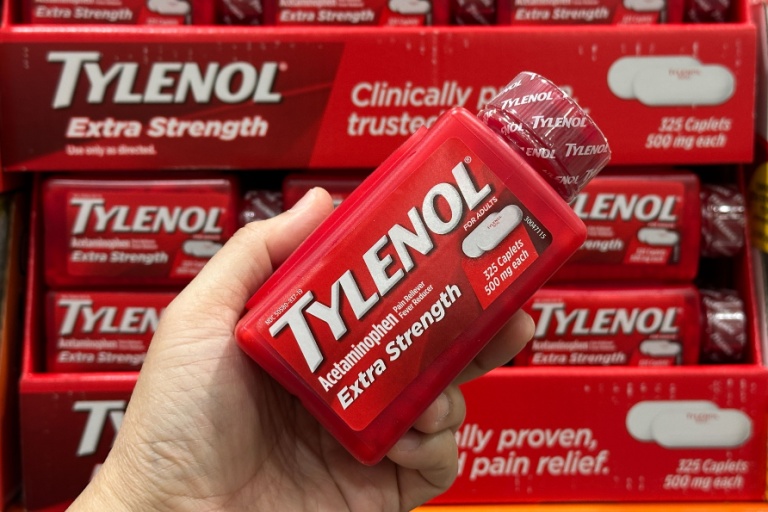
On September 22, 2025, the White House issued an unusual announcement: President Donald Trump’s administration declared that acetaminophen — the pain reliever better known as Tylenol — may be linked to autism when taken during pregnancy. The statement, posted on the official .gov website, cited large-scale cohort studies, reviews from Harvard and Johns Hopkins, and even a 2021 international consensus recommending caution.
Within hours, headlines from major outlets dismissed the claim as “unproven,” “politicized,” or “fearmongering.” The clash quickly moved beyond medical science into a cultural battlefield: Who gets to decide what counts as “settled science,” and how do politics and media shape what the public believes about health?
Examining the acetaminophen and autism link: Science, politics, and public fear
Acetaminophen has been on pharmacy shelves for more than half a century, used by millions of Americans for headaches, fevers, and muscle aches. Pregnant women have long been told it was the “safest” over-the-counter painkiller, especially compared to aspirin or ibuprofen, which carry risks of bleeding or birth complications. For decades, pediatricians and obstetricians treated it as benign.
But beginning in the 2000s, researchers started publishing findings suggesting a possible association between prenatal acetaminophen exposure and neurodevelopmental disorders like autism spectrum disorder (ASD) and ADHD. Studies from Harvard, Johns Hopkins, and Mount Sinai found statistically significant links, although correlation does not necessarily imply causation. A 2021 international consensus statement urged “precautionary action” for pregnant women.
The case for caution
Proponents of Trump’s announcement argue that the administration is simply recognizing evidence that has been accumulating for years. Harvard epidemiologist Andrea Baccarelli noted in 2021 that “we found evidence of an association between exposure to acetaminophen during pregnancy and increased incidence of neurodevelopmental disorders in children.”
From this perspective, the White House is reframing public health guidance in light of science that has been “hiding in plain sight.” Supporters say the establishment media’s dismissals echo earlier controversies, such as the tobacco industry’s decades-long resistance to linking cigarettes with lung cancer, or the early skepticism around lead exposure in gasoline and paint.
The case for skepticism
Critics, however, point out the obvious caveat: association does not prove causation. Autism diagnoses have increased dramatically in recent decades, but most experts attribute this to changing diagnostic criteria, increased awareness, and broader definitions — not necessarily an environmental cause.
Organizations like the American College of Obstetricians and Gynecologists (ACOG) maintain that acetaminophen remains the safest option for pregnant women. They warn that discouraging its use could push women toward alternatives that are demonstrably more harmful. “The danger,” one pediatric neurologist told The New York Times, “is that parents may panic, avoid treatment, and end up doing more harm than good.”
It’s also a matter of timing: Why would you make this announcement now? Skeptics suggest political theater. Trump has often positioned himself as the truth-teller against “fake news,” and the White House’s official article accuses the media of “frenzied hyperventilation” and “smears.” For critics, this language undermines the credibility of what could otherwise be an essential scientific discussion.
Media, politics, and the framing of science
The deeper conflict is not over acetaminophen alone, but over who controls the narrative of scientific risk. In recent years, the COVID-19 pandemic blurred the line between science, politics, and media messaging. Government guidance changed rapidly, journalists amplified expert disagreements, and citizens were left unsure of whom to trust.
This latest clash plays into that distrust. If the administration is correct, media skepticism could be a cover-up. If the administration is wrong, its claims could fuel needless fear among pregnant women and further erode public trust in institutions. Either way, the episode highlights the fragility of the relationship between science and democracy.
Lessons from history: Thalidomide, tobacco, and the ghosts of certainty
The acetaminophen debate does not exist in a vacuum. It belongs to a long lineage of public health controversies where ordinary household products later revealed unsettling consequences — or, in some cases, where fears proved misplaced, but permanently scarred public trust.
In the 1950s and early 1960s, thalidomide was widely prescribed to pregnant women in Europe for morning sickness. It was marketed as safe, modern, and scientifically advanced. Only years later did doctors realize its catastrophic effects: thousands of babies born with limb deformities, blindness, and other severe disabilities. The scandal reshaped global drug regulation, leading to stricter approval processes by the FDA and the establishment of pharmacovigilance as a discipline. The thalidomide tragedy remains a cautionary tale often invoked whenever a common drug is reexamined for hidden risks.
Cigarettes offer another lesson. For decades, the tobacco industry successfully cast doubt on the link between smoking and lung cancer. Industry-funded scientists argued that the data were inconclusive, suggesting that correlation did not imply causation. It took relentless epidemiological research, surgeon general warnings, and public health campaigns to finally shift the consensus. By then, millions had died preventable deaths.
Closer to home, American parents may recall controversies over lead in paint and gasoline. For years, regulators insisted exposure was negligible. Yet research in the 1970s and 1980s revealed that even trace amounts of lead could impair children’s cognitive development. Once again, industry and government institutions were accused of dragging their feet, prioritizing economic interests over public safety.
These historical echoes do not prove that acetaminophen is unsafe; they remind us that medical consensus is rarely static. The line between precaution and panic has always been perilously thin. When the government refers to “possible associations” and the press dismisses them as “unproven,” both sides are operating within a cultural memory haunted by decades of delayed recognition and contested truths.

A cultural mirror
The acetaminophen debate mirrors broader anxieties about health, motherhood, and authority. Autism itself carries heavy cultural weight — parents desperately seek explanations, advocacy groups demand recognition, and political actors sometimes exploit the condition as evidence of societal failure.
The image of a common household drug being linked to a lifelong condition resonates with both legitimate parental concern and conspiracy-tinged suspicion of “big pharma.” Media dismissal risks appearing callous, while political amplification risks inflaming fear.
What comes next
The administration has pledged “bold new initiatives” to address autism, though details remain sparse. Medical institutions are likely to respond with carefully worded clarifications, urging pregnant women not to panic, but to consult their doctors. Meanwhile, the public will be caught between dueling headlines: “Trump warns of autism link” versus “Experts say claims unproven.”
The real challenge is not acetaminophen alone but how societies arbitrate contested science in a polarized age. When a President frames evidence as “truth suppressed by fake news,” and when media outlets dismiss emerging studies out of fear of legitimizing political rhetoric, the result is a public left more confused than informed.
Conclusion: A fragile trust
For families facing the prospect of pregnancy, the stakes are not abstract. A mother with a fever in her third trimester may have to choose between two risks: untreated illness or a drug now clouded by controversy.
Science thrives on uncertainty, but politics and media thrive on certainty. Somewhere in between lies the truth — messy, provisional, and desperately in need of careful communication.
Whether Trump’s warning will be remembered as foresight or fearmongering, it forces Americans to confront an uncomfortable question: In an era where both science and politics are distrusted, who do we believe when the medicine cabinet becomes political?
Follow us on X, Facebook, or Pinterest
