
Truth, once a shared compass, has splintered into a thousand glowing screens.
In Beijing, it is curated by decree. “Party media must have the Party’s surname,” Xi Jinping reminds his editors. In the West, truth drifts under the softer gravity of clicks, advertisers, and partisan appetite.
The tools differ, but the effect is often the same: power tunes the narrative. And in between these orchestrations stands the modern reader, wired into everything yet disoriented, asking the most ancient question — how do we know what’s real?
When the Party defines truth: China’s ‘guidance of public opinion’
In China, truth in media has never been about independence.
In 2016, during a visit to Xinhua, President Xi Jinping declared that “Party media must have the Party’s surname.” Editors were told they must “speak for the Party” and “love, protect, and serve the Party.” This wasn’t rhetoric — it was policy.
Under the guiding principle of 舆论导向 (yulun daoxiang) — “guidance of public opinion” — truth serves social harmony and political stability. Mao once called the press “a mouthpiece of the Party.” Xi has simply reinforced the tradition.
Document No. 9, a leaked internal memo from 2013, explicitly warns against “Western constitutional democracy,” “universal values,” and “Western-style journalism.” In this framework, “freedom of the press” is not a safeguard — it’s a threat.
Chinese media follows a strict hierarchy. Xinhua and People’s Daily set the tone. Local and commercial outlets follow. As one Shanghai editor explained anonymously: “It’s not about suppressing the truth. It’s about aligning the truth with the right mood.”
This is not secrecy for secrecy’s sake. It’s a functional ideology that shapes a reality in which the Party’s goals — optimism, unity, and stability — define what is true.
What Chinese citizens say — when they can
Reliable surveys on media trust in China are rare. But on semi-anonymous forums — Reddit’s r/China_irl, diaspora sites like Pincong, or quickly-deleted Weibo threads — a more candid tone emerges.
“Everyone knows CCTV is propaganda,” one user writes. “But that doesn’t mean everything is false. You just read between the lines.” Another adds: “You learn to decode — when they stop reporting something, that’s the story.”
For many young Chinese netizens, state media is partial but predictable. Western media, by contrast, is viewed with suspicion, especially after years of perceived moralizing or hostile coverage. “The West’s media calls us brainwashed,” one Weibo post reads, “but they also have their own bosses and sponsors.”
The result is a kind of paradoxical literacy. Many Chinese citizens are among the most sophisticated readers of propaganda in the world. They understand euphemisms, know which keywords trigger censorship, and can interpret silence as a signal.
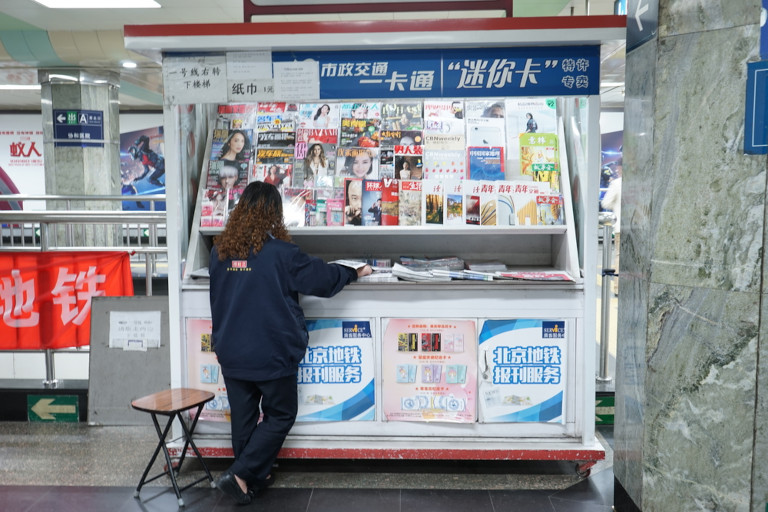
As one Douban user joked: “It’s like walking through a garden. Some flowers are covered, but you can still smell them.”
This isn’t apathy. It’s adaptation. In a controlled environment, truth becomes a personal craft.
When algorithms carry ideology across borders
China’s domestic media strategy is no longer confined within its borders. Apps like TikTok, WeChat, and Temu export not just content, but architecture — blending corporate goals with national imperatives.
Article 7 of China’s 2017 National Intelligence Law requires “any organization or citizen” to assist with state intelligence efforts. Meanwhile, the 2022 algorithm law allows the government to guide recommendation systems to promote “positive energy.”
The implication: algorithms can be steered like editorials.
TikTok says its global data is stored separately under “Project Texas,” but leaked moderation rules once showed videos referencing Tiananmen or Tibetan independence were suppressed. Though the company later claimed those guidelines were outdated, the incident highlighted a structural truth — corporate survival depends, to some degree, on political alignment.
On Chinese platforms like Douyin, content that promotes “low confidence” or “negative emotion” is often quietly downranked. On WeChat, news accounts must register with real names, and posts can be retroactively deleted.
Globally, users may not see People’s Daily — but they still scroll platforms shaped by the same logic of curated positivity. Propaganda, it seems, has learned to dance to a beat.
The West’s softer steering: Bias by omission
Western critics often highlight China’s explicit controls. But influence need not be top-down to be effective.
In liberal democracies, narrative shaping is driven by incentives: advertisers, clicks, subscriptions, and brand loyalty. Newsrooms aren’t told what to write — they learn what sells.
Consider the run-up to the 2003 Iraq War. The New York Times later admitted its reporting relied too heavily on government sources and failed to challenge official claims. Not because editors were ordered to lie — but because access mattered.
Today, the same dynamic is amplified by platforms. The “Twitter Files,” released after Elon Musk’s acquisition of the platform, revealed complex moderation requests from U.S. agencies during the pandemic and the 2020 election. While often aimed at limiting misinformation, they also blurred the line between public health guidance and political curation.
Media bias in the West often emerges not through censorship, but through omission. Local anchors at Sinclair-owned stations were required to read centrally scripted warnings about “fake news.” Cable networks like Fox and MSNBC build audiences through ideological reinforcement. Even independent voices — from Tucker Carlson to Russell Brand — operate within the same attention economy. Their contrarian stance is itself a brand.
Where China’s media problem is overcontrol, the West’s may be oversaturation. Either way, the result is the same: fractured truth.
Rebuilding trust through your own ‘truth workflow’
So how can we navigate this?
Plato warned that most people live in a cave, mistaking shadows for reality. In today’s world, those shadows flicker on screens shaped by algorithmic feeds.
Aristotle believed truth arises when statements match observable facts — a call for evidence and cross-checking. Socrates advocated persistent questioning — not knowing, but interrogating.
In the modern world, truth becomes a workflow — a daily discipline of intellectual hygiene. A few principles can help:
- Diversify sources. Read Chinese, Western, and regional outlets. Use translation tools.
- Trace incentives. Who owns the outlet? Who benefits from the story? Who risks harm?
- Follow original documents. Find speeches, laws, and filings — not just summaries.
- Use AI wisely. Let models highlight contradictions, detect bias, and trace sources — but apply your own judgment.
- Archive what matters. Screenshots and web archives can preserve inconvenient truths.
As Hannah Arendt once wrote, when facts become indistinguishable from opinion, freedom itself is at risk. Without a shared reality, collective action becomes impossible.
Closing thought: The discipline of seeing clearly
Whether in Beijing or Boston, information flows through systems that are neither entirely free nor fully controlled. One is shaped by ideology, the other by capital.
Between them stands the individual — curious, fallible, and responsible.
The goal is not to pick a side in a propaganda war, but to reclaim agency. To think for oneself in a world that rewards performance over truth.
Truth, in this landscape, is less a destination than a practice.
And perhaps the most radical act is to question everything — including your own assumptions.
Follow us on X, Facebook, or Pinterest
