
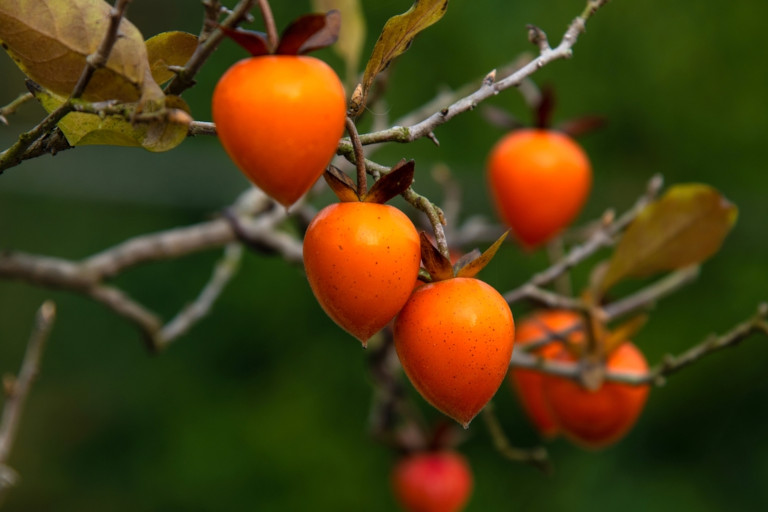
In many rural communities, elders often give the same piece of advice when fruit ripens on the trees: Don’t pick everything. Leave a few behind, because leaving room matters.
At first, this may seem impractical. After all, the fruit was grown with care and effort. But the elders explain it differently. A fruit tree, they say, is like a parent that has raised its children. You may harvest what it produces, but taking everything shows no gratitude. Leaving a portion behind is a way of acknowledging what you have received and showing respect for the natural cycle that made it possible.
There is also a quieter generosity in this practice. Fruit left on the branches may feed travelers who pass through who have nothing to eat. What you planted for yourself can still offer help to others. In this way, sharing becomes an expression of gratitude rather than sacrifice.
Another reason, elders say, is for the birds.
One village had long been home to magpies. Every winter, the birds nested in fruit trees to survive the cold. One year, an unusually harsh winter brought heavy snow and left hundreds of magpies without food. Many froze to death overnight. The following spring, the persimmon trees bloomed again — but soon an unfamiliar caterpillar infestation spread, nearly destroying the entire harvest.
After that year, villagers began leaving some persimmons on the trees each autumn. The fruit sustained magpies through the winter, and when spring came, the birds stayed, feeding on insects in the trees. The harvest recovered.
Whether one views this as a coincidence or a consequence, the lesson is simple. Nature is interconnected. Making space for others — people, animals, or the environment — often creates conditions in which everyone can continue to thrive.
A lesson in tolerance
A similar idea appears in a well-known story from the Song Dynasty.
Shao Kangjie, a respected philosopher deeply versed in the I Ching, was related to the Neo-Confucian scholars Cheng Hao and Cheng Yi and was acquainted with the poet Su Dongpo. The Cheng brothers and Su, however, did not get along.
When Shao fell gravely ill, the Cheng brothers stayed by his bedside. One day, a visitor arrived. When they learned it was Su Dongpo, they ordered that he not be allowed in. Shao, already too weak to speak, raised his hands and gestured as if leaving a gap.
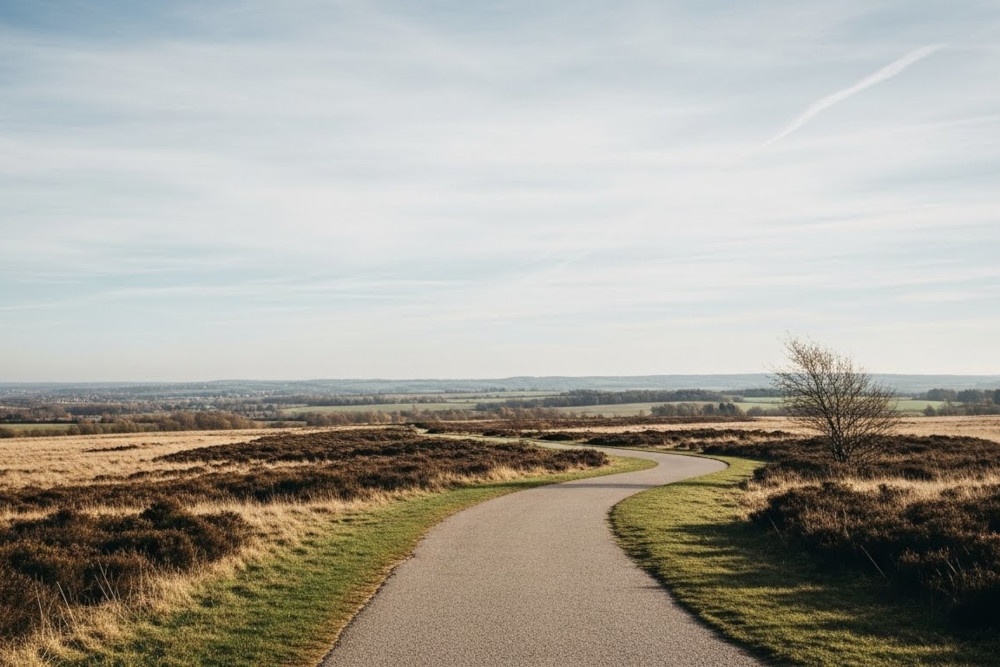
The brothers did not understand. After a moment, Shao regained enough strength to say: “Leave the road ahead a little wider, so those who come later can walk through.” With that, he passed away.
His words captured a lifelong principle: Benefits should not be taken to the limit, blessings should not be exhausted, and power should not be used without restraint.
Why leaving room matters
Life rarely unfolds without disagreement. In any society, there are people who are open-minded and those who are narrow or resentful. Without tolerance, coexistence becomes difficult.
Leaving room does not mean weakness. It means refusing to push situations to extremes — emotionally or practically. When conflicts arise, restraint and understanding often make resolution possible. They also build trust, allowing relationships to recover rather than collapse.
This principle applies just as much to daily life. A sculptor leaves extra material when shaping a face, adjusting gradually rather than cutting too far. A cook adds salt slowly, tasting along the way. A tailor is asked to shorten pants cautiously, knowing the fabric cannot be put back once cut. In each case, flexibility comes from not going too far too soon.

Making space for yourself and others
Leaving room has two sides.
First, it protects you. Avoiding absolute statements and irreversible actions keeps future options open. It allows room to adjust as circumstances change.
Second, leaving room for others ultimately benefits you as well. Cutting off someone else’s path often narrows your own. Making life unnecessarily hard for others tends to return in unexpected ways. When people are allowed to move forward with dignity, cooperation becomes possible.
A well-known example comes from the Song Dynasty official Lü Mengzheng. Early in his career, another official openly questioned whether he was fit for high office. Lü smiled and pretended not to hear. When his companions wanted to confront the man, Lü stopped them, saying that knowing the person’s name would only make the insult harder to forget. His restraint impressed those present. Later, the same official visited Lü’s home to apologize, and the two became allies.
The quiet strength of restraint
In both life and work, leaving room offers resilience. Speaking with care, acting with moderation, and avoiding extremes allow people to respond calmly when situations shift unexpectedly. No matter how capable a person may be, forces beyond control will always exist.
Equally important is making space for others. Patience, generosity, and tolerance foster stability and trust, not only for those around you, but also for yourself. When you recognize how closely your life is connected to everyone else, restraint becomes not a loss, but a form of quiet strength — one that allows life to continue moving forward.
Translated by Joseph Wu
Follow us on X, Facebook, or Pinterest
