
Perched atop Yuanshan (Round Hill) and overlooking Taipei City and the Keelung River, the Grand Hotel Taipei is one of Taiwan’s most recognizable landmarks. With its magnificent palace-style architecture and rich historical legacy, the hotel has become a symbol of elegance, hospitality, and cultural heritage.
The Grand Hotel was established in 1952 at the suggestion of Madame Chiang Kai-shek (Soong Mei-ling), who envisioned a world-class venue capable of hosting foreign dignitaries and distinguished international guests. Since then, it has played a significant role in Taiwan’s diplomatic, political, and tourism development.
A mission beyond hospitality
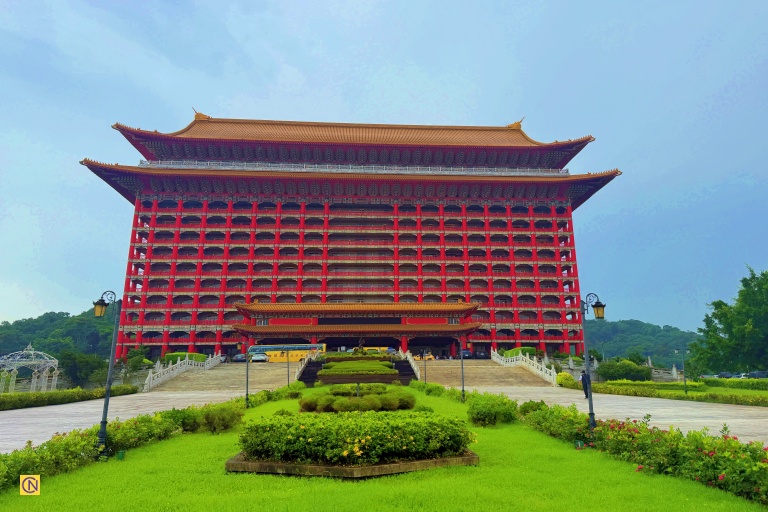
The 14-story hotel, originally built with approximately 500 guest rooms, is owned by the Duen-Mou Foundation of Taiwan, a non-profit organization supervised by the Ministry of Transportation and Communications (MOTC). The foundation was established to promote international tourism, cultivate hospitality professionals, strengthen cultural exchanges, and enhance Taiwan’s friendship with the global community.
Over the decades, the Grand Hotel has welcomed more than 100 heads of state and members of royal families, including U.S. President Dwight D. Eisenhower, Shah Mohammad Reza Pahlavi of Iran, King Tāufaʻāhau Tupou IV of Tonga, and King Bhumibol Adulyadej of Thailand.
Witness to Taiwan’s modern history
Beyond serving as a luxury hotel, the Grand Hotel has been the setting for many significant events in Taiwan’s modern history. Important political meetings, national conferences, constitutional discussions, and cross-strait negotiations have taken place within its walls. During critical moments in Taiwan’s diplomatic history, the hotel also hosted discussions related to Taiwan–U.S. relations and other international affairs.
As a result, the Grand Hotel stands not only as a hospitality landmark but also as a silent witness to many of the events that helped shape contemporary Taiwan.
A masterpiece of Chinese palace architecture
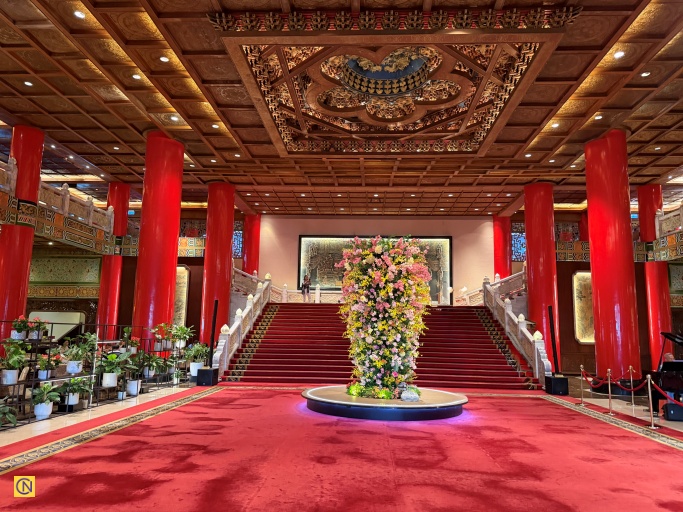
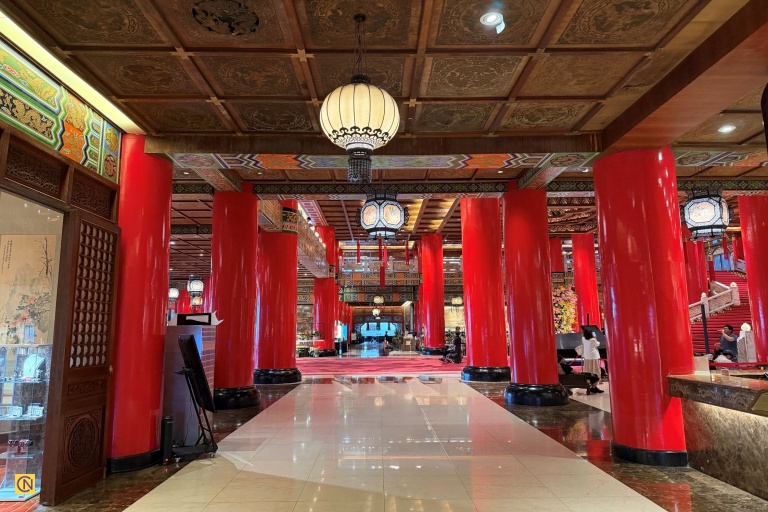
The Grand Hotel is renowned for its striking traditional Chinese architectural style. Supported by massive red columns and crowned with a gleaming golden-tiled roof, the structure combines classical Chinese aesthetics with modern engineering techniques.
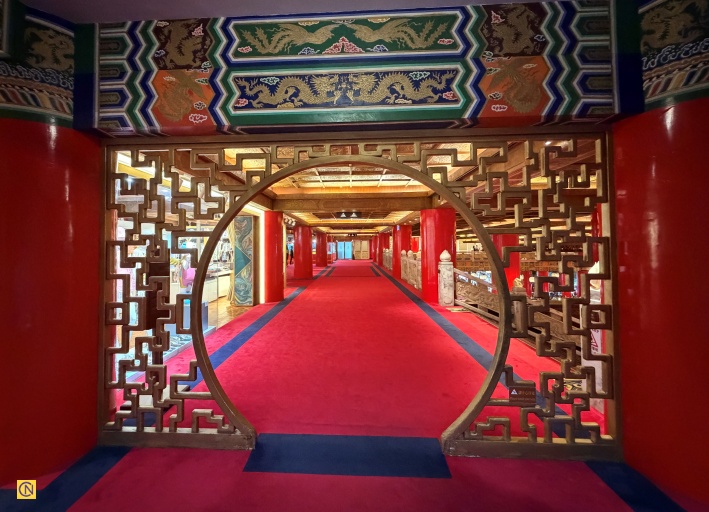
Its imposing design resembles an imperial palace, while intricate decorations showcase the elegance of traditional Chinese art. The hotel’s elevated location further enhances its grandeur, making it one of the most photographed buildings in Taiwan.
The legendary Dragon Palace
One of the most fascinating aspects of the Grand Hotel is its extensive use of dragon motifs. In Chinese culture, dragons symbolize power, prosperity, wisdom, and good fortune.
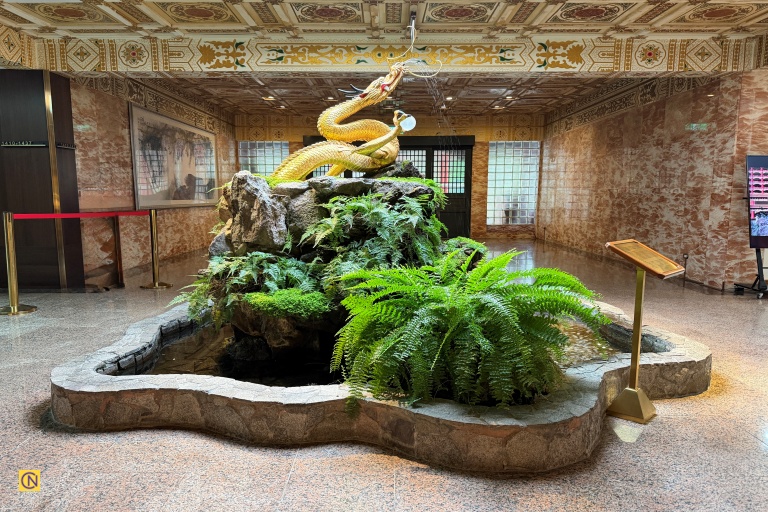
According to hotel estimates, more than 220,000 dragon images, carvings, and decorative elements can be found throughout the property, both inside and outside the building. This remarkable feature has earned the hotel the nickname “The Dragon Palace.”
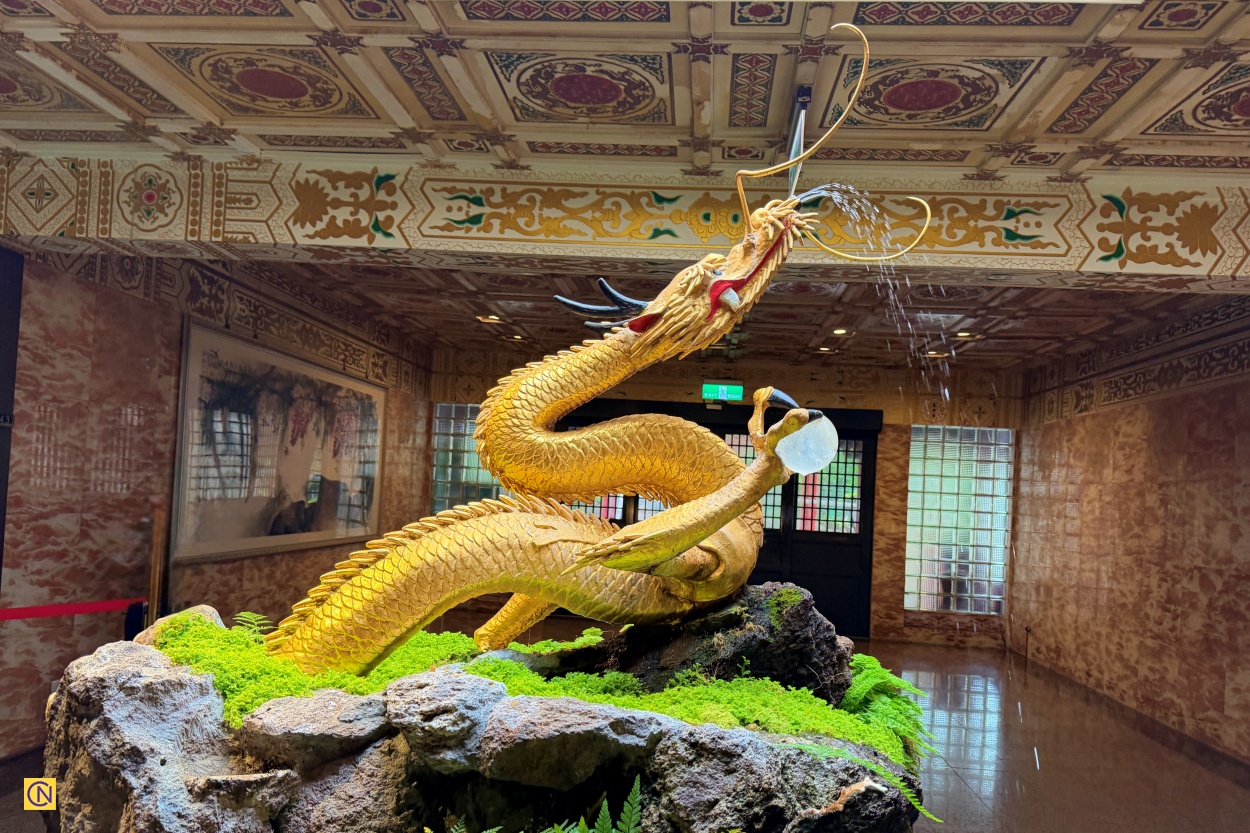
Among its treasures is the celebrated Golden Dragon displayed near the Golden Dragon Restaurant. Crafted from bronze and plated with 24-karat gold, the dragon is believed to be over a century old. Interestingly, it features three claws rather than the four or five claws commonly seen in traditional Chinese dragon imagery. Historically, five-clawed dragons were reserved for emperors, while three- and four-clawed dragons were used by nobles and commoners.
Mystery beneath the palace
Perhaps the most intriguing feature of the Grand Hotel lies beneath the building itself. Hidden underground are two secret tunnels measuring approximately 67 and 85 meters in length.
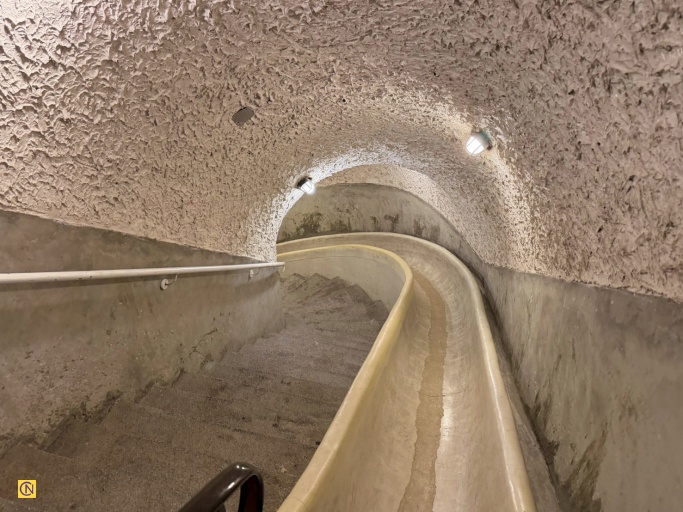
For decades, these hidden passageways have fueled mystery and speculation. According to a popular legend, they were secret escape tunnels built for President Chiang Kai-shek (the Generalissimo) and his wife, Soong Mei-ling, should the Chinese Communist Regime attack Taiwan. While the story has captured the imagination of many Taiwanese, the tunnels were in fact designed as emergency evacuation routes for guests and dignitaries during an era of military uncertainty.
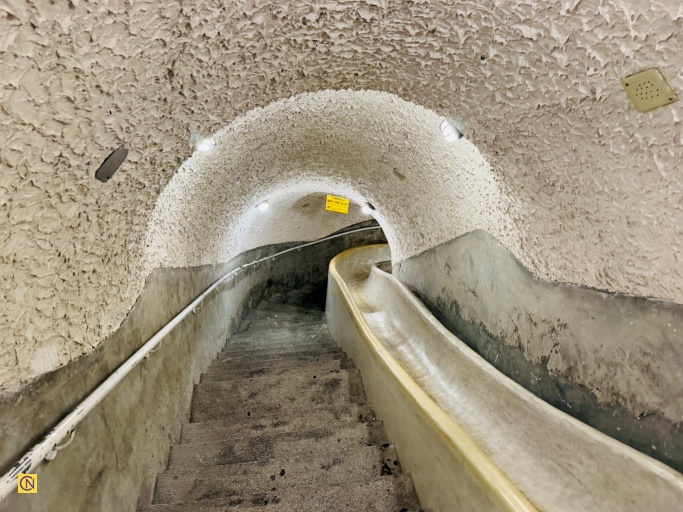
The tunnels, approximately 2.3 meters high and 2.1 meters wide, extend from the hotel to nearby parks and open areas. Today, they remain one of the hotel’s most popular attractions, offering visitors a glimpse into Taiwan’s Cold War-era history.
Preserving memories at the Grand Hotel Museum
Visitors interested in history can explore the Grand Hotel Museum, which houses a collection of historical documents, photographs, artifacts, and personal items associated with notable guests and major events. The exhibits provide valuable insights into Taiwan’s political, diplomatic, and economic development over the past several decades, highlighting the hotel’s unique role in the nation’s history.
A timeless attraction
The Grand Hotel has received international acclaim for both its architecture and hospitality. It was once named among the world’s leading hotels by prominent international travel publications and continues to be regarded as one of Asia’s most distinctive hotels.
Combining breathtaking architecture, panoramic views, cultural significance, and fascinating historical stories, the Grand Hotel remains one of Taiwan’s most beloved attractions. Whether visitors come to admire its grandeur, learn about its past, or simply enjoy its magnificent setting, the Grand Hotel offers an unforgettable experience that bridges history, culture, and modern hospitality.
Follow us on X, Facebook, or Pinterest
