
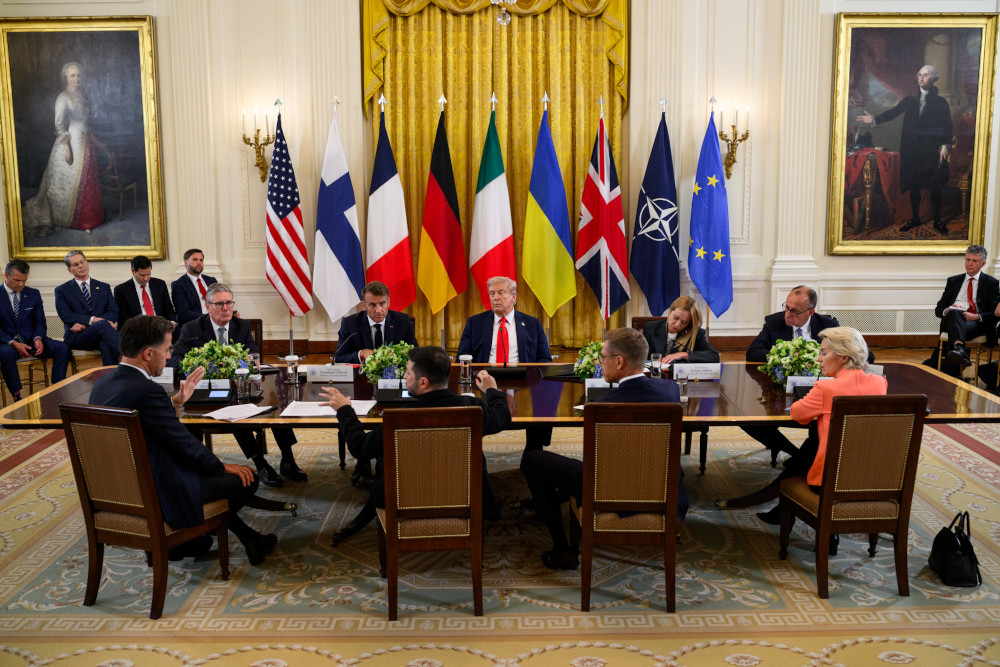
After meeting with Russian President Vladimir Putin in Alaska on August 15, U.S. President Donald Trump quickly held talks at the White House with Ukrainian President Volodymyr Zelensky and several European leaders. His plan was straightforward: He wanted the Russian and Ukrainian leaders to sit down as soon as possible to advance peace talks.
But events soon went off course. Just two days later, Russian Foreign Minister Sergey Lavrov announced publicly that Moscow had no plans for negotiations with Kyiv. Trump expressed his frustration in the Oval Office, warning that if there was no substantial progress within two weeks, the United States would consider imposing large-scale sanctions on Russia.
The “two-week” deadline is something Trump has used repeatedly in the past, but journalist Fang Wei points out that the deeper issue is not the timetable itself. The real question is why Trump continues to misjudge Putin.
Why Trump struggles to assess Putin
Trump is a shrewd businessman and politician with decades of experience and numerous negotiations under his belt. Yet he has often found it challenging to assess Putin accurately. The reason is actually simple: Trump is not a dictator.
For leaders like Putin, North Korea’s Kim Jong-un, and even Chinese Communist Party (CCP) leader Xi Jinping, the top priority is not national prosperity but personal security. Their central concern is whether their regimes can survive, their thrones remain secure, and their lives stay safe.
Dictators communicate on this basis. Democratic leaders, especially one like Trump with a business background, tend to argue from the perspective of national interest and mutual benefit. This disconnect leads to talking past one another.
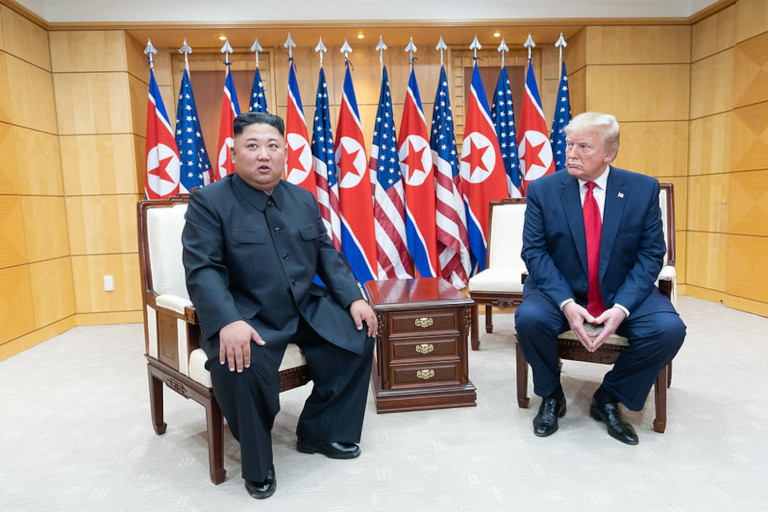
Trump’s economic blueprint for North Korea offers a vivid example. Between 2017 and 2019, he met with Kim several times, even crossing into North Korea at Panmunjom to extend the olive branch of “economic prosperity in exchange for denuclearization.” But Kim’s real worry was different: If the North Korean people became wealthier and more informed, could he still hold on to power? Consequently, Trump’s blueprint was never taken seriously in Pyongyang.
The same dynamic is at play with Putin today. The war in Ukraine has cost Russia more than US$500 billion in military spending and resulted in over a million casualties, yet it has brought limited gains. Russia has neither captured major Ukrainian cities nor secured enough territory to bargain from a position of strength. For Putin, entering negotiations now would amount to admitting defeat, thereby undermining the authority he has cultivated over the past 25 years. His only option to stay in power is to keep fighting. As long as the war continues, he can maintain his image as a strongman and preserve his rule.
This survival logic of dictators is something Trump struggles to grasp.
Putin’s ‘apprenticeship’ with China
Putin’s tactics bear a striking resemblance to strategies the CCP has used over the past few decades. Two classic examples stand out.
First is the “fight and talk” strategy of the Chinese Civil War. In 1945 and 1946, the leader of the communist forces, Mao Zedong, traveled to Chongqing to negotiate with Nationalist leader Chiang Kai-shek, appearing to seek peace. Meanwhile, he secretly redeployed elite troops to Manchuria. With Soviet support, Mao expanded his forces to 250,000 soldiers. Just three years later, the CCP overthrew the Nationalist government. This method of negotiating while continuing to build military strength is precisely what Russia is doing today — releasing smoke signals about “peace talks” while stalling for time and reinforcing its army.
The second example is China’s entry into the World Trade Organization in 2001. At the time, the CCP pledged to open its financial, telecommunications, and logistics sectors, strengthen intellectual property rights, and cut subsidies to state-owned enterprises. Yet in the two decades since, most of those promises have gone unfulfilled. Markets remain closed, piracy is rampant, and subsidies are widespread. What the international community sees as a contractual obligation, the CCP treats as a tactical maneuver — promises are tools, not commitments.
Putin now follows the same playbook: Signaling a willingness to negotiate while ramping up military preparations, making verbal promises with no intent to keep them, and leaning on Chinese arms, financing, and technology to sustain the war. In many ways, Moscow has become Beijing’s apprentice.
Democracy and autocracy speak different languages
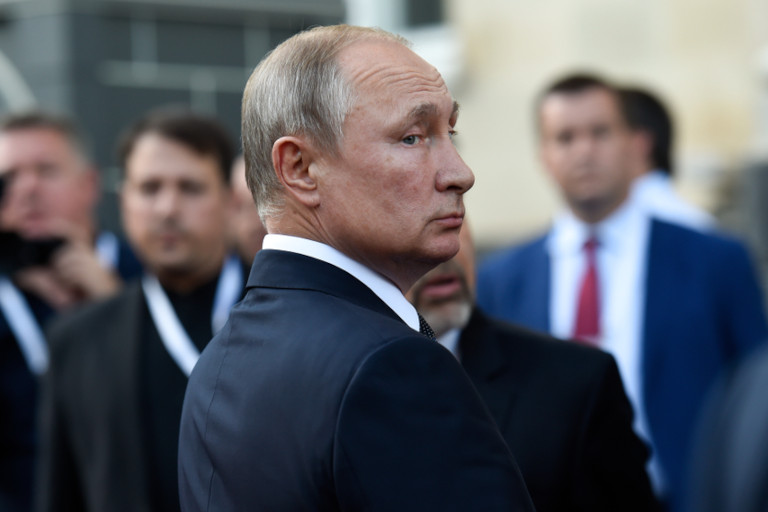
At its core, Trump’s misjudgment of Putin highlights the gulf between democratic and authoritarian thinking. Leaders in democracies weigh national interests — economic growth, social stability, and voter support. Dictators, however, focus on their own survival — how to avoid coups, suppress rivals, and retain power.
So when Trump tries to persuade Putin with talk of “prosperity,” Putin is thinking instead: “Will this threaten my hold on power?” When Trump pitches Kim Jong-un on “national interest,” Kim is calculating: “Can I still keep my throne?”
They are simply speaking different languages.
The costly lesson for Trump and the world
Trump’s strength lies in his ability to learn quickly. But until he fully grasps the survival logic of dictators, the United States and Russia are likely to remain locked in a grinding war of attrition, reminiscent of the drawn-out battles of the Somme and Verdun in World War I.
This remains Trump’s costly lesson, and one the world must also endure. The real question is not whether Trump can finally understand Putin, but whether democratic nations can hold firm against authoritarian delay and deception — and prevent the rules of freedom from being overturned by dictators’ “fight and talk” tactics.
Translated by Patty Zhang
Follow us on X, Facebook, or Pinterest
