
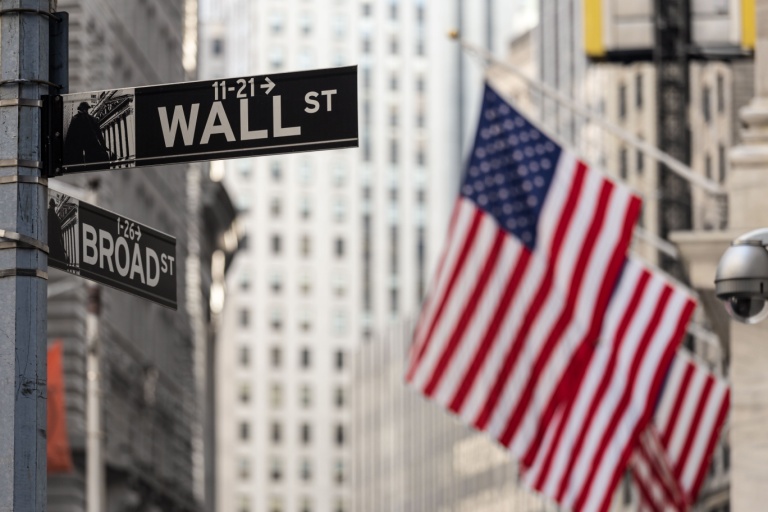
On Wall Street, the difference between survival and collapse is often measured in weekends. Behind closed doors, phone calls are made, signatures exchanged, and entire empires change hands — while the public sees only headlines and numbers. What unfolded in the fall of 2008 was not just a deal between banks, but a turning point in financial history, where ambition, fear, and quiet power reshaped the future of money itself.
When rumors turn real
On a late-summer morning in 2008, Wall Street moved in slow motion. The rumors were unmistakable: Lehman Brothers, once a titan of finance, had reached the end of its rope. As the sun set on September 14, Bank of America’s Ken Lewis received the call again — this time, not about Lehman, but about Merrill Lynch. In a move that felt both desperate and epochal, BofA agreed to acquire Merrill in an all-stock deal valued at roughly $50 billion, offering 0.8595 shares of BofA per Merrill share — a staggering 70 percent premium over Merrill’s just-closed price.
That same weekend, in emergency rooms of power at the New York Fed, Treasury Secretary Henry Paulson and Fed Chair Ben Bernanke were leaning on Ken Lewis, making clear that failure was not an option. Internal emails later revealed that regulators implied management changes would follow if the deal didn’t go through. Lewis would later testify that they had “leverage … or else it could affect the bank’s viability.”
The perfect storm
Merrill — led briefly by John Thain, and before him Stan O’Neal — was hemorrhaging. The firm had piled into collateralized debt obligations (CDOs), especially those underwritten against subprime mortgages, encouraged by Osman’s aggressive expansion. That hasty drive decimated internal resistance — the duo of risk managers who had urged caution were dismissed — and by autumn 2008, Merrill’s exposure totaled some $55 billion. On top of that, much of Merrill’s credit protection had come from AIG — helped along by the government. But when AIG nearly collapsed, that fortress crumbled.
‘It was South versus North’
In Eight Days, a New Yorker retrospective of that fateful week, one banker recollected, “It was South versus North, traditional banking–blue collar versus the trailblazers, the masters of the universe.” It was a culture clash distilled into a merger. Despite the murky motives and immense risk, both boards approved the deal by December 5, 2008.
Once the details were fully out — particularly the $21.5 billion operating loss Merrill posted in the fourth quarter — the stock plunged to its lowest point in 17 years. Lewis admitted that, had the losses been revealed earlier, he might have invoked material‑adverse‑change clauses to walk away. But with the prospect of systemic trauma and regulatory wrath hanging overhead, he swallowed hard and proceeded.
The shadow of BlackRock
Few eyes caught the full strategic nuance: By acquiring Merrill, BofA also gained almost 50 percent of BlackRock, the fast-growing asset manager. Merrill had merged its investment arm with BlackRock in 2006, giving itself nearly half of the new firm. Thus, BofA found itself holding an indirect strategic stake in one of the world’s most powerful asset managers. But the honeymoon didn’t last. By 2010-2011, BofA began divesting: A 2010 share sale reduced its stake, and by 2011 it had sold off virtually all remaining holdings — shrinking from as much as 34 percent down to near zero.
Aftermath and reckoning
The acquisition, warts and all, turned out to be among BofA’s most consequential bets. By Q1 2009, Merrill alone contributed $3.7 billion of profits out of BofA’s $4.2 billion total. By Q3, the subsidiary accounted for more than 25 percent of profits, but the integration was rocky. Mass departures of Merrill talent — those bankers dismayed by culture and uncertainty — hollowed the newly merged institution. Bonus scandals followed. A secret agreement to pay up to $5.8 billion in bonuses at Merrill during the merger was not disclosed to shareholders. This prompted an SEC fine of $33 million in 2009. Ultimately, BofA paid over $2.43 billion in class-action settlements tied to its failure to inform investors properly
Legacy
Today, Bank of America stands as the second-largest U.S. bank by assets — wielding over $3.26 trillion, with strategic wings in wealth, investment banking, and retail. But the Merrill Lynch acquisition is its ambivalent heirloom: a deal forced, toxic, yet transformative.
Merrill may have been saved — though only — but its legacy looms large in modern finance: a cautionary tale of hubris, merged cultures, and financial overreach. BlackRock, now an independent colossus, was once tethered to that fate, only to break free. Today’s regulatory architecture — Dodd‑Frank, Basel III — sits atop wreckage like this.
In the end, the Bank of America–Merrill Lynch deal shows how quickly power can shift in times of crisis. Merrill had bet too heavily on risky mortgage investments and was collapsing fast. Under pressure from the government, Bank of America stepped in to buy it, despite the massive losses.
This deal briefly gave Bank of America part ownership of BlackRock, which later grew into the world’s biggest asset manager. But the merger also led to lawsuits, fines, and the loss of public trust. Still, despite all the chaos and mistakes, Bank of America survived and grew into one of the largest banks in the U.S. today — a reminder that in finance, even the worst disasters can create unexpected winners.
Follow us on X, Facebook, or Pinterest
