
Imagine being told you could rent a genius. Not hire, not bribe, not even seduce — just rent. That’s the pitch behind GPT-5 Pro, OpenAI’s most advanced language model, which — if you believe the hype — scored a Mensa-certified IQ of 148. A number that places it squarely in the “genius” bracket, the same club as Einstein, Stephen Hawking, and that one smug guy at the pub quiz who doesn’t let you forget he “almost” got into Oxford.
But unlike your neighborhood Mensa freak, GPT-5 Pro or GPT-5 Thinking Pro isn’t some eccentric human with a cluttered loft and an obsession with Sudoku. It’s a subscription service. Fork over $200 a month and you’re granted access to reasoning power that, according to its fans, can code entire apps, architect business models, and solve complex logic problems in ways that make yesterday’s AI models look like a Speak & Spell.
The catch? This new form of digital genius is gated. If you can’t pay, you don’t play. And in the emerging “AI gold rush,” that makes intelligence itself — our species’ proudest evolutionary asset — a pay-to-win mechanic.
So, what even is GPT-5 Pro?
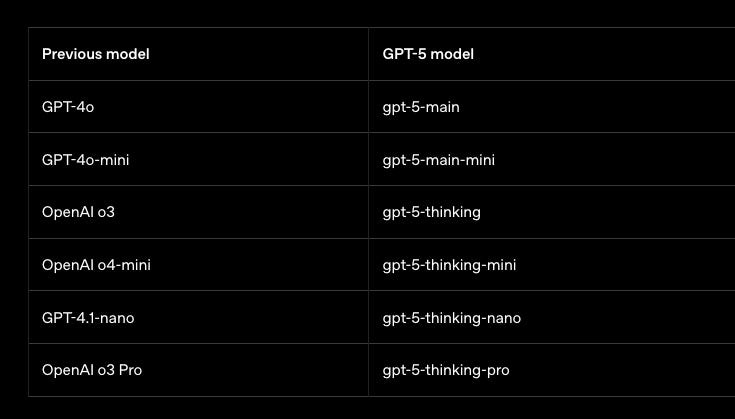
According to OpenAI’s marketing leaks and the developer cult surrounding it, GPT-5 Pro isn’t just another chatbot. It’s the special ops unit of the GPT-5 lineup — the one they actually cared about. The other “vanilla” GPT-5 models? Cost-cutting experiments that often stumble on basic math and spit out half-baked answers. GPT-5 Pro is the one they kept expensive because it runs on what insiders call parallel test-time compute.
Translation: while normal AIs think in a straight line (“maybe this, maybe that”), GPT-5 Pro fans out like a conspiracy theorist on Red Bull, sketching dozens of possible solutions simultaneously before settling on the one that sticks. It doesn’t just guess. It debates itself, a digital version of late-night stoner logic circles — except with PhD-level reasoning and none of the Dorito dust.
The $200 gate to genius
Here’s where the utopian hype starts to rot. As the transcript we examined bluntly puts it: AI is becoming pay-to-win.
Think about it: once upon a time, knowledge was locked up in monasteries. Then came the printing press, which democratized it. Then came the internet, which accelerated it. Now, in a sick historical twist, we’ve circled back: elite knowledge and intelligence are once again behind a toll booth.
$200 a month may sound like a gym membership, but scale it. For many in the Global South, for students scraping by, for anyone not already cushioned by capital, that’s prohibitively expensive. And the price won’t stay there. Insiders whisper about $500 or even $1,000 per month tiers once the compute costs inevitably rise.
A future where your ability to think at scale depends on your credit card limit isn’t sci-fi anymore. It’s product strategy.
AI side hustles: The new gig economy
In the transcript, the AI evangelist doesn’t just gush about GPT-5 Pro’s smarts — he builds a business case out of it. Here’s the pitch:
- Go to Upwork, the freelancer marketplace.
- Find a $2,000 coding project (example: a “senior AI voice agent” with speech-to-speech and RAG — retrieval augmented generation).
- Paste the brief into GPT-5 Pro.
- Watch as it lays out a project plan, scaffolds the code, builds the backend, and even writes the GitHub commits for you.
- Pocket the cash.
Repeat this four or five times a month and, allegedly, you’re making $10K a month “with just a few hours of work.” Forget drop-shipping or hustling crypto memecoins — this is the new hustle: arbitrage human clients with machine labor.
The transcript’s creator even shows GPT-5 Pro orchestrating the whole development lifecycle: from scaffolding a Next.js frontend, spinning up a FastAPI backend, wiring it all into GitHub, to even debugging when dependencies misfire. At one point, the AI literally tells him, “Take a deep breath and proceed like a senior developer would.” For non-programmers, this is sorcery. For developers, it’s existential whiplash.
The uberization of code
Let’s call it what it is: Upwork on steroids. The logic is brutally simple: why spend years learning to code when you can rent a digital assistant that codes for you? Why compete against other freelancers when you can underbid them, confident that GPT-5 Pro will brute-force the work? This isn’t freelancing. It’s arbitrage. And like every arbitrage game, it only works until everyone else catches on.
Remember drop-shipping? TikTok shops? Amazon FBA? All gold rushes start with a handful of smug early adopters cashing in. Then the floodgates open, the margins evaporate, and the platform clamps down. The transcript itself predicts six to eighteen months before saturation kicks in. That’s the paradox: GPT-5 Pro is so powerful, the only way to profit is to sprint before the herd arrives.
Intelligence inequality: The new digital divide
But let’s zoom out. If only the well-funded get access to “genius-level AI,” the divide between haves and have-nots doesn’t just widen — it calcifies. Think of intelligence as infrastructure. Access to GPT-5 Pro could mean:
- A startup founder codes an entire SaaS app in weeks, raising millions.
- A student in Lagos, who can’t afford the subscription, stays locked out.
- A hedge fund pays for unlimited licenses and uses AI to find arbitrage opportunities in milliseconds, further concentrating wealth.
This isn’t about who’s smart. It’s about who can afford to rent smartness. And when intelligence itself becomes a subscription service, democracy starts to look like a freemium app with in-app purchases.
The political backlash brewing
Politicians are already catching whiffs of this. Elizabeth Warren’s camp has whispered about “AI wealth concentration.” The EU is sharpening regulations on compute scaling and access fairness. Meanwhile, in China, the state has no intention of letting private companies auction off elite intelligence to the highest bidder. And yet, Silicon Valley doesn’t care. The transcript reeks of a distinctly American ethos: move fast, monetize, and let the regulators choke on your dust.
It’s worth remembering: when OpenAI launched, it was literally called “Open.” Its stated mission was to democratize intelligence, ensuring it wasn’t concentrated in a handful of hands. Fast-forward to GPT-5 Pro: intelligence as a luxury tier, $200 a month minimum, with a trickle-down model for the rest of us. Call it what it is: from open source to open wallet.

The cult of ‘problem solving’
One of the most striking parts of the transcript is the quasi-religious reverence. The creator treats GPT-5 Pro not just as a tool but as a mentor: “take a deep breath and proceed like a senior developer would.” The AI doesn’t just give answers — it role-plays authority.
That’s dangerous. Humans are notoriously bad at resisting authoritative voices, even when they’re wrong. Milgram’s shock experiments in the 1960s proved people would electrocute strangers if a guy in a lab coat told them to. Now swap the lab coat for a chatbot window that never sleeps, never doubts, and always answers with confidence. The risk isn’t just bad code. It’s bad decisions: in law, in medicine, in politics. A GPT-5 Pro “senior strategist” whispering in a minister’s ear at 3 a.m. could shape policy as easily as it scaffolds a Python API.
Should you pay the $200?
That’s the consumer hook. Is GPT-5 Pro worth it? For a hustler on Upwork, maybe yes. For a broke college student, probably not. For a billionaire hedge fund, it’s a rounding error. But the real question isn’t about price. It’s about precedent. Do we really want to normalize a world where reasoning itself — the most basic human faculty — is behind a subscription wall? Because that’s where we’re heading. Today it’s $200. Tomorrow it’s $2,000. And by then, the people shaping the world won’t be the ones with the best ideas. They’ll be the ones with the fattest wallets.
Conclusion: Renting genius, selling the future
GPT-5 Pro is either the most exciting side hustle enabler since the invention of eBay — or the first glimpse of a dystopia where intelligence is privatized. Yes, it can build you an AI voice agent for a dentist’s office in an afternoon. Yes, it can spin up $2,000 projects on autopilot. And yes, it feels like having Einstein on retainer.
But beneath the hype lies a darker truth: intelligence is no longer a birthright or even a skill. It’s a subscription. And when genius is something you rent, the question isn’t whether you can afford it. It’s whether society can. Because once intelligence itself becomes a luxury commodity, what happens to everyone who can’t pay? The answer, like everything with GPT-5 Pro, will depend on who asks first — and who can afford to listen.
Follow us on X, Facebook, or Pinterest
