

On September 16, former democracy activist Tang Yuanjun pleaded guilty in a U.S. federal court, admitting he had conspired to act as an unregistered agent of the Chinese Communist Party (CCP).
A double life behind the mask of a democracy fighter
For many, the revelation was stunning. Tang Yuanjun, once imprisoned in China for his role in the 1989 Tiananmen Square protests and later granted asylum in the United States, had secretly served as an agent of China’s Ministry of State Security for years. The case shocked the Chinese American community and highlighted the depth of the CCP’s infiltration networks abroad.
Now 68, Tang Yuanjun’s story reads like a bitter irony. After escaping China, he passed through Taiwan in 2002 before reaching the U.S., where he eventually became a citizen. He cultivated the image of a pro-democracy fighter, even founding a nonprofit organization and publicly denouncing Beijing. But according to U.S. prosecutors, as early as 2018, he had already begun reporting to Chinese intelligence. His tasks included collecting personal details on dissidents in America and infiltrating encrypted communication groups, providing the CCP with tools to monitor and intimidate those in exile.
An insider spying on dissident communities
Court records show that Tang Yuanjun not only submitted regular reports but also met Chinese intelligence officers in Macau. He permitted special spyware to be installed on his phone and was given a laptop to transmit information. His surveillance activities included photographing, recording, and filming pro-democracy activists in the U.S. He was also compensated for his work.
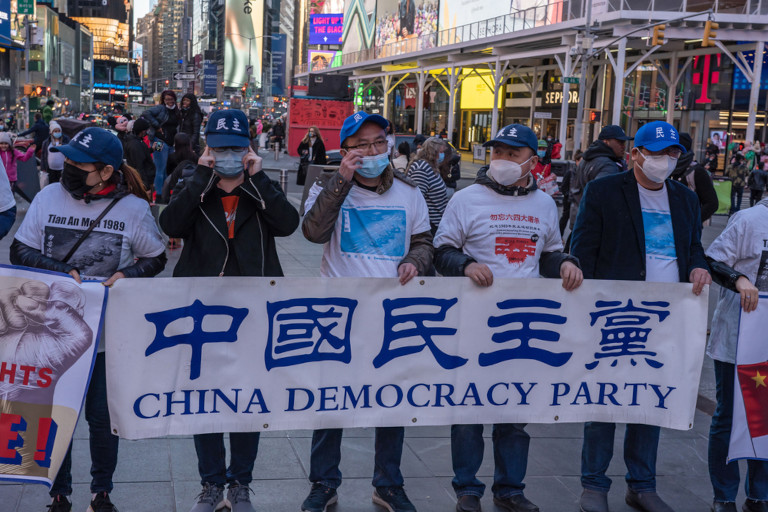
This double life represented more than a personal betrayal. It revealed how the CCP can turn former political prisoners into pawns, exploiting their past reputation and social connections to sow division, gather intelligence, and spread fear within overseas Chinese communities.
A glimpse into broader CCP infiltration
Tang Yuanjun’s case is not unique. In recent years, multiple countries have uncovered similar infiltration efforts:
- In the U.S., the FBI exposed covert CCP “overseas police stations” used to monitor Chinese communities.
- In Australia and Canada, intelligence agencies revealed CCP attempts to influence domestic politics and policies.
- In Europe, media reports have documented espionage within academic institutions and Chinese organizations.
Tang Yuanjun’s background as a June Fourth political prisoner, asylum seeker, and outspoken dissident gave him an almost impenetrable cover. This allowed him to spy for years without suspicion, gathering sensitive information that dealt a heavy blow to overseas Chinese communities.
A warning for exiles and democracies
Tang Yuanjun’s guilty plea is a sobering reminder for exiles and pro-democracy activists: Moving to a free society does not shield one from the CCP’s reach. The regime excels at bribery, threats, and manipulation, exploiting the weaknesses of human nature to achieve its political aims.
The case also validates repeated warnings from Western governments. The CCP’s “long-arm jurisdiction” and global infiltration campaigns are not distant theories, but real threats to democratic societies.
Tang Yuanjun is scheduled for sentencing on January 29, 2026, and faces up to five years in prison. Yet the symbolic meaning of this case far outweighs the length of his sentence. It exposes how even within pro-democracy movements, insiders may betray the cause. Free societies must remain vigilant, guarding against infiltration and ensuring their movements are not undermined by corruption and betrayal.
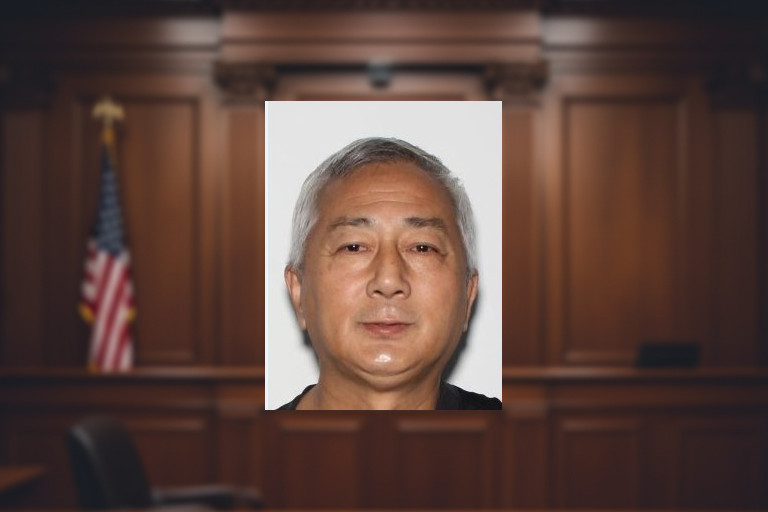
Tang Yuanjun’s fall from “June 4th hero” to “CCP spy” is both a personal tragedy and a warning bell for the democratic camp. His story underscores a harsh truth: No matter how celebrated someone once was, human nature can falter when faced with money and temptation.
Translated by Chua BC, edited by Maria
Follow us on X, Facebook, or Pinterest
