
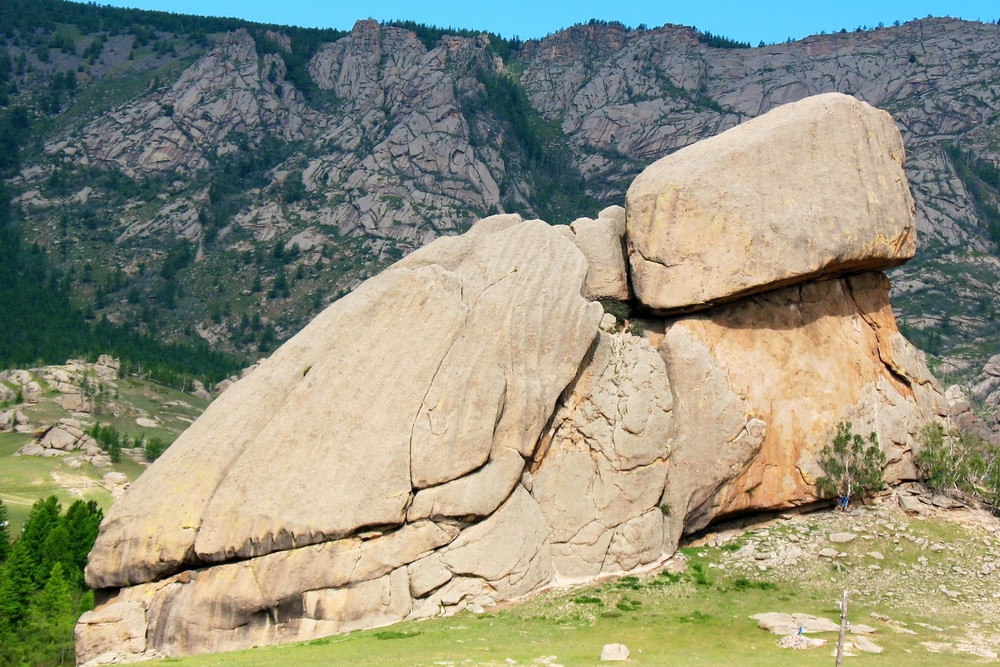
The Fu River surges from the snowy plateau, cuts a deep ravine between two mountains, and races into Fuzhou. Where the current widens, white waves crash against a peculiar rock on the shore.
This rock is extraordinary — about a quarter mile long, shaped like a giant turtle lifting its head toward the river, unmoving for a thousand years. Its arched back bears natural grooves that form the pattern of the Eight Trigrams. A stone snake coils atop it, and patches of moss create markings like a turtle shell. It feels less like cold stone and more like a sacred object deliberately placed by Heaven and Earth.
Locals long ago stopped noticing it, but a visiting feng shui master recognized it at once as an auspicious formation known in feng shui as “the hidden dragon bearing the chart, the golden turtle presenting the seal.” He declared that whoever buried their ancestors there would have five descendants rise to the rank of Provincial Administration Commissioner — a position of great power over a province’s finances during the Ming and Qing dynasties.
A treasure waiting for the worthy
After surveying the site, the feng shui master posted a notice at the city gate offering to transfer the location. Yet half a year passed, and no one asked about it. People came and went, never believing that the barren turtle rock could bring fortune.
Still, the master did not give up. Every few days, he returned to the rock, standing quietly or lingering for hours, as if waiting for someone who could truly recognize this “treasure.”
The turning point came with a poor couple who lived in a thatched hut nearby. They survived by farming rented land, and the husband earned extra coins by hauling towropes for passing boats. During floods, when ferries could not dock, he would carry stranded travelers across the river on his back — never accepting payment.
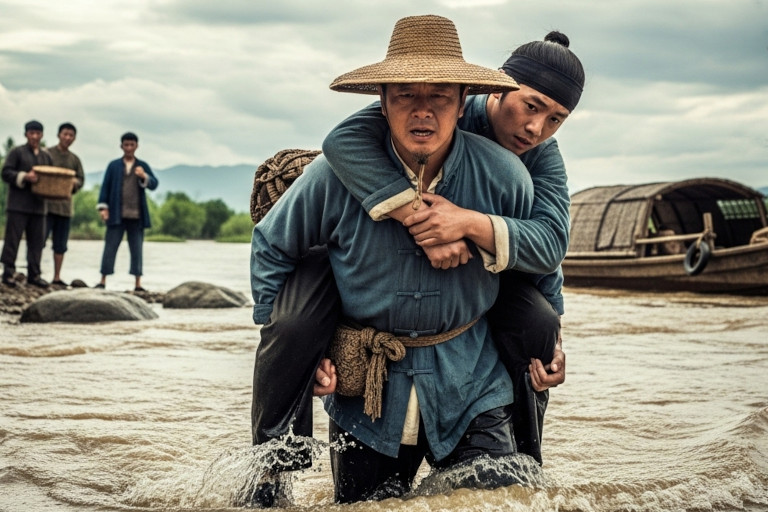
Their kindness shone like gold to the feng shui master. Invited into their humble home, he was served only coarse tea and wild greens, yet he found their hospitality richer than any banquet. He thought to himself: “Virtue is the root, wealth the branch. Without virtue, even a blessed land brings misfortune.”
The blessing and the test
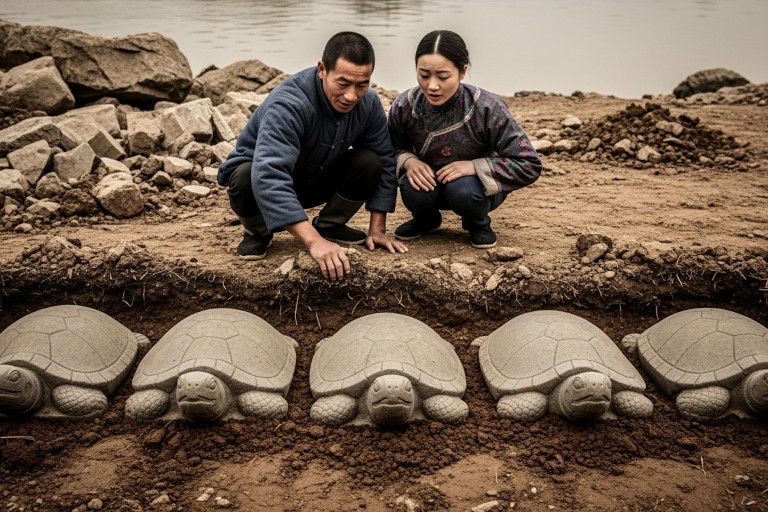
Moved by their goodness, the master secretly decided that this sacred place should belong to them. One night, he led the couple to the turtle’s back. Amid the solid rock, a single patch of black soil lay at the center — just large enough for a coffin, a natural “auspicious cavity” shaped by Heaven and Earth.
He instructed them solemnly: “When burying your ancestors, you will find five small stone turtles. Carry each one to the river at a different time. Never remove them all at once, or the blessing will be exhausted too soon.”
The couple gratefully agreed.
But human fortune and misfortune often turn on a single thought. When they dug the grave and indeed found five small turtles, they grew tired and impatient. Ignoring the warning, they threw all five into the river at once. Ripples spread across the surface, the night swallowed the turtles’ shadows, and Heaven and Earth fell silent.
A fleeting miracle
From that time on, miracles unfolded. Their four sons and one daughter all passed the highest civil service exam and became Provincial Administration Commissioners. Yet the fortune meant to last five generations was spent in one. After their brilliance, later descendants lived ordinary lives.
Even today, locals call the spot “Five Provincial Commissioners.” It stands as both a geological wonder and a moral one. In worldly terms, it is mysterious feng shui; in human terms, it reveals a more profound truth: Without virtue, even the best land is but an illusion. Opportunities not aligned with Heaven’s way create only brief miracles, never lasting ones.
The true source of good fortune
In this scientific age, many dismiss feng shui as superstition. Yet stories faithfully recorded by ancient scholars often point to something more profound.
The couple of Fuzhou were blessed not merely by a favorable site but by their own selflessness. Their habit of helping others without reward was itself the greatest feng shui. As the saying goes: “Blessed land for blessed people, and blessed people dwell in blessed land.” The outer environment matters — but moral character matters more.
With genuine kindness, anyone can create their own blessed land. Virtue, after all, is the truest feng shui.
Translated by Joseph Wu
Follow us on X, Facebook, or Pinterest
