
The book Wind and Snow Over Dingling — The Opening of the Underground Palace tells a chilling story of what followed the excavation.
The fall of the faithless — seven lost lives
On the very afternoon that the emperor and empress’s coffins were thrown into the ravine, local villagers found them. Although the surface of the golden nanmu wood had slight corrosion, the interiors remained as fresh and fragrant as new. Seeing the precious wood, the villagers eagerly divided it among themselves.
An elderly couple commissioned two coffins made from the wood, hoping to prepare for their afterlife. Yet strange things soon unfolded. The moment the first coffin was finished, the wife immediately passed away. Just as the second coffin was complete, the husband also died suddenly, with the couple passing away within two weeks of each other. The villagers were stunned by this occurrence. Five months later, something even more tragic occurred.
The first to discover the discarded coffins was a farmer from Yuling Village, known as “X.” While working with his wife in the mountains, he saw the coffins being rolled down into the ravine. Recognizing the fine nanmu wood, he eagerly dragged the thick planks home. Others quickly followed his example.
The farmer used the wood to make two large chests for his home, proud of his “fortune.” Some villagers congratulated him on his luck, but others warned: “These belong to the emperor, and ordinary people are not meant to possess them. Taking them will bring misfortune.” X scornfully dismissed their words: “These are just old superstitions. You’re only jealous.” But bad luck soon came. One afternoon, he and his wife returned home from the fields to find all four of their children missing. Their search ended in horror. Beside the large chest made from the wood of the royal coffins lay four pairs of children’s shoes.
When they opened the chest, they found all four of their children, three boys and one girl, lying lifelessly inside, their fingers bloodied from scratching the wood, trying to get out. The eldest was 12; the youngest, 5. The authorities called it “suffocation.” In grief, the couple bore four more children, three daughters and a son. Yet even this last boy, so dearly loved, died mysteriously one night, lying across the same chest. The cause of his death was never known.
The villagers in that region were descendants of the mausoleum guardians. Old villagers whispered: “They did not fulfill their duties as tomb keepers. They should have protected the emperor’s resting place, not pilfered from it. Heaven has eyes.” Even then, X and his wife refused to believe in retribution. “It’s all superstition,” they argued. But what is “fate,” if not the invisible hand of consequence? Was this not also a kind of superstition, but in this case one of disbelief?
Desecration and sacrilege
If the handling of Dingling’s treasures had stopped there, it would already be tragic enough. But what came next during the Cultural Revolution was a disaster beyond imagination. In 1966, during the nationwide “Smash the Four Olds” campaign, the Red Guards stormed the Dingling Museum. They pried open the gates of the underground palace and began destroying what they called “the relics of the old world.”
The white marble thrones were overturned, burial chests smashed. Wang Qifa, the same man who once protected the coffins, stood up again to stop them. He was beaten to the ground. They grabbed his hair and slammed his head against the palace wall until blood spurted forth and he died on the spot.
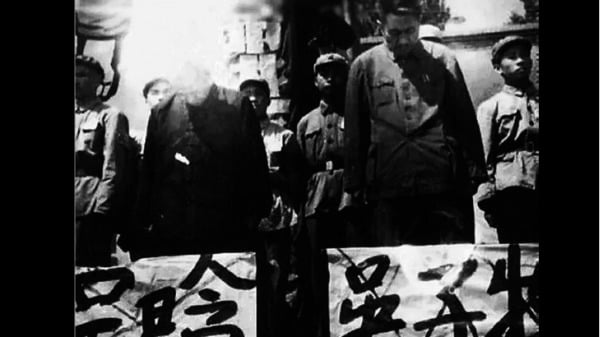
Not long after, another group of Red Guards arrived. Unable to topple the massive stele or destroy the spirit tower, they turned their fury instead upon the dead, the Wanli Emperor and his two empresses. By then, scientists had already reassembled the imperial remains into three complete skeletons for study. The Red Guards forced open the storage and threw the bones to the ground, surrounding them with portraits and relics, calling them “evidence of imperial crimes.”
All the villagers, including local government officials, merchants, farmers, and students, attended this “condemnation event.” The Red Guards shouted: “The revolution begins now!” Then stones rained down upon the bones, breaking them into fragments. Next came the flames from a large bonfire, consuming remains and artifacts. And then suddenly — a loud thunderclap. A torrent of rain came from a clear sky, pounding straight down upon the fire that devoured the bones. Those who witnessed it stood frozen, drenched in awe and dread. Nearly all who participated in that act met tragic ends in the following years.
One woman later confessed during a media interview: “Since that day, I have dreamed of the emperor and his queens coming for me. I wake up each night with my pillow drenched in cold sweat.” Her health broke down, and she lived the rest of her days tormented by nightmares. She whispered: “Perhaps… it is retribution.”
The price of arrogance — the cycle of karma
Despite the short-term glory and profit they gained, those who planned and led the excavation soon met dark fates.
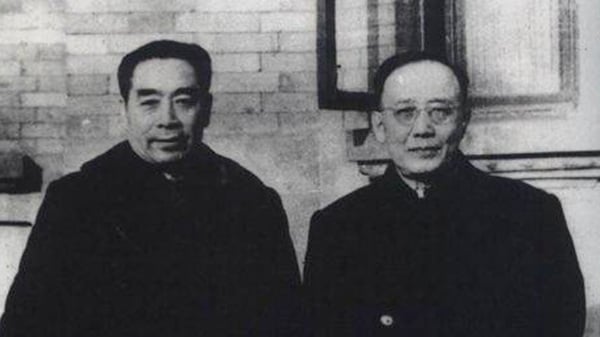
Wu Han, one of its strongest advocates, was later persecuted and beaten daily during the Cultural Revolution. He and his wife were both put in prison, then his wife died, his daughter went mad, and he took his own life, having pulled all his hair out before death.
Guo Moruo, the scholar who initiated the excavation project, was spared by Mao’s order, yet even he could not escape grief. Two of his sons died young.
One son, Guo Minying, a musician, took his life in despair after being denounced for listening to Western music. The other son, Guo Shiying, was accused of treason for speaking English with his girlfriend on the phone. He was arrested, severely beaten up, and thrown from a building with his arms tied behind him. The official death certificate says “suicide.” He died at age 26. Though Guo continued to praise the revolution, he was said to have copied his son’s diary by hand, all eight volumes, word by word, page by page, in silent repentance and profound sorrow.
Others shared similar fates. Zheng Zhenduo, who directed the excavation, died in a plane crash with no remains found. The archaeologist Bai Wanyu went mad and died of a brain hemorrhage. Deputy Party Secretary Deng Tuo, who co-signed the excavation proposal, hanged himself during the Cultural Revolution.
Was it all a coincidence? Or was there, in the unseen realms, a greater justice at work to reap what one has sown? When reverence is lost, when the sacred is defiled, even the mightiest cannot escape the echo of cause and effect. Cosmic justice is subtle, yet sure. It is the actual net from which nothing escapes.
See Part 1 here
See Part 2 here
See Part 3 here
Translated by Katy Liu and edited by Helen London
Follow us on X, Facebook, or Pinterest
