

Life offers many quiet gifts — safety, food, relationships, learning, peace, and simple dignity. Yet comfort can become so familiar that we stop noticing it. Ancient teachings often remind people to pause, look around, and feel grateful for what already exists in their lives.
Seeing blessings through life’s challenges
There is a traditional saying in Chinese culture: “Not knowing how fortunate you are while already living in blessings.” It serves as a reminder to pause, look around, and feel thankful for the life we have. Even during seasons of difficulty, many people in the world face far harsher circumstances.
One story tells of a wealthy man who once traveled by boat with several household servants. Among them was a young servant who had never seen the sea and had never experienced seasickness. As soon as the ship began to sway, he panicked. He cried loudly, clung to the railing, and refused to be comforted. No amount of gentle words or reassurance could calm him.
A philosopher happened to be on the same ship. After watching for a moment, he said to the wealthy man: “Allow me to try. Perhaps I can help him settle down.” The wealthy man agreed. The philosopher instructed a few sailors to briefly lower the frightened servant into the ocean and lift him back out. After splashing in the waves and glimpsing the fear of sinking beneath the vast sea, the servant was returned to the deck.
From that moment on, he sat quietly. His panic had disappeared.
Curious, the wealthy man asked: “Why did your method work when ours failed?”
The philosopher replied: “Before this, he did not understand the fear of drowning. Because he had never known danger, he could not appreciate the safety of the boat or the comfort of where he already sat. Only after facing hardship does one recognize the blessings that were always present.”

It is human nature to become accustomed to comfort and to begin noticing what is missing rather than what is already good. Yet when we consider those who struggle simply to find food, those displaced by war, or those who cannot rest peacefully at night, it becomes clear how much there is to value in ordinary life. Food on the table, warmth, peace, and dignity are blessings worth recognizing.
The quiet key to staying young
Many years ago, an 87-year-old woman named Rose enrolled in university. She was small in stature, her face lined with age, yet her spirit shone with energy and humor. When she was invited to speak at a campus banquet, she shared a message that stayed with many who heard it.
“We do not stop playing because we grow old,” she said. “We grow old because we stop playing.”
Her advice was simple yet full of life: keep laughter close, stay curious, and always hold onto dreams. “When a person loses their dreams,” she continued, “their spirit fades long before their body does. Many people walk through life like moving shadows, unaware they have stopped truly living.”
She made a distinction between aging and growing. Anyone can age — years pass whether we embrace life or not. But growing up means continuing to evolve, to search for new opportunities, and to use the time we are given wisely. Older people, she said, rarely regret what they have done. They regret what they never tried.
A heart that carries regret grows heavy. A heart that keeps purpose, even late in life, stays youthful. Determination and curiosity can continue at any age, and dreams can continue to unfold for those who still hold them gently in their hands.
A drop of water and the value of all things
Another story speaks of a Zen monk in Japan who once carried a full bucket of water to wash his teacher’s feet. When the teacher finished and did not use all the water, the young monk poured the rest away without thinking.
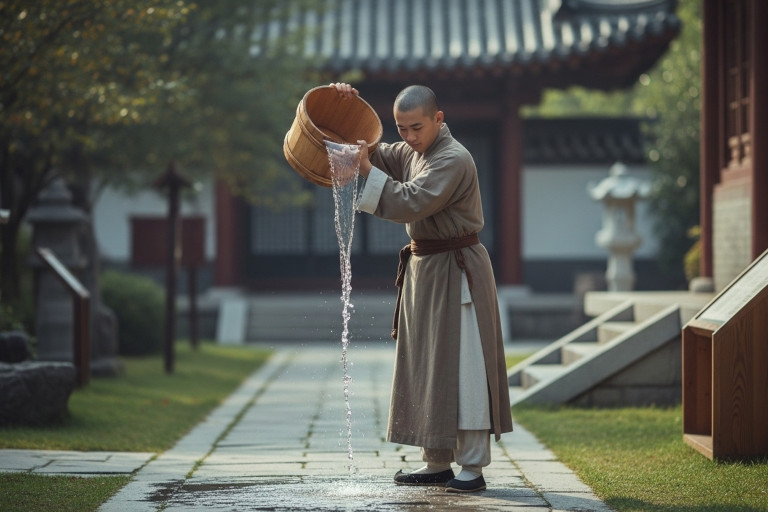
His teacher immediately stopped him. “Never waste the value within all things,” the master said. “A single drop of water can save a thirsty person. A single drop can nourish life. A single drop can join with others to form a river, a sea, and a world that flows without end. How can you discard half a bucket as if it meant nothing?”
Hearing this, the monk felt deep shame. To remember the lesson, he later took the name “Drop of Water,” a symbolic practice not uncommon in Buddhist tradition that serves as a reminder of humility and purpose. Over time, he grew into a respected teacher himself, remembered for a life grounded in mindfulness and appreciation for even the smallest things.
Choosing gratitude, one moment at a time
Life does not require perfection to be meaningful. What matters more is how we see the moments in front of us — ordinary meals, loved ones, opportunities to learn, a quiet night’s rest, the warmth of the sun, a laugh shared with a friend. These small pieces, often unnoticed, form the gentle wealth of a blessed life.
When gratitude becomes a daily habit, the world feels wider and our hearts steadier. Hardships may still come, but appreciation gives strength to face them. As the old saying reminds us: while living in blessings, remember to see them — and let that awareness bring calm, joy, and a deeper sense of purpose to each day.
Translated by Cecilia
Follow us on X, Facebook, or Pinterest
