
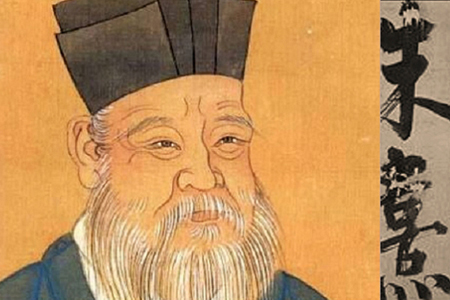
Since ancient times, Chinese families have placed great importance on moral education and self-cultivation. Among the many works that guided household conduct, Zhu Xi’s Family Instructions by the great Song Dynasty Confucian scholar Zhu Xi (1130-1200) stands out as one of the most enduring. Written for his children and descendants, the text offers concise yet profound advice on gratitude, diligence, humility, and integrity — values meant to sustain both family harmony and personal virtue.
Since childhood, many in China have heard teachers quote Zhu Xi, reminding us to cherish what we have and to recognize the hard work behind every comfort. The aim is to instill gratitude and simplicity of heart. Keeping a grateful and content spirit is not only a mark of kindness, but also a foundation of good character. The wisdom in these maxims continues to shine across the centuries, offering enduring lessons for cultivating both self and family.
5 of Zhu Xi’s most illuminating proverbs
1. With every bowl of porridge and every meal, please think of how hard it was to obtain; with every half thread and half strand, always remember the difficulty of producing material goods.
When a meal is placed before us, we should pause to reflect on the effort behind it — the farmers who tilled the soil, the hands that prepared it, the fortune that allows us to enjoy it in peace. For even half a fiber or half a strand of cloth, we should remember the countless labors that brought it into being. The elders often remind us that one must know contentment and cherish blessings.
The Chinese character for blessing (福) itself embodies this wisdom. Within it are “口” (mouth), “衣” (clothing), and “田” (field) — symbolizing nourishment, warmth, and livelihood. A person who has food to eat, clothes to wear, and land to live upon already possesses a great fortune.
Today, as living standards rise, many children grow up in ease and abundance, sheltered from hardship. Having never gone without, it becomes easy to take comfort for granted: food that doesn’t suit one’s taste is discarded, and garments slightly out of style are thrown away. Yet Buddhist thought reminds us that fortune in life is not endless. Blessings are like water in a well — drawn with care, they can sustain us for a long time; squandered, they soon run dry. Gratitude and moderation are what keep the well from emptying.
Therefore, we must teach the young to value what they have, to be diligent and frugal, and to live with a heart of thankfulness. Gratitude is not mere courtesy — it is a quiet strength that preserves blessings and deepens one’s sense of joy and peace.

2. Do not covet windfall wealth; do not drink alcohol in excess.
Do not chase unexpected gains, for they often bring trouble to the family; do not drink excessively, for it burdens both body and mind. As an old saying reminds us, a gentleman values wealth, but obtains it through proper means. Wealth and prosperity are naturally desired, yet when gained improperly, even money in hand brings little satisfaction. People are not unhappy because they have too little, but because their desires are too many. Pies do not fall from the sky — windfall wealth may come easily, but living in constant fear or worry over it is rarely worth the cost.
Drinking, too, requires moderation. Buddhist teaching reminds us that alcohol is the root of many evils; those who can refrain avoid countless misdeeds. Drunkenness harms the body, clouds the mind, and opens the door to misfortune: accidents, quarrels, and loss of self-control all too often follow. Practicing restraint protects both health and harmony, helping one preserve the blessings that come from living wisely.
3. When marrying off a daughter, choose a good son-in-law; do not demand heavy betrothal gifts. When taking a daughter-in-law, seek a virtuous woman; do not count the thickness of the dowry.
In marrying off a daughter, the most crucial consideration is the character of her husband; it should not be the size of the dowry or gifts. Similarly, when welcoming a daughter-in-law into the family, what matters most is her virtue and ability to manage a household, rather than the wealth she brings. In forming a marriage, the education, values, and household traditions of the other family should take precedence. Wealth is external and fleeting; a lifetime spent with a person who is capable, responsible, and good-hearted is far more valuable than material comfort.
Even great family wealth cannot endure the recklessness of unfilial descendants. As the saying goes, “A lineage without good wives in one generation will lack good sons for ten generations.” Securing a wise and virtuous match for one’s children benefits three generations — grandparents, parents, and grandchildren — ensuring the family flourishes and remains harmonious for years to come.
4. Though ancestors are far away, sacrifices must be sincere; though descendants are dull, the classics must be read.
Even though our ancestors have long passed, we must honor them by remembering our roots and preserving the family’s traditions. Likewise, even if descendants show modest natural ability, we must encourage them to study diligently. A family’s legacy is not measured in wealth alone, but in the values, knowledge, and character passed from one generation to the next.
In ancient scholarly families, elders emphasized learning and moral cultivation above material gain. As the saying goes, “Saving money is not as good as teaching your children; idling is not as good as reading books.” Even if a child’s innate talent may be limited, a supportive environment and a good education can shape virtue and wisdom. Countless riches cannot compare to a single scroll of the classics; nurturing the next generation through learning is the most accurate way to ensure a family’s lasting legacy.

5. When arguing over matters, how can you know it is not your fault? You must calmly reflect in private.
Conflict is inevitable in any household, yet how we respond defines the strength and harmony of the family. When disagreements arise, it is easy to point fingers and assume others are at fault. Zhu Xi’s wisdom reminds us to pause and turn our attention inward: consider carefully whether we ourselves share responsibility. Calm self-reflection is not a sign of weakness, but a mark of wisdom and maturity.
A family thrives when its members act with patience, humility, and understanding. Frequent quarrels and unchecked anger gradually erode trust, fray emotional bonds, and leave relationships brittle. By examining our own behavior first, we prevent minor disputes from growing into lasting resentment. As the ancients taught, “When matters arise, think thrice; when anger flares, yielding is best.” Yielding here does not mean surrendering principle, but choosing reflection over impulse and harmony over pride.
The practice of self-reflection in times of conflict nurtures both personal character and the family’s collective well-being. It transforms ordinary households into spaces where understanding, respect, and love flourish, creating a legacy of emotional wisdom that benefits not only the present generation, but also those who follow. In this way, the simple act of pausing and looking inward preserves the family’s unity and strengthens the moral foundation upon which it rests.
Conclusion
These five maxims show that a well-lived life is built not on wealth or comfort, but on careful attention to our actions, our relationships, and the values we pass on. Zhu Xi teaches that character is shaped in ordinary moments: in how we use what we have, in how we choose companions, in how we guide the next generation, and in how we temper our own impulses. By practicing these principles, we cultivate a quiet strength that sustains both ourselves and those around us. The wisdom of the past becomes a living guide, shaping families and communities, nurturing harmony, and inspiring virtue across generations.
Translated by Cecilia and edited by Tatiana Denning
Follow us on X, Facebook, or Pinterest
