
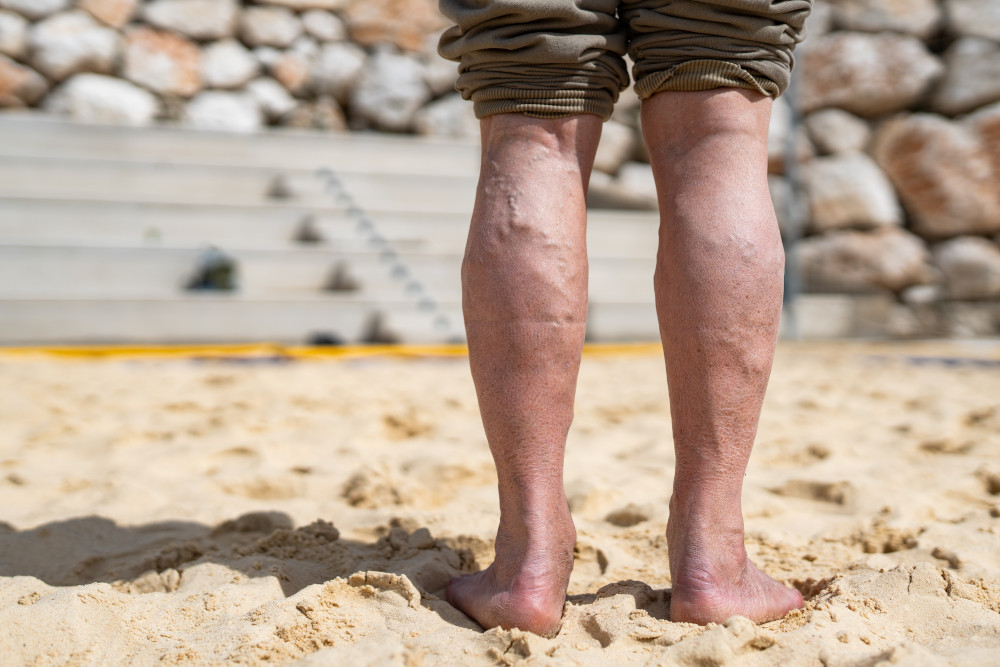
For many people, the first health issues to appear after middle age are not related to the heart or blood sugar, but to the legs. Looking down at their calves, some begin to notice fine red and blue veins spreading beneath the skin like a spiderweb. In more severe cases, the veins bulge visibly, twisting like earthworms, while the skin around the ankles may darken and harden. Western medicine gives this condition a name that sounds relatively mild — varicose veins of the lower extremities — but those who experience it know that it is not merely a cosmetic issue. Aching, swelling, heaviness, and pain often follow, and in some cases, the condition can be associated with serious complications.
Ni Haixia, a well-known lecturer and advocate of traditional Chinese medicine (TCM) within the Chinese-speaking world, emphasizes that varicose veins are never simply a “leg problem.” In TCM theory, the heart is said to govern the blood vessels, and whether blood can return smoothly from the feet depends on the strength of the body’s yang energy and the absence of lingering cold and dampness. When heart yang is weak, and cold and dampness sink downward, blood is thought to become heavier and less mobile, accumulating in the lowest parts of the body — the calves. Over time, this buildup places pressure on the veins, causing them to expand and twist into the forms commonly seen with varicose veins.
From this perspective, the root of the problem does not lie solely in the veins themselves. As a result, Ni argues that simply removing or sealing off veins addresses symptoms rather than the underlying imbalance. In traditional Chinese medicine, the more fundamental approach focuses on strengthening the heart’s function, warming yang energy, improving circulation, and encouraging blood to flow back upward.
2 exercises for varicose veins that appear simple, but are considered essential
1. The first exercise: Leg-raising practice
This exercise is done once a day, or twice daily — morning and evening — if physical condition allows. Each session lasts 20 to 30 minutes, with beginners starting at around 10 minutes. Lie flat on your back with your hips close to the wall and your legs extended upward against it. Those with lower-back discomfort may place a thin pillow beneath the lower back.
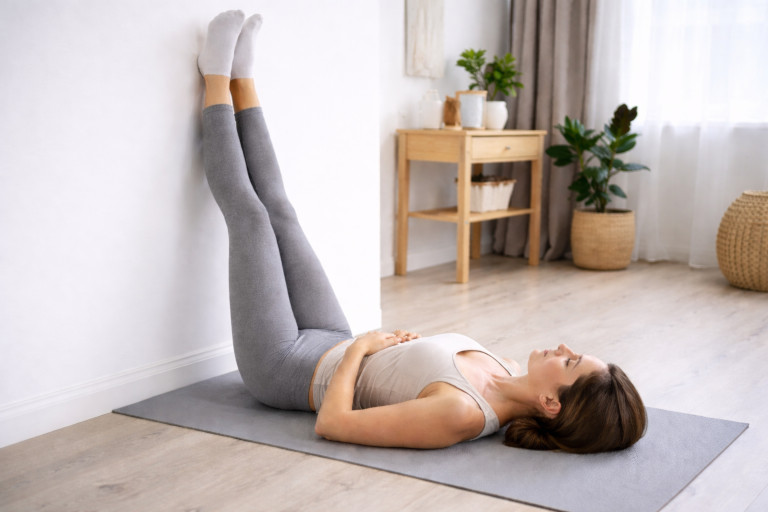
Breathing is coordinated with the movement: inhale through the nose and exhale through the mouth, making a soft “hsu” sound during exhalation. In traditional Chinese medicine, this is often paired with the mental image of cold or heaviness leaving through the soles of the feet. Practitioners commonly report warmth or tingling in the feet after the exercise.
2. The second exercise: Heel-raising practice
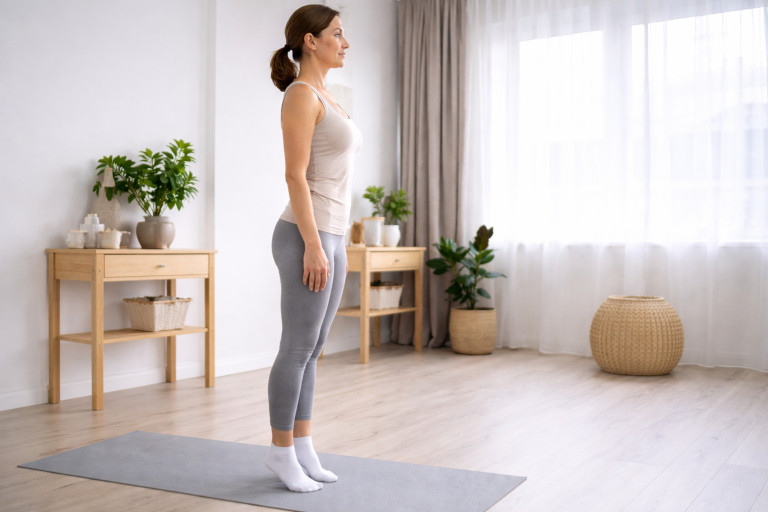
This exercise is performed 100 times a day, commonly divided into 50 repetitions in the morning and 50 in the evening. Stand with your feet shoulder-width apart, slowly rise onto the balls of your feet, pause at the highest point for 3 to 5 seconds, then lower yourself gradually.
According to TCM practitioners, the key is not speed but the pause at the top, which is believed to help encourage upward circulation in the calves. After consistent practice, many people report warmth in the lower legs followed by a sense of lightness and relaxation.
Given how simple these movements are, many people naturally wonder whether they can truly make a difference.
Ni often points to clinical experiences from his patients. One woman in her mid-sixties had lived with varicose veins for nearly 20 years, with prominent veins along the inner calves and dark, hardened skin around the ankles. Surgery had been recommended. From a TCM perspective, her condition was attributed to insufficient heart yang and the accumulation of cold and dampness. Alongside herbal foot soaks and internal treatment focused on warming and circulation, she practiced daily leg-raising and heel-raising exercises. Within a week, her legs began to feel warmer. After three months, the veins became noticeably softer and flatter, and the hardened skin around her ankles gradually shed, revealing new skin beneath.
Another case involved a man in his forties with a sedentary lifestyle, chronic late nights, and a habit of sugary drinks. He developed diabetes along with leg swelling and venous discomfort. His regimen focused on movement guidance and lifestyle adjustments, including eliminating sugary beverages and performing 100 heel raises daily, sometimes referred to in TCM as activating the “second heart” of the calves. Over time, the swelling subsided, and the appearance of superficial veins improved alongside broader lifestyle changes.
Ni cautions that varicose veins do not develop overnight, and improvement is rarely immediate. In his view, consistency matters more than speed. With daily leg-raising for 20 to 30 minutes and regular heel-raising practice, many people begin to notice gradual changes over several months.
In traditional Chinese health philosophy, true care is not about forcing the body, but working with its natural tendencies — easing stagnation, restoring warmth, and supporting circulation. When the legs feel warmer and lighter, some find that their overall sense of energy and vitality improves as well.
This article reflects perspectives from traditional Chinese medicine and is not intended to replace medical diagnosis or treatment. Readers with symptoms or underlying conditions should consult a qualified healthcare professional.
Translated by Patty Zhang
Follow us on X, Facebook, or Pinterest
