
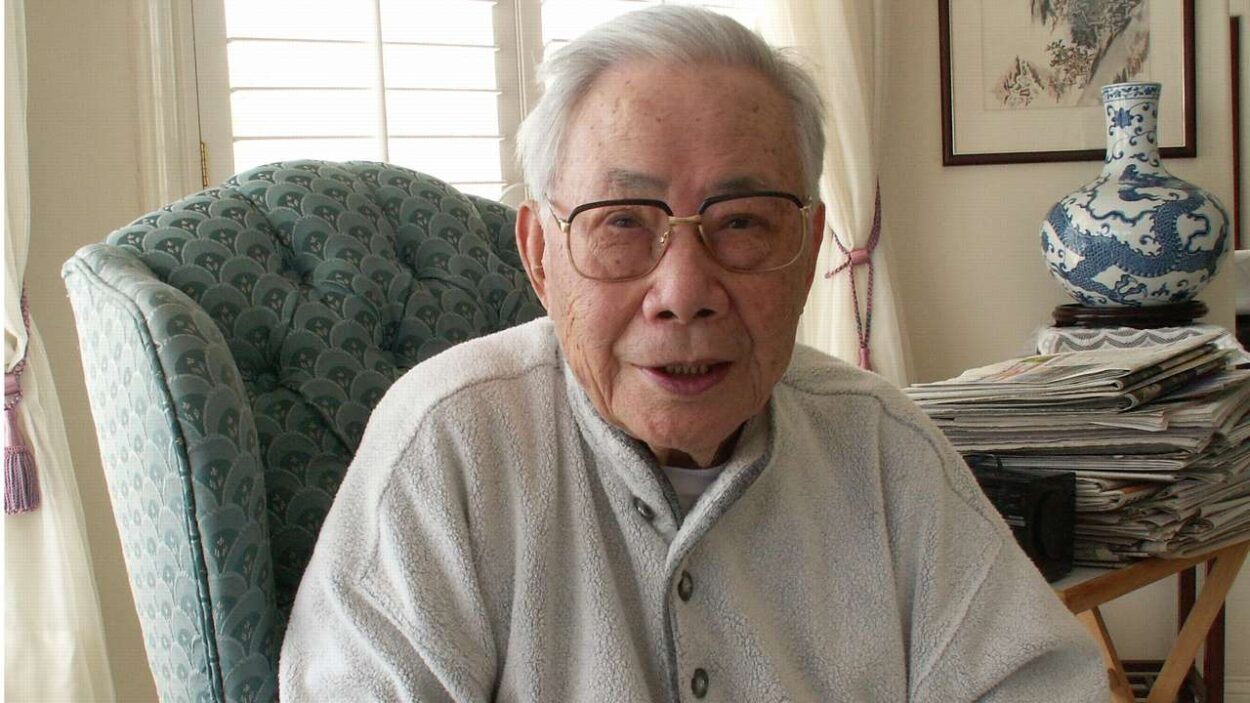
In 1989, after Deng Xiaoping orchestrated the Tiananmen Square massacre, a number of Chinese Communist Party (CCP) officials who sympathized with and supported the student movement were forced to flee China. Among them, the oldest, highest‑ranking, and most prominent was Xu Jiatun, a former CCP Central Committee member, head of Xinhua’s Hong Kong bureau, and secretary of the Hong Kong-Macau Work Committee.
Xu Jiatun was born in 1916 in Rugao, Jiangsu. In his early years, he joined the New Fourth Army and fought as a revolutionary veteran. He later rose to become the first secretary of the Jiangsu Provincial Party Committee, a Central Committee member, a member of the Central Advisory Commission, and a standing committee member of the National People’s Congress. As a “Red Aristocrat” and senior official at the provincial‑ministerial level, his loyalty was once considered beyond reproach.
In 1983, at age 67, Xu Jiatun was appointed secretary of the Hong Kong-Macau Work Committee and head of Xinhua’s Hong Kong branch, becoming the CCP’s top representative in Hong Kong. He worked there for seven years, known for his openness and liberal outlook. After being dismissed on January 15, 1991, he temporarily resided in Nanxiu Garden, Shenzhen, where he began to notice a tightening web of surveillance.

Fleeing to the United States to avoid disaster
Following the Tiananmen protest and massacre in 1989, the CCP launched a purge, and many senior officials, including then‑General Secretary Zhao Ziyang, lost power. Xu Jiatun, who shared Zhao’s views and sympathized with the student movement, was also targeted.
A senior official later told Xu Jiatun that Jiang Zemin, the new General Secretary, intended to punish him. Xu Jiatun was chilled when he learned that Liang Xiang, then governor of Hainan, had been tricked into coming to Beijing under the pretext of a port development project, only to be immediately placed under house arrest. Xu Jiatun also discovered that his successor at Xinhua Hong Kong, Zhou Nan, had suspended his salary, confiscated his car and residence, and established a special group to compile charges against him. Faced with this, Xu decided it was better to escape than await his fate.
In late April 1990, Xu Jiatun contacted an old trusted friend, Jin Yaoru, former editor‑in‑chief of Hong Kong’s Wen Wei Po, and asked him to meet in Shenzhen. Xu Jiatun revealed his plan to take “temporary leave” in the United States. Jin supported him and agreed to help. He applied for a visa at the U.S. Consulate in Hong Kong. After consulting Washington, approval came on April 29.
On April 30, Xu Jiatun crossed the border at Shenzhen Luohu with a family member. To evade immediate suspicion, he utilized the pretext of a “Study Tour.” He took a train, got off after one stop, and was picked up by Jin, who drove him to Hong Kong.
That night, Xu Jiatun wrote to Deng Xiaoping and other leaders, explaining that Jiang Zemin and Li Peng sought to destroy him and that he therefore had no choice but to temporarily reside abroad. He promised not to seek asylum, not to leak secrets, not to meet the media, and not to contact dissidents — unless Jiang and Li retaliated against him or his family.
On May 1, 1990, Xu Jiatun boarded a flight from Hong Kong Kai Tak Airport to San Francisco, becoming the highest‑ranking CCP official ever to successfully defect overseas. Later, when asked what would have happened had he not left, Xu Jiatun replied: “I would have been detained and interrogated by Jiang Zemin and Li Peng, and lived out my days under house arrest like Zhao Ziyang — no, certainly worse than Zhao.”
Sympathy and support for the student movement
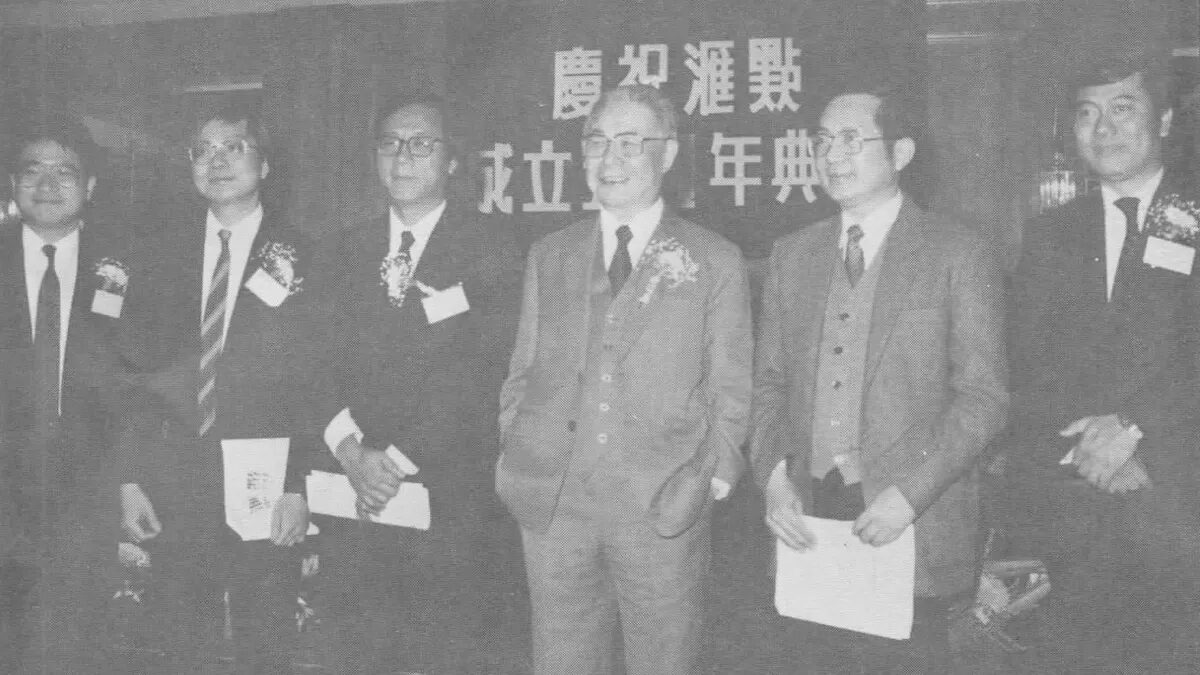
In the spring and summer of 1989, Beijing saw a student democracy movement against corruption and for democracy and human rights. Hong Kong citizens strongly supported it. Xu Jiatun, based in Hong Kong, was deeply moved and consistently sympathetic to the students.
On May 3, Zhao Ziyang summoned Xu Jiatun to Beijing to ask his views. Xu Jiatun said: “This is a patriotic movement, a movement supporting Communist Party reform. Some hope reform will advance further, others fear it will stop or even reverse.” Zhao replied: “Our views are the same.” On May 20, Beijing declared martial law. Xu recalled that Wen Wei Po staff planned to respond by publishing an editorial with a bold blank space. He agreed. The next day, the paper’s front page carried the words “Deeply Distressed”, causing a stir.
Beijing was furious, and Li Peng demanded an investigation. Xu Jiatun stated that Hong Kong was distinct from the mainland and that they would handle it appropriately, thereby shielding the journalists from immediate retaliation. After the massacre, Xinhua Hong Kong issued a statement under the name of “some staff members” condemning the crackdown and calling for mourning:
“We are extremely outraged by the bloody suppression and killing of patriotic students and citizens in the capital! We call on all employees of Chinese institutions in Hong Kong to mourn the dead compatriots on June 5 in various forms.” Xu Jiatun’s stance toward the student movement was regarded as “standing on the right side of history.”
Expelled from the Party and public office
As a senior official at the provincial‑ministerial level, Xu Jiatun’s “unauthorized departure” to the United States — which the CCP regarded as the foremost hostile foreign power — caused a sensation. In the Party’s view, this was an act of profound betrayal.
On March 3, 1991, Xinhua reported that, with the approval of the CCP Politburo, the Standing Committee of the Central Advisory Commission and the Standing Committee of the Central Discipline Inspection Commission had decided to revoke Xu Jiatun’s position and expel him from the Party.
The decision stated that Xu Jiatun, “as a senior Party cadre, ignored Party discipline and secretly fled abroad… the Party organization had repeatedly tried to educate and save him, but he remained obstinate.” In the same month, his position in the National People’s Congress was also revoked.
To be continued
Translated by Cecilia and edited by Helen London
Follow us on X, Facebook, or Pinterest
