
In 1994, orthopedic surgeon Anthony Cicoria was standing in a public phone booth in suburban New York speaking with his mother when a storm rolled in. Dark clouds gathered overhead, and suddenly a bolt of lightning struck the booth where he stood holding the receiver.
The powerful shock threw Cicoria backward. His heart stopped.
A woman waiting to use the phone witnessed the incident and rushed to help. Fortunately, she knew CPR. After performing chest compressions, she managed to restart his heart before paramedics arrived. Cicoria survived what could easily have been a fatal strike.
At first, his recovery seemed uneventful. But in the weeks that followed, something unexpected began to happen.
A sudden craving for classical music
Not long after the accident, Cicoria developed an intense urge to listen to classical music. The desire felt unusually strong — almost like a compulsion.
Before the lightning strike, he had never cared much for classical music. He did not play the piano or violin, and concerts held little interest for him. Yet now he found himself drawn to the music again and again.
Eventually, listening was no longer enough. Cicoria began teaching himself to play the piano.
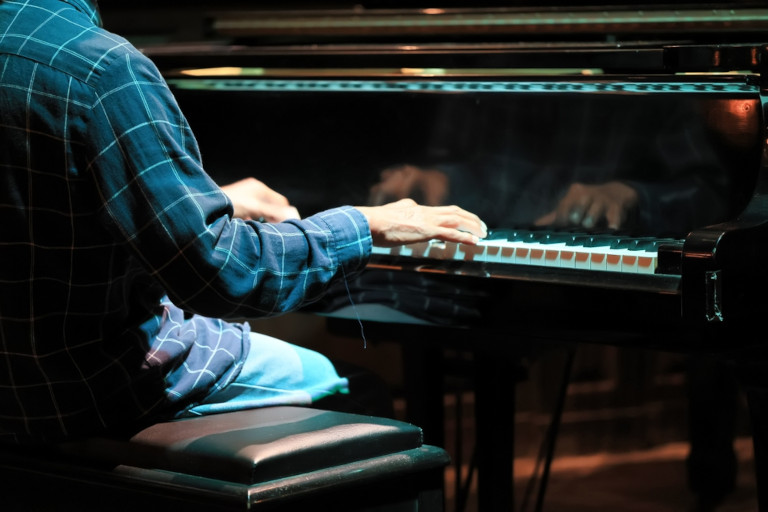
Then something even stranger occurred. Whenever he heard a piece of music, he would begin to hear new melodies forming in his mind — melodies he had never heard before. These original compositions seemed to arrive fully formed, prompting him to write them down and play them.
Over time, the former orthopedic surgeon began composing and performing his own music. What started as a mysterious impulse became a lasting passion that reshaped his life.
A carpenter who suddenly began painting faces
A similarly unusual transformation occurred in the life of Tommy McHugh, a carpenter from Liverpool, England.
For most of his life, McHugh had no interest in art. His days revolved around work and ordinary routines. But when he was 51 years old, he experienced a sudden and severe medical emergency.
One morning, he suddenly experienced an excruciating headache and collapsed. Doctors later determined he had suffered a massive brain hemorrhage. After hours of emergency treatment and surgery to remove two aneurysms, McHugh narrowly survived.
The experience changed him in unexpected ways.
Soon after recovering, McHugh developed a powerful urge to draw and paint — something he had never done before. Faces began appearing vividly in his mind, each with its own expression and personality. He felt compelled to capture them before they vanished.
To keep up with the images in his head, McHugh began using every available surface in his home as a canvas. Walls, floors, ceilings, and furniture gradually filled with painted faces. When one area filled up, he painted over it and continued.
The compulsion drove him to work constantly, sometimes painting up to 18 hours a day. Over time, his unusual artwork began attracting attention, and he eventually opened a gallery to sell his pieces. He continued painting obsessively until his death in 2012.

When brain injury unlocks unexpected abilities
Stories like those of Cicoria and McHugh have intrigued scientists for years. In some rare cases, people develop sudden artistic, musical, or mathematical abilities after brain injuries or neurological events.
Researchers sometimes describe this phenomenon as acquired savant syndrome. Unlike savant abilities present from childhood, these skills appear suddenly in people who previously showed no special talent in those areas.
Scientists do not fully understand why this happens. One possibility is that brain injuries disrupt normal neural pathways, allowing other areas of the brain — particularly those involved in pattern recognition, music, or visual processing — to become unusually active.
Another theory focuses on the brain’s ability to reorganize itself after trauma. When some circuits are damaged, new connections may form, sometimes leading to unexpected abilities.
Although the exact mechanisms remain unclear, these rare cases reveal just how complex — and mysterious — the human brain can be.
A reminder of the brain’s hidden potential
Anthony Cicoria continued composing and performing music long after the lightning strike that changed his life. Tommy McHugh spent the final decade of his life painting the faces that appeared so vividly in his mind.
Their experiences remain unusual, but they offer a fascinating glimpse into how dramatically the brain can change after trauma. In rare moments, events that nearly end a life can also open the door to entirely new abilities — ones that might otherwise have remained hidden.
Translated by Patty
Follow us on X, Facebook, or Pinterest
