
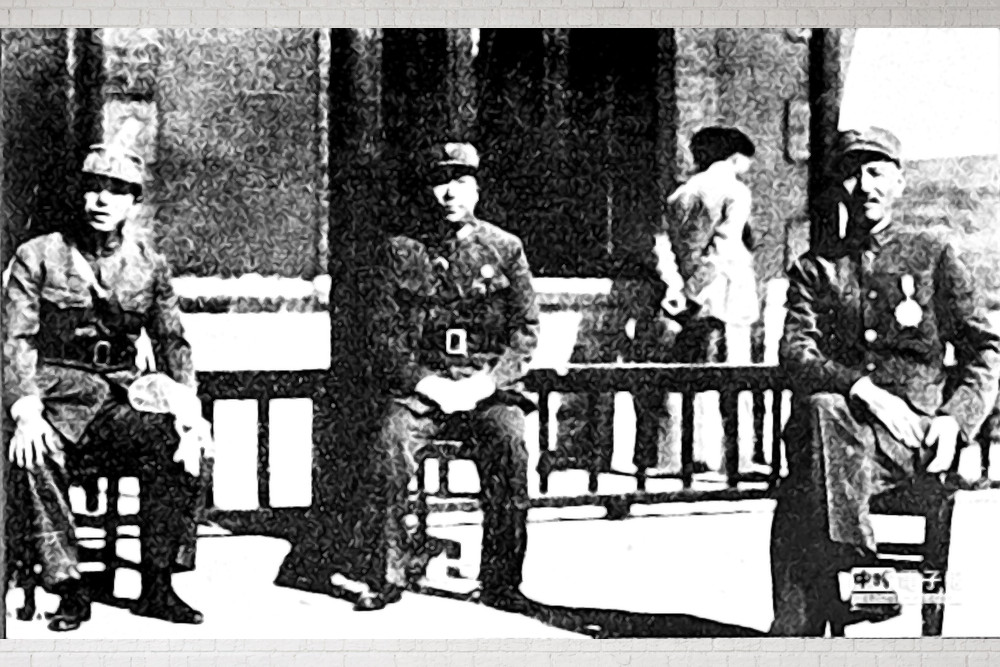
History often turns on a single decision made under pressure. In modern Chinese history, few moments demonstrate this more clearly than the Xi’an Incident of 1936.
At the center of that event was Zhang Xueliang (1901-2001), widely known as the “Young Marshal.” The son of a powerful warlord, Zhang Xueliang had inherited command of the Northeast Army, one of the most formidable military forces in China during the turbulent Republican era. By the mid-1930s, Japan had already seized his homeland in Manchuria, leaving him a displaced leader determined to find a path forward for China.
More than 50 years later, living quietly in Hawaii, Zhang Xueliang looked back on the decision that defined his life. At a banquet celebrating his 90th birthday, he reportedly let out a long sigh and told those around him:
“I am a sinner — one of the greatest sinners.”
It was a striking statement from a man once regarded as a patriotic hero. In his later years, Zhang Xueliang came to believe that a single decision he made in 1936 helped reshape the trajectory of modern China.
A decision that gave the Communists a second chance
By the mid-1930s, the Chinese Communist Party (CCP) was in desperate condition. Its Red Army had just survived the catastrophic retreat known as the Long March (1934-1936). The surviving forces that reached northern Shaanxi were exhausted, poorly equipped, and struggling to survive.
According to Zhang Xueliang’s later recollections, the Communist forces had dwindled to roughly ten thousand men. By contrast, the combined strength of Zhang’s Northeast Army and the Nationalist government’s Central Army under Chiang Kai-shek (1887-1975) was overwhelming.
In purely military terms, he later believed that defeating the remaining Communist forces would likely have been possible.
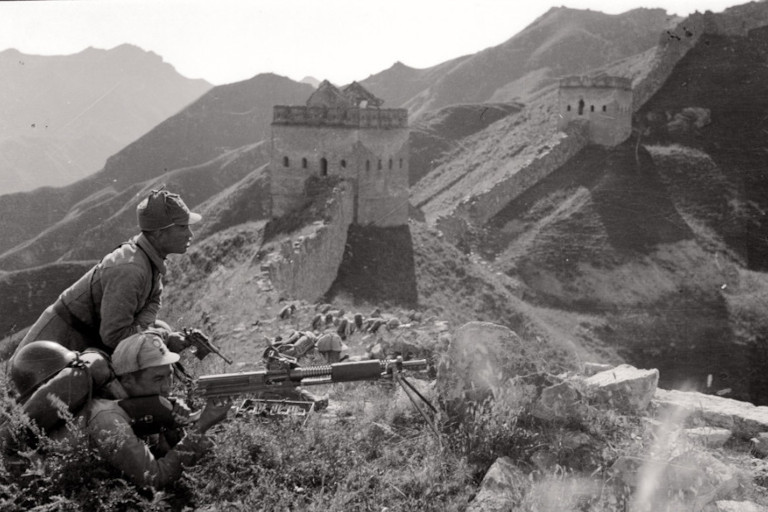
Instead, Communist leaders proposed a different path. They urged Zhang Xueliang and the Nationalist government to stop fighting one another and form a “united front” against Japan, which had already invaded large parts of China.
Zhang Xueliang accepted the idea.
In December 1936, Zhang Xueliang and another general, Yang Hucheng, detained Chiang Kai-shek in the city of Xi’an in order to force negotiations. The dramatic confrontation shocked China and drew international attention.
The result was a temporary alliance between the Nationalists and the Communists against Japan. Yet Zhang Xueliang later concluded that the decision had an unintended consequence: it allowed the CCP — then on the verge of collapse — to survive and rebuild.
Within little more than a decade, the Communists would emerge victorious in the Chinese Civil War.
Personal tragedy and a bitter realization
For Zhang Xueliang, the consequences of that moment were not only political but also deeply personal.
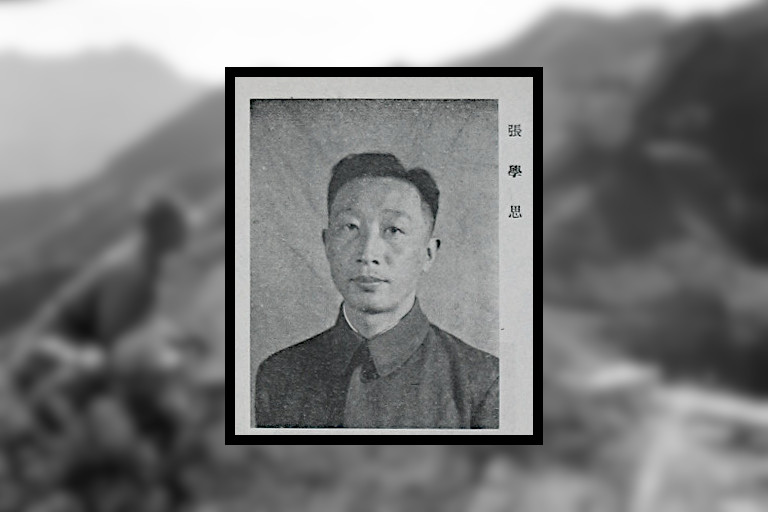
His younger brother, Zhang Xuesi (1916-1970), later joined the Communist movement and rose to become chief of staff of the People’s Liberation Army Navy. But during the Cultural Revolution, the same regime turned against him. He was persecuted and eventually died after years of suffering.
The irony was painful. Zhang Xueliang had helped create the conditions that allowed the CCP to survive, yet the regime later destroyed his own brother.
Meanwhile, Zhang Xueliang himself spent decades under house arrest in Taiwan after the Xi’an Incident. Chiang Kai-shek, the leader he had once detained, ordered the confinement.
Although Zhang Xueliang lost his freedom, the arrangement likely saved his life. Many political leaders who remained on the mainland later fell victim to violent campaigns, purges, and political struggles.
Reflecting on his life, he later remarked that while Chiang had imprisoned him, he had also protected him.
A century China might have avoided losing
In his later years, Zhang Xueliang summarized his reflections in stark terms. He believed that if the Communists had been defeated in the 1930s, China’s development might have advanced by a century.
Without the Xi’an Incident, he believed the remaining Communist forces could have been eliminated in northern China. If that had happened, the movement that later took control of the country would never have come to power.
In Zhang Xueliang’s view, many of the tragedies that followed were not inevitable chapters of Chinese history, but consequences of that outcome. The civil war that brought the Communists to power, the land reform campaigns that claimed countless lives, the famine during the Great Leap Forward that killed millions, and the Cultural Revolution that shattered families and devastated traditional culture all unfolded under the rule of the Communist regime that survived in 1936.
History cannot prove how events might have unfolded differently. But Zhang Xueliang believed that by allowing the CCP to survive, he had unintentionally opened the door to decades of upheaval that might otherwise never have occurred.
A warning that still echoes today
Zhang Xueliang’s reflections cannot change the past, but they offer a powerful reminder about how easily history can shift.
At moments of national crisis, decisions are often made quickly, under pressure, and based on promises whose long-term consequences are difficult to see. Yet those decisions can shape the fate of entire societies for generations.
Zhang Xueliang’s long sigh in old age was more than personal regret. It was a warning about how profoundly a single misjudgment — made in a moment that seemed urgent and necessary — can alter the course of history.
Nearly a century later, the lesson remains relevant: The true consequences of political choices often appear only decades after the moment that gave rise to them.
Translated by Patty Zhang
Follow us on X, Facebook, or Pinterest
