
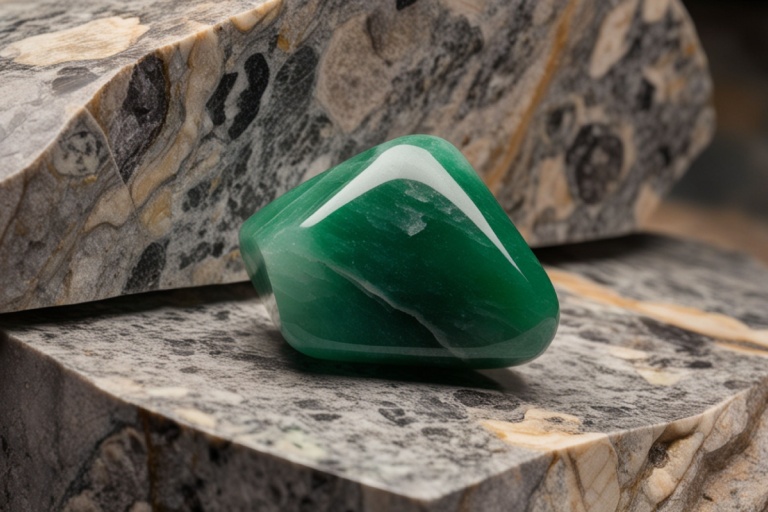
According to the Gemological Association of Great Britain (GemA), in ancient Chinese civilization, jade was far more than a decorative gemstone; it was considered the “Stone of Heaven,” possessing a spiritual essence that bridged the gap between the mortal and divine realms and served as a key link to Chinese tradition. In the Neolithic period (such as the Liangzhu and Hongshan cultures), jade was the primary medium for communicating with spirits and ancestors, as the ancients believed it embodied the essence of nature.
By the Han Dynasty, the belief in jade’s “immortality-giving” properties reached its peak. It was believed that jade could prevent the physical body’s decay and preserve the deceased’s “qi” (life force). Interest in jade in Western society has increased, with the introduction of “Chinese Jades” exhibitions, such as the one at the Penn Museum on the University of Pennsylvania campus.
The gavel falls, breaking records
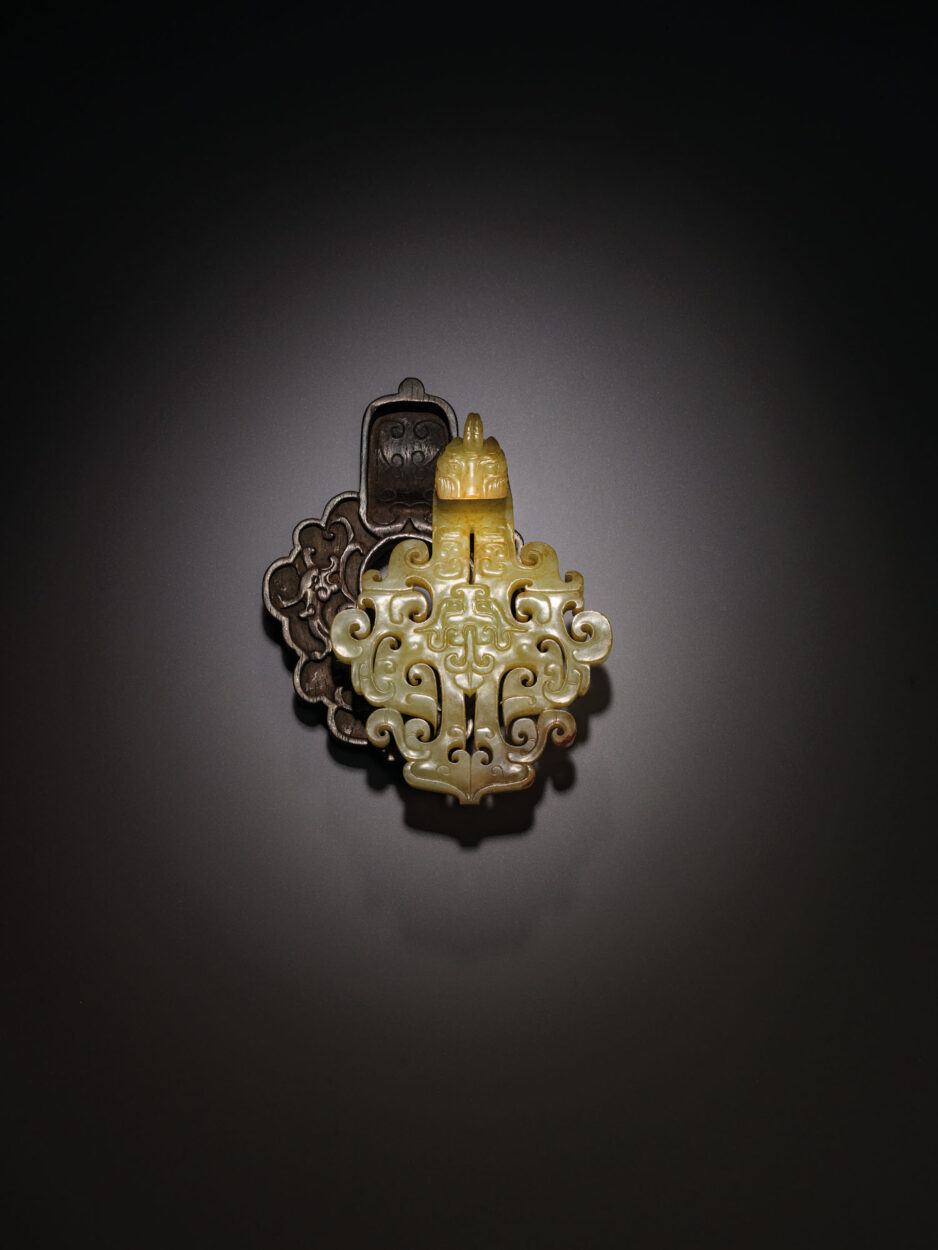
On November 4, 2008, a chilly autumn afternoon in London, Christie’s auction hall was packed. Under the spotlight on a small, elegant display stand rested a yellow jade belt hook from China’s Western Han Dynasty. Its golden luster was warm, its curves graceful, and every carved motif carried traces of more than two thousand years of history.
Initially estimated at only £100,000-£150,000 (US$133,390-200,085), the atmosphere grew tense as bidders kept raising their paddles. With each strike of the auctioneer’s gavel, the price climbed until it finally sold for £825,250 (US$1,100,800), a new record for Han Dynasty jade at auction. Twelve years later, in 2020, another jade belt hook appeared at Christie’s. The scene was even more intense. In the end, it sold for £2,902,500 (US$3,871,644) — nearly triple the 2008 price. Collectors hailed it as “a peak moment in the ancient jade market.”
As the proverb goes: “Gold has a price, but jade is priceless.” These auctions did more than break records; they brought the artistic and cultural allure of ancient Chinese jade back into the global spotlight. So why can a piece of ancient stone be worth so much? The answer lies in jade’s deep connection with Chinese tradition. Over millennia, jade has absorbed influences from different eras, developing rich symbolic meanings in religion, politics, ritual, and art.
The eternal popularity of jade
At Taiwan’s National Palace Museum, jade represents the oldest category of artifacts. While visitors often find jade the most difficult to “decode,” the jade galleries remain the most crowded. Deng Shuping, an honorary researcher at the National Palace Museum and a leading scholar in the field, explains that genuine jade is generally divided into two categories: shan jade and hui jade.
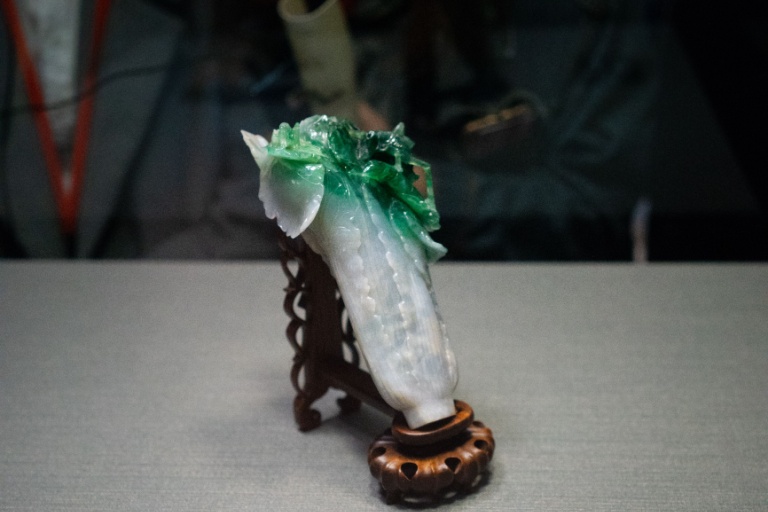
The famous “Jadeite Cabbage” is a hui jade piece. Hui jade has a brilliance similar to glass, unlike the soft, oily texture of white shan jade. When hui jade contains chromium, it turns emerald green; different iron content produces colors such as reddish-brown, dark green, or light purple. However, ancient jade is difficult to authenticate, so how can we truly distinguish its quality and authenticity?
Expert advice: Navigating the jade market
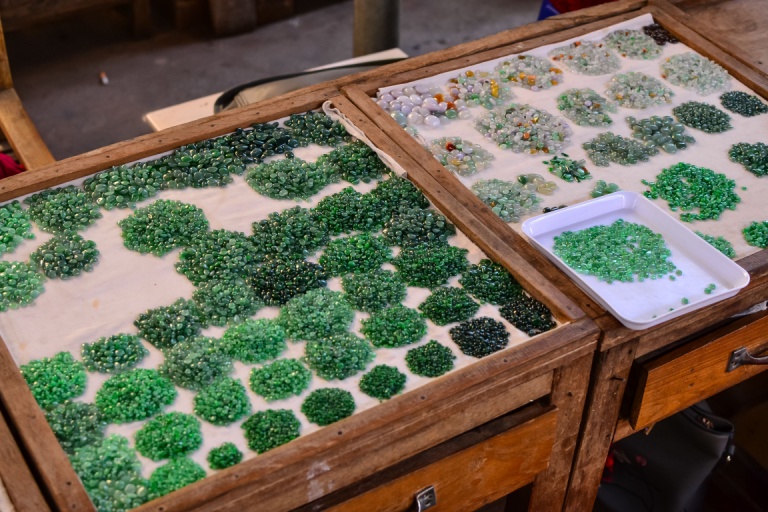
Deng notes that many wealthy buyers spend large sums on ancient jade only to realize later that the pieces are fake. For those looking to enter the world of jade, she offers three pieces of advice:
- Educate the eye: Visit museums like the National Palace Museum to see authentic pieces before buying.
- Decorative vs investment: When browsing markets, treat purchases as decorative items rather than financial investments unless you are an expert.
- Slow down: If you are unsure of authenticity, do not rush. Seek artistic inspiration first and identify the specific type of jade that resonates with you.
The eleven virtues of jade: The enduring love for jade stems from the belief that it embodies the essence of heaven and earth. Confucius famously stated that jade represents the moral character of a gentleman, possessing eleven distinct virtues:
- Benevolence: Represented by its gentle, moist quality.
- Wisdom: Seen in its firmness and density.
- Righteousness: Shown by its sharp edges that do not harm others.
- Propriety: Reflecting the neatness of carved ornaments.
- Music/Harmony: Found in the clear, resonant sound it makes when struck.
- Loyalty: Represented by the fact that spots do not hide the beauty, nor beauty its flaws.
- Trustworthiness: Seen in its radiant, unconcealed brilliance.
- Heaven: Reflected in its rainbow-like aura.
- Earth: Found in its spirit, reminiscent of lofty mountains.
- Virtue: Represented by its use in sacred ceremonies.
- Morality: The ultimate reason it is prized above all other stones.
Throughout the world, jade remains precious because it is not just a stone; it is a physical manifestation of human morality.
The spiritual resonance of jade in 2026
In 2026, the spiritual value of jade has undergone a modern metamorphosis, moving beyond traditional ancestral worship to become a cornerstone of the global “Mindful Luxury” movement. As the digital world becomes increasingly saturated, people have turned to jade as a tactile anchor.
In this context, the stone is no longer just an antique of the past; it is a bio-energetic tool for the present. Collectors and spiritual practitioners alike prize jade for its perceived ability to harmonize the wearer’s frequency, acting as a physical shield against the technological noise of a hyper-connected era.
Furthermore, the 2026 spiritual landscape has embraced jade as a symbol of environmental interconnectedness. There is a growing belief that wearing a stone formed over millions of years connects the individual to the “Deep Time” of the Earth, fostering a sense of responsibility toward the planet.
This eco-spirituality has driven the value of untreated, raw-textured jade to new heights, as buyers seek an unadulterated connection to nature. Whether it is a minimalist pendant or a traditional bi-disk, jade in 2026 represents a silent, sophisticated protest against the disposable nature of modern life — a permanent piece of the Earth’s soul held in one’s palm.
Tommy Lee, chairman of the Hong Kong Jewelry Manufacturers’ Association (HKJMA), explains that in 2026, fine gold jewelry and heritage pieces are expected to remain particularly strong in mainland China and the Middle East. While the 2026 market places a multi-million-pound price tag on ancient artifacts, the true value of these pieces remains tied to a much older wisdom. Confucius often used jade as a metaphor for a “gentleman” because it was the one thing that truly endured when material riches faded.
“The scholar does not consider gold and jade to be precious treasures, but loyalty and good faith.” — Confucius
Translated by Cecilia and edited by Helen London
Follow us on X, Facebook, or Pinterest
