
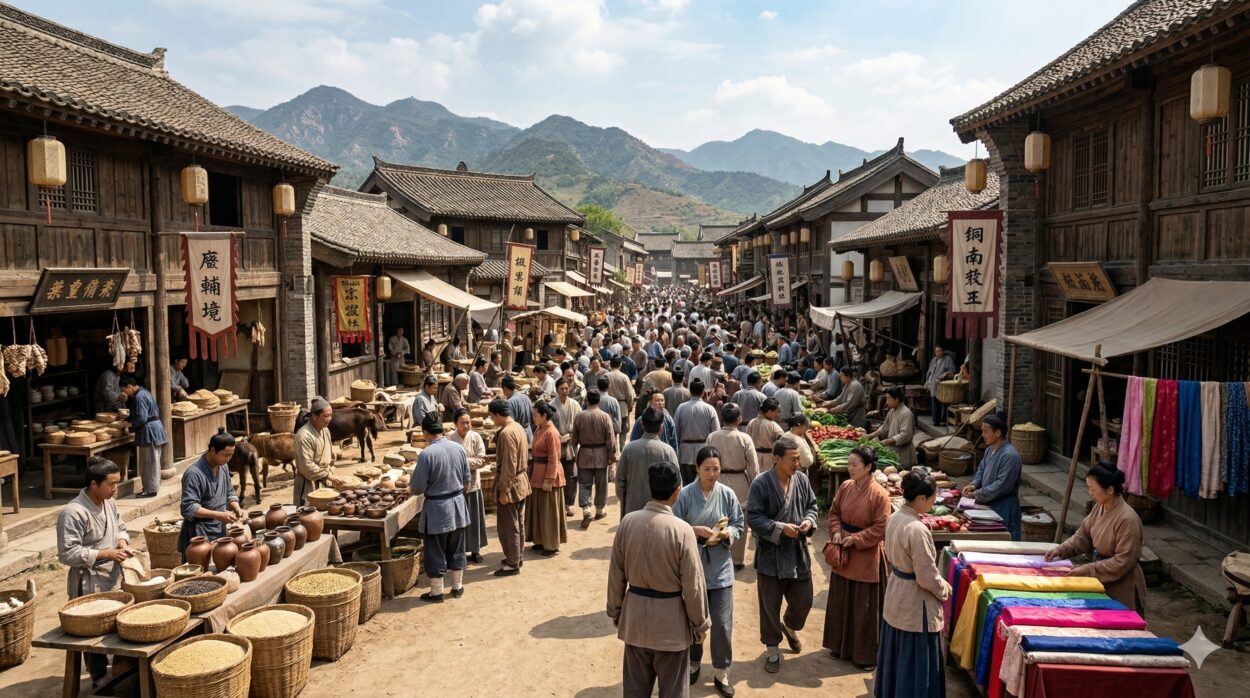
In a small village called Shankouzhuang, east of Tai’an County in Shandong, China, life moved in a familiar rhythm. On the first and sixth day of every month, the market would come alive — voices rising, goods exchanged, people gathering like a tide that came and went. Among them was an elderly man surnamed Liu, who ran a tavern at the marketplace. His business flourished, and over the years, he became a man of comfortable means. But more than wealth, it was his character that quietly set him apart.
Aiding a destitute couple
One day, Liu’s nephew came to him with a request. Already past middle age and without a son, he wished to buy a young woman as a concubine. “How much will you need?” Liu asked. “Twelve thousand coins.” Liu nodded and agreed. But just then, a sound drifted in from outside — soft at first, then unmistakable: the sound of someone weeping bitterly. Not ordinary tears, but the kind that carry helplessness in them.
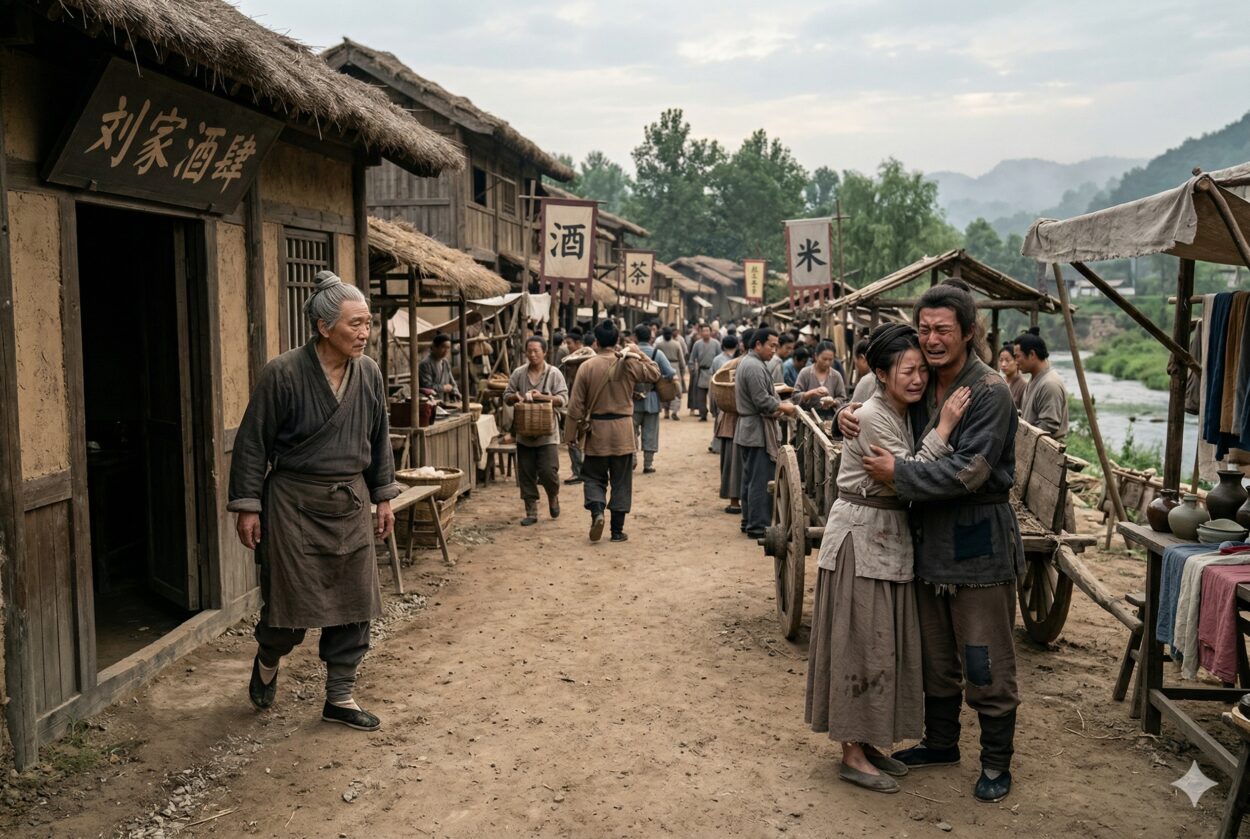
Liu stepped outside. There, by the roadside, stood a young couple, clinging to one another, crying as though the world had just ended. He gently asked what had happened. The man bowed his head and said: “My name is Yang Zhong. This is my wife. We fled the famine in our hometown, but we have exhausted all our money and now have nothing left. We cannot survive any longer. In desperation, I must sell my wife.” His voice trembled. “To be torn apart like this — it is unbearable.” The young woman was to be sold to Liu’s nephew.
Liu turned to his nephew and said calmly: “If they cannot bear to part, then let them be. You can find someone else. As for the money — even if you need more, I will lend it to you. No interest.” The nephew hesitated briefly, then gladly agreed. Relief flickered across the couple’s faces — but it did not last long. Yang Zhong spoke again, his voice heavy. “You have shown us great kindness. But even if we stay together, without money, we will still starve.”
Liu said simply: “I will give you the full amount that was to be paid for her.” Tears welled up again in the woman’s eyes. She sobbed: “We are strangers here. Even with the money, half will go to rent. What remains will soon be gone… and I may still face the same fate.” Liu gently reassured her: “Do not worry. I have some vacant houses on the outskirts of my estate — you may live there. Outside of the house, there is also a small plot of land you can rent and cultivate. Perhaps you will be able to make a living.”
At those words, the couple dropped to their knees, bowing again and again, their gratitude too deep for speech. And so, Liu kept his promise. He gave them shelter, land, and a chance — not just to live, but to start a life again.
Kindness takes root
Hardship had taught Yang Zhong the value of every grain of rice. He worked diligently, lived frugally, and little by little, their life began to improve. When he was finally able, he returned the 12,000 coins Liu had given him — along with interest. Liu, valuing his honesty, accepted only the original sum and returned the interest.
Touched beyond words, Yang Zhong and his wife never forgot. Whenever Liu’s household needed help, they came without being asked, working alongside the family as if they were their own. Kindness, once planted, had quietly taken root. A breath between life and death. Then one summer, tragedy struck.
Liu’s 4-year-old grandson fell gravely ill with smallpox. At first, it seemed manageable — but suddenly, his condition worsened drastically. His small body swelled, his skin stretched tight, and the sores flattened ominously. After struggling for nine long days… the child was gone. Grief fell over the household like a heavy blow. Heartbroken, Liu asked Yang Zhong to take the child and bury him on the land he had rented.
Yang Zhong dug a shallow grave. He placed the child inside — but as he began to cover him, something in his heart resisted. He could not bear to bury him completely. Instead, he gently covered the body, leaving the boy’s small face exposed. Then, as if time itself paused, he noticed the child’s lips trembling ever so slightly. At first, he thought it was his imagination. But when he placed his hand near the boy’s mouth, he felt it — a faint, fragile breath.
Startled and overjoyed, Yang Zhong quickly lifted the child out of the grave. Gradually, the boy’s breathing grew stronger. Overcome with urgency, he was about to run back and tell the family — but his wife stopped him. “If we tell them now, they will rejoice,” she said softly. “But if the child falters again… it will break their hearts a second time.” She paused. “Let us take him home first and nurse him back to life. If he lives, we can share the good news later. If not… we will quietly lay him to rest.” Her words, full of compassion, carried a quiet wisdom. Yang Zhong agreed.
Holding on to life
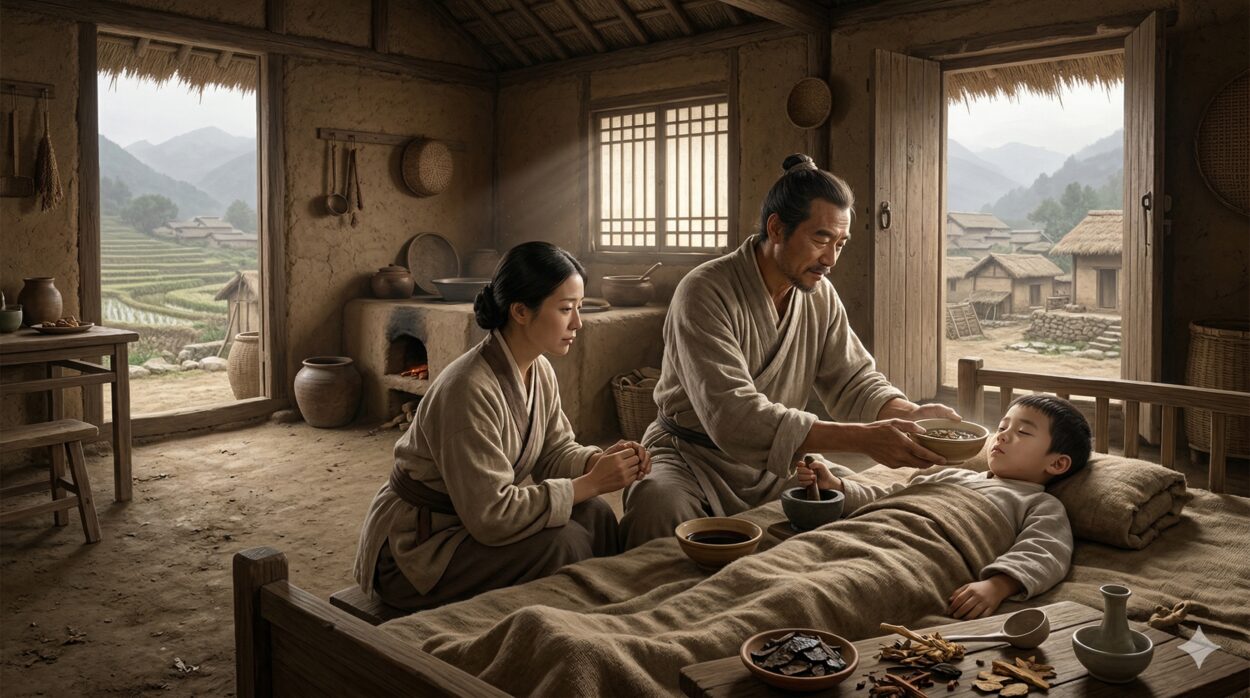
The couple brought the child home and, out of kindness, cared for him day and night. Yang Zhong remembered something — a few pieces of pangolin scale he had once found, with the ability to help draw out hidden toxins. He prepared a concoction and gave it to the child. The medicine was potent. Soon, blisters erupted, burst, and wept. He tended to them carefully, applying warm earth to cover and soothe them.
The child had not eaten for three days. Yet the day after taking the medicine, he awoke and called for his mother, asking for food. “Mother…” he whispered. “I’m hungry.” At that moment, hope returned. They fed him soft rice porridge, little by little. Day by day, the sores dried, hardened, and healed. After 20 days, the scabs fell away completely. The boy could walk again. But he missed his mother, often crying softly, calling for her.
Joy restored
At last, Yang Zhong sent his wife to inform Liu’s family. When the wife arrived, she found Liu’s wife quietly weeping, grieving for her lost grandson. She gently said: “The young master did not die. He is with us now. He misses his mother — please come to see him at once.” Overcome with astonishment and joy, Liu’s wife rushed there with the child’s mother. And there he was. Alive. Warm. Real.
Their happiness was beyond words — like embracing the moon, like finding a priceless pearl. When they asked how this miracle had happened, Yang Zhong recounted everything in detail. From that day on, Liu treated Yang Zhong’s family with even greater kindness.
A reflection on virtue
A Taoist observer, known as Master Xubai, later reflected:
To let a couple remain together — this is benevolence.
To give what was promised — this is trust.
To provide shelter — this is propriety.
To value honesty — this is wisdom.
To accept repayment but return excess — this is righteousness.
In Liu, all five moral virtues lived. Those who possess virtue, it is said, will receive blessings in return. Such generosity is rare. And yet, the reward came swiftly, beyond expectation. Perhaps it is no coincidence that, in the quiet order of Heaven, Liu’s grandson was restored to life. May stories like this awaken kindness in others’ hearts. Some may seem small in the moment — a decision, a gesture, a turning of the heart. But given time, they echo.
Translated by Katy Liu and edited by Tatiana Denning
Follow us on X, Facebook, or Pinterest
