
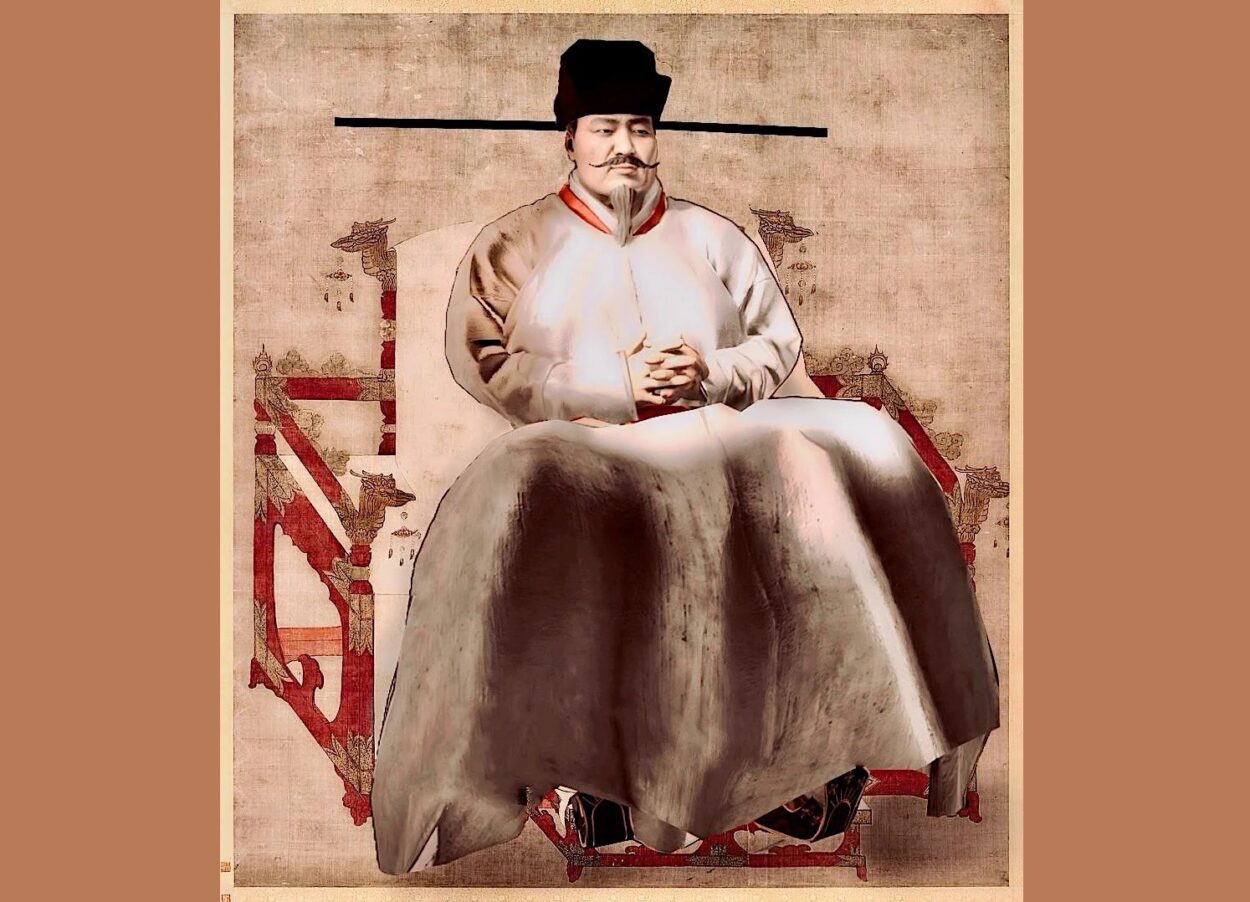
Zhao Kuangyin (927-976), Emperor Taizu of Song, began his career merely as a general under Emperor Shizong (921-959) of the Later Zhou dynasty (951-960). On one occasion, he found himself locked in a life-or-death struggle against an enemy army. Zhao was in the very heat of battle when, unexpectedly, his warhorse was struck by an arrow and collapsed dead beneath him. Thrown from the saddle, he was instantly surrounded by several enemy commanders, who seized the opportunity to close in.
At that critical moment, a cavalryman from Zhao Kuangyin’s own ranks galloped forward and, leaping from his mount, he shouted: “General, quick — take my horse!” In the urgency of the moment, Zhao cast only a fleeting glance at the trooper before mounting the warhorse and plunging back into the fray against the enemy.
After the battle, Zhao resolved to find the man who had saved his life. He issued a command to the entire army, offering a reward for identifying that specific cavalryman. Yet, to his astonishment, several days passed without anyone coming forward to claim the bounty. The matter remained unresolved for nearly a decade. Nevertheless, Zhao never forgot that soldier.
Following the death of Emperor Shizong, Zhao Kuangyin was proclaimed emperor in the Chenqiao Mutiny. Zhao ascended to the throne and became the ruler of the realm. Now possessed of immense wealth and power, he felt an even stronger desire to repay the benefactor who had risked his own life to save him. Relying on his own recollections, he commissioned court painters to create a portrait of the cavalryman. Copies were then posted throughout the country in a nationwide search, yet the effort still yielded no results. At this point, Zhao Kuangyin surmised that the cavalryman who had lost his steed had likely fallen in battle in an attempt to save him.
Several years passed. One day, a man arrived at the imperial palace bearing the portrait that Emperor Taizu of Song had commissioned years earlier. He said to the guards at the gate: “Simply announce that the man depicted in this portrait requests an audience.” The guards relayed the message. Upon learning that his benefactor had arrived, Emperor Taizu hastened to meet him.
Although more than a decade had elapsed, Emperor Taizu instantly recognized the very cavalryman who had saved his life all those years ago. Zhao Kuangyin could not help but exclaim: “I have been searching for you for many years. Why have you only come now? Had you not risked your life to save me back then, where would I be today?”
The old cavalryman replied: “When I saved you all those years ago, it was because you were the army’s commander-in-chief. Saving you meant saving the entire army, including myself. After that battle, I returned to my hometown wounded. I saw the portraits that the Imperial Court had circulated in search of me. I even took one down to keep as a memento. The fact that Your Majesty still remembers a humble subject like me is gratification enough. I seek no further reward.”
Just as Emperor Taizu was marveling at the man’s magnanimity, he noticed the old soldier’s expression suddenly change. With a grave demeanor, the man continued: “I have come to court to seek an audience today, not for my own sake. For the past two years, my hometown has suffered from a relentless drought, resulting in an absolutely no harvest. Yet, the local officials — seeking to inflate their administrative achievements — have concealed the true extent of the disaster and failed to report it to the throne. Consequently, corpses of the starved litter in the countryside. The people are reduced to utter destitution, and the horrors are unbearable — fathers are devoured by their own children! I could no longer sit idly by. I resolved to come before Your Majesty in the hope that you would show mercy and provide relief to the suffering people of the realm!”
Upon hearing this, Emperor Taizu immediately ordered that relief efforts be organized. He further decreed that his benefactor be bestowed with a reward of one hundred thousand taels of gold and granted the privilege of choosing any official post he desired. The man, however, replied: “If it were for the sake of official rank or wealth, this humble subject would have come to claim his reward long ago. I am keenly aware that my talents are insufficient to shoulder great responsibilities. It is best for me to simply live out my days in quiet obscurity. If Your Majesty would graciously permit it, I beg that the monetary reward intended for me be allocated as funds to aid the victims of the recent disaster. I would be eternally grateful!”
The old cavalryman immediately knelt and prostrated himself upon the ground. Emperor Taizu hurriedly bade him rise, then sighed deeply: “To be so indifferent to fame and fortune, and to hold the welfare of the common people so close to your heart — you are truly worthy of admiration! Since you have no desire to remain at court to serve as an official, I shall instead entrust you with the task of escorting this shipment of money and grain back to the affected region.”
Yet the old cavalryman demurred once more: “The act of disaster relief serves to demonstrate Your Majesty’s benevolent love for your people. If I were to act as the escort, it might inevitably lead others to believe that you are merely repaying a personal debt of gratitude to me alone — would that not be a disservice to Your Majesty’s boundless grace?”
Taizu pondered the matter for a moment; then, procuring paper and ink, he personally wrote a letter and handed it to the man, saying: “Should you ever encounter any difficulties in the future, simply present this letter, and you shall receive whatever assistance you require.” After bowing in gratitude, the old cavalryman carefully tucked the letter into the folds of his robe.
Years later, having lived a full and natural life, the old cavalryman passed away peacefully. As his descendants sorted through his personal effects, they were astonished to discover the letter written in Emperor Taizu’s own hand. The man who was content with a simple life — and who steadfastly refused to leverage his connection to the emperor to seek fame, fortune, or official position — was none other than Xing Song.
As the Caigentan aptly observes: “When writing reaches its pinnacle, it possesses no exotic novelty, and it is simply “just right”; when one attains the highest state of being, there is no extraordinary distinction, and it is simply “naturalness.” This concept of “naturalness” finds its most fitting illustration in the conduct and deeds of Xing Song. In this life — whether one pursues ambitious advancement or embraces a pastoral idyll — one must always remember this “naturalness” and never lose sight of one’s roots. Only then can one truly grasp the genuine beauty of existence.
Translated by Patty Zhang and edited by Laura Cozzolino
Follow us on X, Facebook, or Pinterest
