
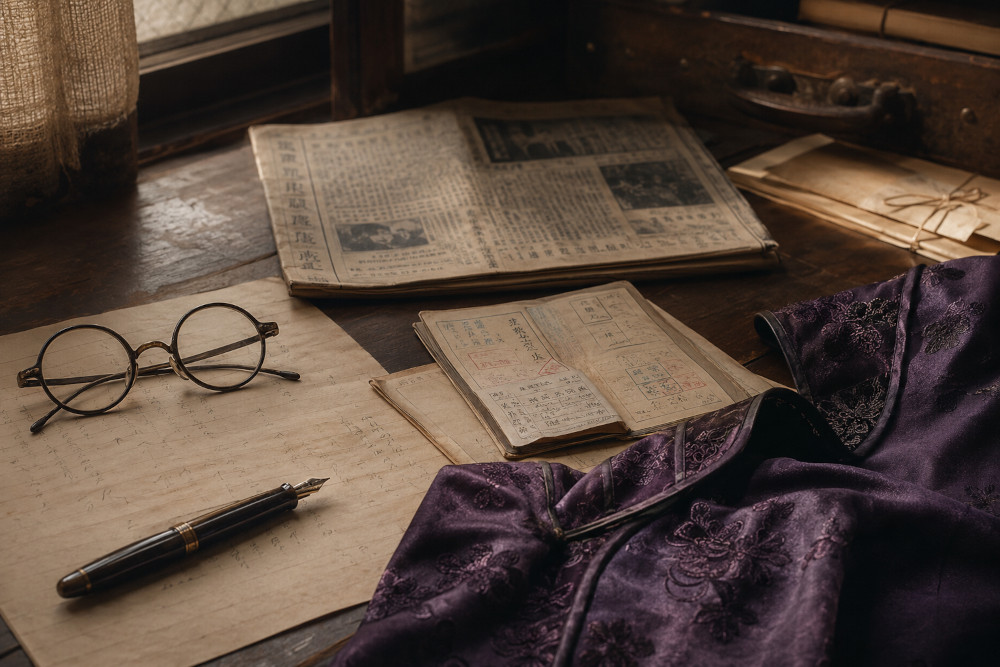
At critical moments, a single thought can shape a person’s life, even determining whether to stay or leave. What triggers such a decisive thought? Sometimes it is a keen sensitivity to small details that others overlook.
Eileen Chang saw a warning in clothing
Eileen Chang was one of the most respected writers in the Chinese-speaking world. Her works used sharp insight and delicate prose to portray the emotional worlds of men and women, exposing the complexities of human nature.
In 1949, as political power changed hands in China, Chang remained in the country. In 1950, she attended a conference for Shanghai literary and art workers wearing one of her favorite outfits: a deep purple cheongsam with a white open-knit mesh vest over it. In a hall filled with the heavy blues and grays of Zhongshan suits and Lenin suits, she felt as if she had sunk into a swamp, where even her way of breathing had to change.
She realized that in a country where clothing, speech, and writing would all be subject to control, the ordinary people, urban men and women, emotions, and social conditions she wrote about would have no place.
As the waves of history surged, most people saw and heard grand but hollow promises. Chang saw something else: the message sent by the colors and uniform styles of clothing. There was no freedom of choice. That message helped move her toward a decision.
In 1952, Chang found her opportunity. Quietly, but firmly, she acted on her choice. She applied to go to Hong Kong on the grounds that she needed to complete her studies at the University of Hong Kong. After nervously passing through the Luohu checkpoint near Hong Kong, she never turned back.
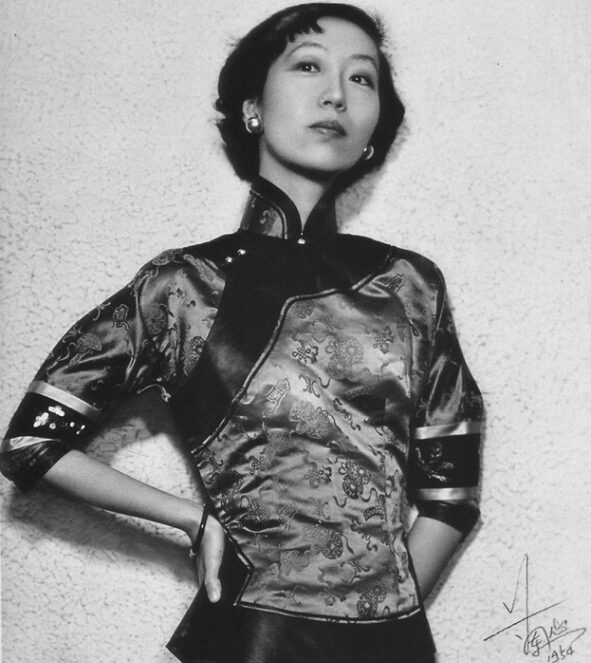
Hu Shih saw the meaning of ‘freedom’ and ‘bread’
In the 20th century, Hu Shih held a respected position in academic and intellectual circles. At the end of 1948, the Chinese Communist Party’s (CCP’s) forces were closing in on Beiping, now Beijing. Hu Shih was then president of Peking University. Through its underground representative Wu Han, the CCP tried to persuade Hu Shih, Wu’s former teacher, to stay. If he remained, they said, he could be made director of the Peking University Library, or even continue serving as president of the university.
Hu Shih replied coldly: “Do not believe the Communist Party’s line.”
Hu Shih understood the situation this way: “When the Americans come, there is bread and freedom. When the Soviets come, there is bread but no freedom. When they come,” referring to the CCP, “there is neither bread nor freedom.” This statement appears in “Introducing My Own Thought.”
Late on the night of Dec. 13, 1948, Hu wrote a letter to his old friend Chen Yuan, a historian and president of Fu Jen Catholic University. The letter was mailed the next day. The day after that, Hu boarded a Nationalist government plane sent to rescue scholars and flew south. In April 1949, he went to the United States. In 1958, he went to Taiwan.
In June 1949, while in the United States, Hu read “An Open Letter from Chen Yuan to Hu Shih.” Over the next several months, he studied the text in detail and concluded that Chen, who had remained in Beiping, had likely been ordered to prepare a draft, which was then rewritten by CCP writers. One clue was that the letter was written in vernacular Chinese, a style Hu knew his old friend Chen did not use.
The letter used Chen’s voice to attack Hu Shih and put on a show of freedom for those outside the Iron Curtain:
“You say there is ‘absolutely no freedom’? I now see with my own eyes that the people are living freely, the young people are studying and discussing freely, and the professors are conducting research freely. One can say with certainty that true freedom exists only here in the liberated areas.”
After reading the “open letter,” Hu sighed and said: “My poor old friend Mr. Chen Yuan no longer has even the freedom not to speak.”
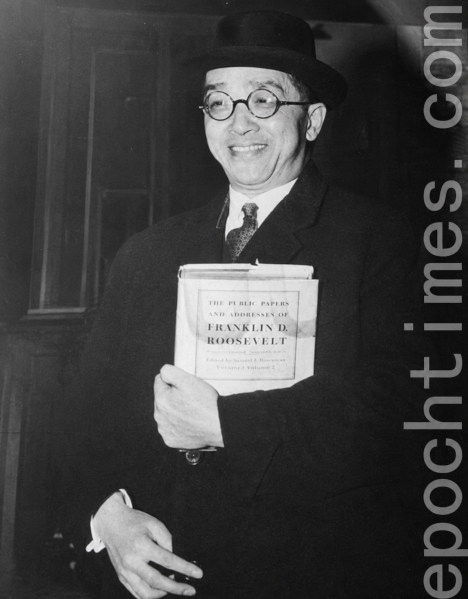
The reality beneath the CCP’s grand version of the emperor’s new clothes did not deceive him. Hu later said: “The ‘Open Letter from Chen Yuan to Hu Shih’ is the clearest proof that under the CCP, there is absolutely no freedom of academic thought.” This appears in his “Postscript to the So-Called ‘Open Letter from Chen Yuan to Hu Shih.’”
On Sept. 22, 1950, Hong Kong’s Ta Kung Pao published “A Criticism of My Father — Hu Shih,” written by Hu’s second son, Hu Sidu. The following day, Hu Shih saw a report about it in The New York Times. When reporters interviewed him that day, Hu said: “My son was left behind in China. His present statement relates to a point I have been emphasizing recently: in communist countries, there is no freedom to remain silent.”
The two events Hu personally experienced proved that under the CCP’s rule, there was “absolutely no freedom, absolutely no freedom of speech, and absolutely no freedom not to speak.”
Hu saw that the core of the new regime was absolute ideological control. The CCP’s later political campaigns confirmed his judgment. First came the Thought Reform Campaign, then the Anti-Rightist Campaign, and then the Cultural Revolution. Intellectuals were humiliated, physically abused, psychologically tormented, and forced to criticize themselves. Few could preserve their dignity and emerge unharmed.
The pitiful and tragic Hu Sidu obeyed orders and wrote a public criticism of his father, yet a few years later, he was still labeled a “rightist.” In the end, he fell into despair and committed suicide. Wu Han, who had been ordered to persuade Hu Shih to stay, later became one of the first targets used to launch the Cultural Revolution. He suffered torture and died in prison. His remains are still unaccounted for.
Translated by Chua BC
Follow us on X, Facebook, or Pinterest
