
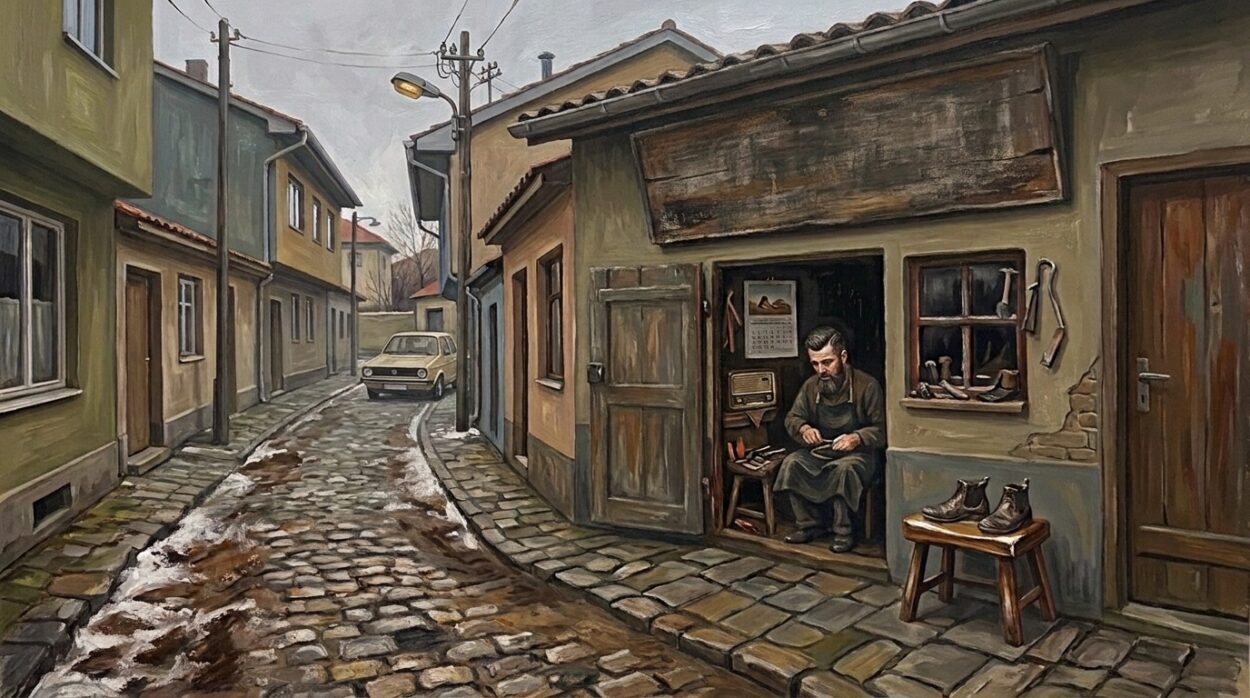
The wind along the old street always carried the musty fragrance of aged wood and dried grass, mingled with the earthy smell of half-melted snow and damp mud. At the end of the cobblestone lane stood a little shoe-repair shop that had served the neighborhood faithfully for decades. Over time, relentless rain had completely eroded the characters on its worn wooden sign, leaving the business name illegible to passersby. Only the low wooden stool sitting outside still shone with a polished smoothness, as though the relentless passage of years had rubbed it thousands of times into a gleaming mirror.
My father’s hardworking hands were remarkably like that weather-worn stool. They were rough in the truest and most unforgiving sense of the word, scarred by decades of manual labor and harsh climate. His knuckles were cracked like dry earth during a severe drought, and black shoe polish seemed permanently embedded beneath his fingernails, no matter how vigorously he washed. When I was small, my father’s entire world was contained within a remarkably tiny space — a humble shop measuring less than 10 square meters, a sharp steel awl, a few spools of tough hemp cord, and me sitting quietly in the corner.
I often watched my father work silently in his tiny repair shop
One of the most vivid images preserved in my childhood memory is the quiet dusk after I returned home from school and finished my daily homework assignments. My father would carefully take the dented aluminum kettle off the small heating stove, pour me a cup of warm water, and hand it over with gentle hands. Then, without pausing to rest, he would lower his head and patiently continue repairing the worn-out leather footwear piled in front of him. His spine seemed to grow noticeably more stooped with every passing year, yet he never complained about the endless physical burden of his labor.
For as long as I could remember, my father always seemed to lean slightly forward whenever he sat on his wooden bench working on a boot. At the time, I didn’t understand why he kept such a rigid posture or why he spent his whole life in that tiny room. I only thought his back looked heavy and dull, resembling an old clay figure that could never speak or share its internal thoughts. Sometimes, when I saw my primary school classmates wearing bright new sneakers, I felt deep embarrassment walking around in old rubber shoes my father had patched together by hand.
A sudden winter storm tested our resilience
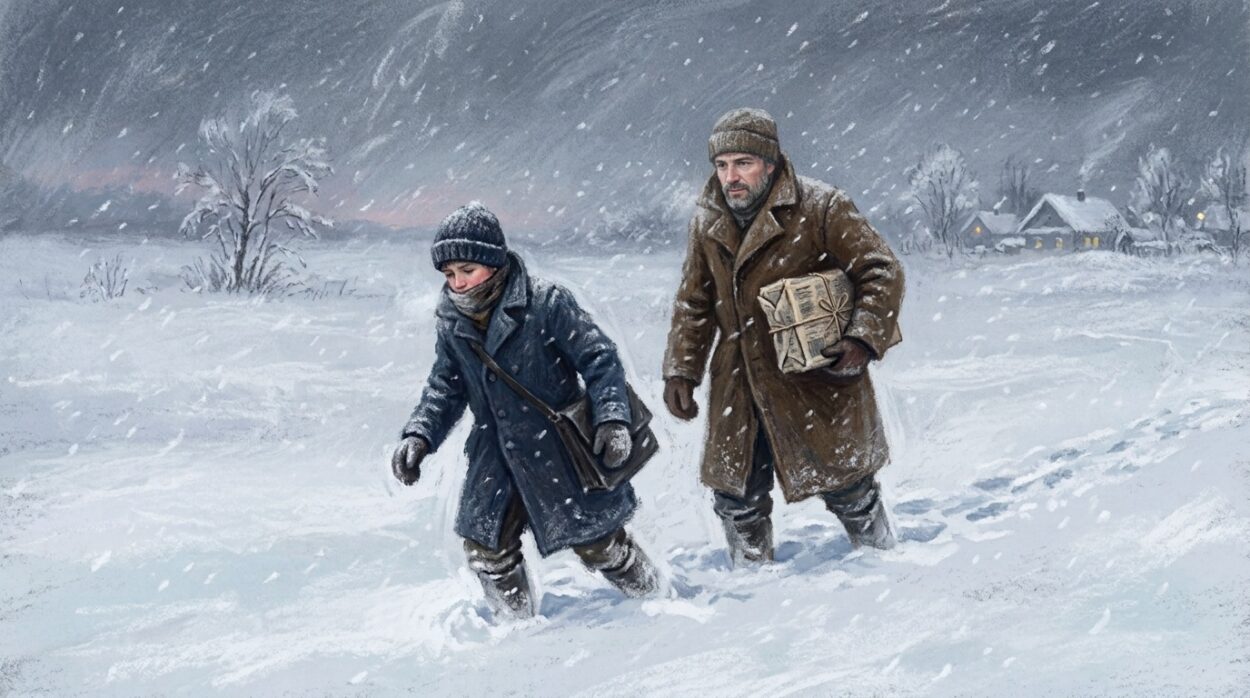
Eventually, the coldest winter of my youth arrived with an unrelenting blizzard that blanketed our town in deep white drifts. A sudden heavy snowfall blocked all major roads, creating serious transportation hazards just when I was scheduled to take a crucial entrance examination in the nearby city. When I prepared to leave early that morning, darkness still blanketed the icy streets, and fresh snow covered the ground past my ankles. Despite the extreme weather conditions, my father insisted on accompanying me across the frozen countryside, quietly carrying a small package wrapped tightly in old newspaper.
When we finally reached the ancient stone bridge at the entrance of our village, the bitter winter wind drove tiny shards of ice into every exposed gap between our clothes. My father suddenly stopped walking on the slippery path and set his newsprint package down onto a relatively dry patch of snow. He crouched in front of me and, without a word, reached out and pulled off the wet cotton shoes that were already soaked through on my shivering feet. I instinctively cried out and tried to pull my foot back from the frost, but his large hand held my ankle with firm determination.
In that startling instant, I was utterly stunned by the sensation of his touch against my freezing skin. My father’s calloused hand was as icy cold as raw iron, and his rough palm felt like coarse sandpaper rubbing against my ankle. He didn’t even have a decent pair of insulated cotton gloves to protect himself from the storm, wearing only thin cloth work gloves with frayed threads sticking out at the seams. Carefully, he unrolled the damp newspaper wrapping and pulled out a brand-new pair of thick, custom-crafted winter shoes that he had secretly made for my examination day.
My father gave me custom handmade shoes
He had lovingly crafted them himself, placing every single stitch by hand while staying up late beneath the dim yellow glow of his workbench lamp. The rubber soles were hand-stitched, thick, and sturdy enough to repel the deep slush, while the uppers were fashioned from clean, durable black khaki fabric. Inside the handmade shoes were generous, insulating layers of fluffy white cotton designed to shield my feet against the most punishing winter cold. “Put them on right now, as they will keep you warm on your long walk,” my father urged softly as he guided my feet into the boots.
My father looked up into my eyes, and his face, usually so stern and serious from hard labor, softened into a gentle smile. The deep wrinkles at the outer corners of his weather-beaten eyes spread outward like the delicate folds of an opened paper fan. I slipped my feet into the pristine cotton shoes, and at once, a deep wave of soothing warmth traveled from the soles of my feet straight up into my chest. I turned and walked on through the howling snow, leaving my father’s stooped figure behind as he gradually faded into the pale white distance.
As I marched toward the distant city exam hall, a profound understanding suddenly washed over my heart regarding the true nature of my quiet home life. Those sturdy patched shoes I had once been deeply embarrassed by, along with the quiet daily companionship I had taken for granted, were all woven from the same selfless affection. They represented a father’s clumsy but profoundly deep way of protecting his child — offering everything he had to ensure I had a better future than his own. His silent sacrifices every day in his humble repair shop were meant to give me a chance to go further than he ever could.
The enduring lesson of his quiet sacrifice
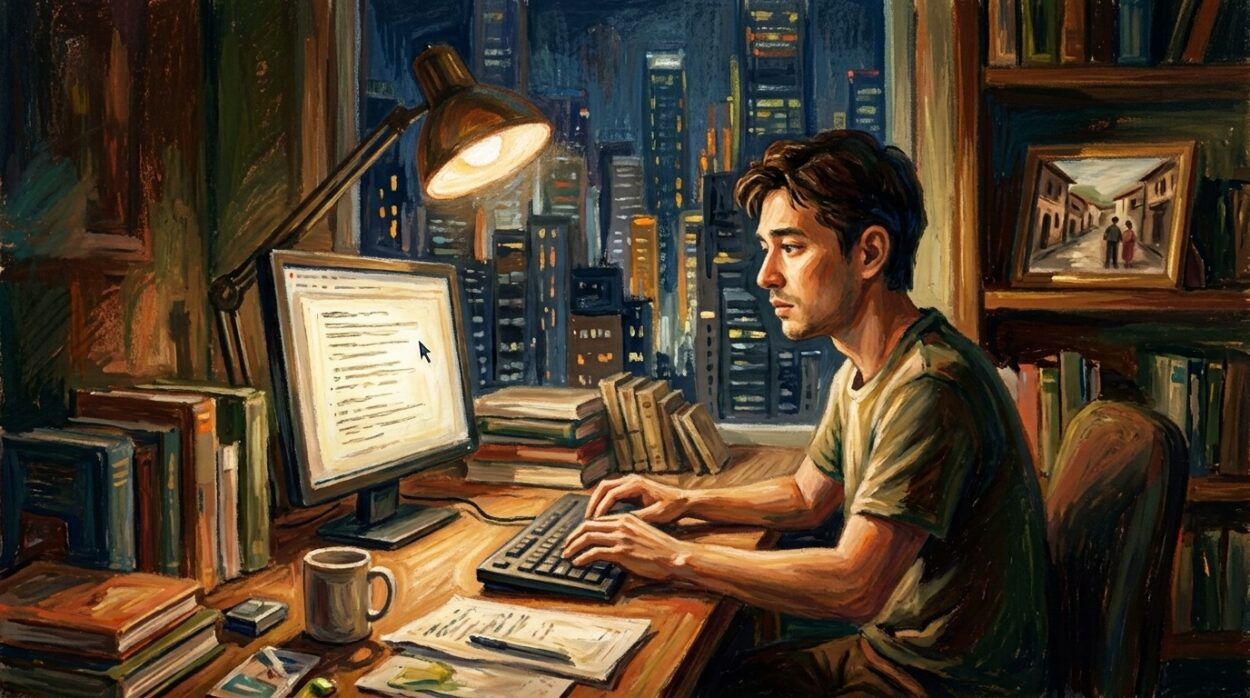
The long years flowed swiftly through my fingers like water, carrying me away from the tiny cobbler shop into a broader world. I eventually made my way to a sprawling metropolis of steel and concrete, discovering a lifestyle far larger than the humble village life I knew as a youth. Yet whenever I sit beneath the late-night glow of my desk lamp, typing on my keyboard, something soft and reflective stirs in my heart. No matter how many achievements I accumulate in the modern world, the memory of those handmade shoes remains the anchor of my soul.
Life is ultimately a long journey filled with unexpected turns, shifting priorities, and continuous personal transformations. We are constantly forced to say goodbye to old chapters of life while setting off toward one unknown destination after another across distant horizons. Yet no matter how far I travel from that dilapidated shoe shop, the lingering warmth beneath my feet reminds me of the foundational strength I inherited from my upbringing. The selfless dedication shown on that snowy stone bridge remains the most important lesson of my life.
My father never expressed his love through spoken poetry or grand declarations, choosing instead to communicate his devotion through silent labor and hand-stitched leather. He spent his youth crouched over an anvil in a tiny room so that I might stand tall and walk confidently anywhere in the world. His cracked hands and stooped shoulders were the price he willingly paid for my comfort, safety, and future education. That understanding transforms every hardship I face today into something manageable, because I know the immense cost of the foundation beneath my steps.
Whenever life becomes difficult, I close my eyes and remember the freezing wind on the old village bridge and the miraculous heat of those cotton shoes. That memory serves as a perpetual hearth in my spirit, warming me through my own metaphorical winters and reassuring me that I am never truly alone. Somewhere back in that small village, or preserved forever in my fondest memories, a devoted protector quietly gathers all life’s harsh storms unto himself. He bore the bitter cold without complaint, deliberately leaving behind the warmest and clearest skies for me to enjoy.
Translated by Katy Liu and reviewed by Tatiana Denning
Follow us on X, Facebook, or Pinterest
