
From Revelation’s “mark of the beast” to blockchain ID and deepfake detection, humanity’s quest for verification becomes a new test of the soul.
Prophecy and the test of identity
In the last decade, faces have become unreliable witnesses. A politician’s apology circulates online before he ever utters it; a celebrity’s likeness appears in videos she never filmed. When even one’s own image can be fabricated, the idea of an authentic self begins to tremble.
Two millennia ago, an exile on Patmos described a vision in which every person bore a sign on the hand or forehead that determined who could “buy or sell.” Whether one reads that passage from the Book of Revelation as theology, allegory, or ancient politics, its imagery now feels strangely literal. Identity has again become the medium through which power flows.
Today’s contest is not fought over creed, but over verification. The same instinct that once produced signet rings and royal seals now drives biometric scanners and cryptographic wallets. Humanity still seeks a mark — some trusted proof that distinguishes the true from the false.
The logic of marking: trust, authorization, exclusion
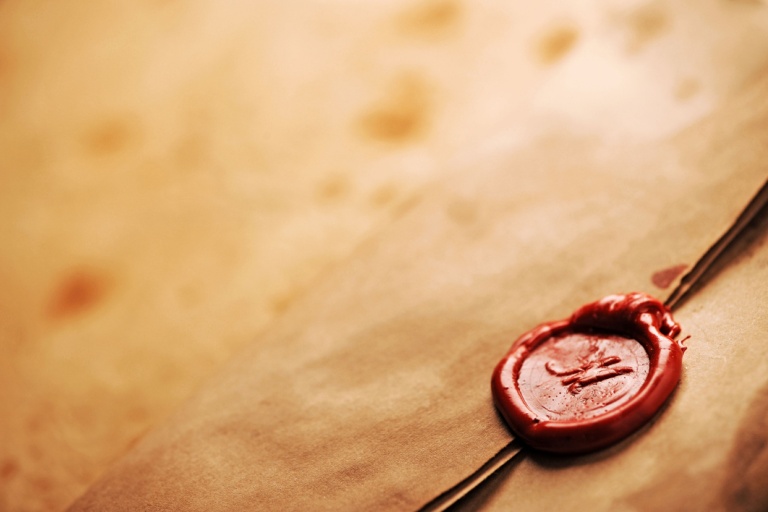
From antiquity’s wax seals to the magnetic stripe, every civilization has engineered its own shorthand for legitimacy. The mark has always carried a double charge: it confers belonging while excluding the unmarked.
Modern versions multiply. The W3C’s Decentralized Identifiers v1.0 standard lets a person create a cryptographic identity independent of any single government or company. Its companion, the Verifiable Credentials Data Model 2.0, defines how proof of education, age, or citizenship can travel across networks without exposing private data. The European Union’s eIDAS 2.0 regulation will soon make such credentials mandatory for access to public services. These are the new seals of the digital kingdom.
Yet trust is a fragile covenant. The very technologies designed to protect it are being corroded by their mirror image: synthetic media that can counterfeit nearly anything. When the mark itself can be forged, what remains of faith? When signatures, faces, and voices are reproducible at scale, the mark no longer testifies to truth — it imitates it. Out of that collapse emerges a new specter: the deepfake.

Deepfakes and synthetic souls
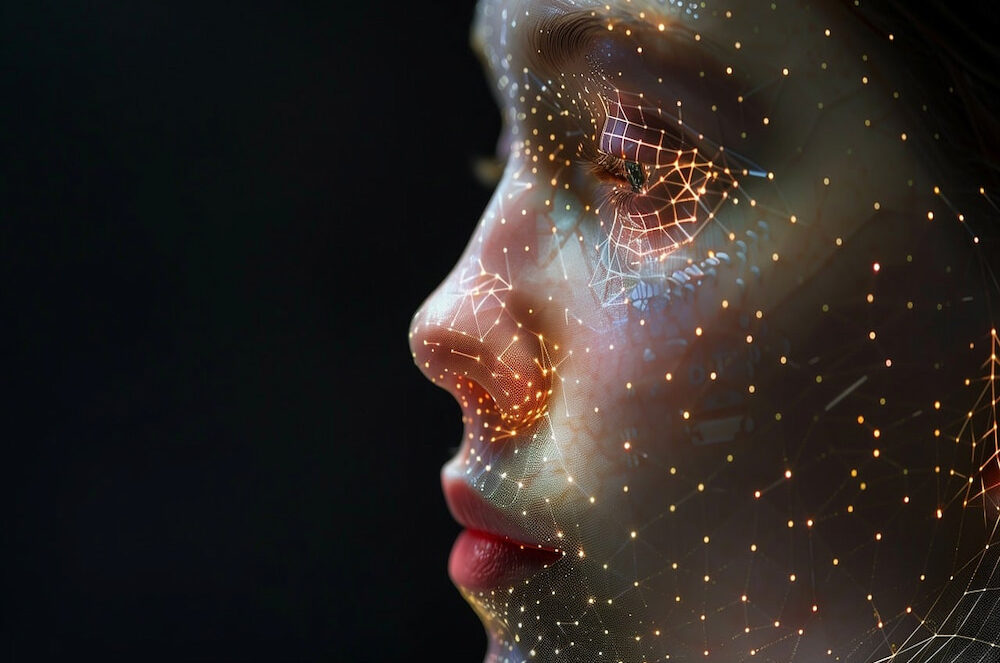
In 2024, the U.S. Federal Trade Commission opened a rule-making docket on AI-enabled impersonation after scammers used cloned voices to defraud families. Researchers at the National Institute of Standards and Technology warned that synthetic content had become so convincing that detection tools would “never be perfect.” The coalition behind the C2PA standard now works to embed cryptographic “content credentials” into every photo and video, so that future software can verify that they have not been tampered with.
These efforts sound technical, but the anxiety beneath them is spiritual: if everything visible can be falsified, what can still be believed? The philosopher Jean Baudrillard once argued that modern life replaced reality with simulation; AI industrializes that process. A digital prophet might say that the age of the deepfake is the age when the image finally worships itself.
The response has been predictable. In the face of infinite imitation, institutions reach for stronger forms of authentication. And so the search for salvation shifts from the eye to the algorithm. To restore trust, we turn to the machine for reassurance — in the form of digital identification.
Digital ID and the last frontier of verification
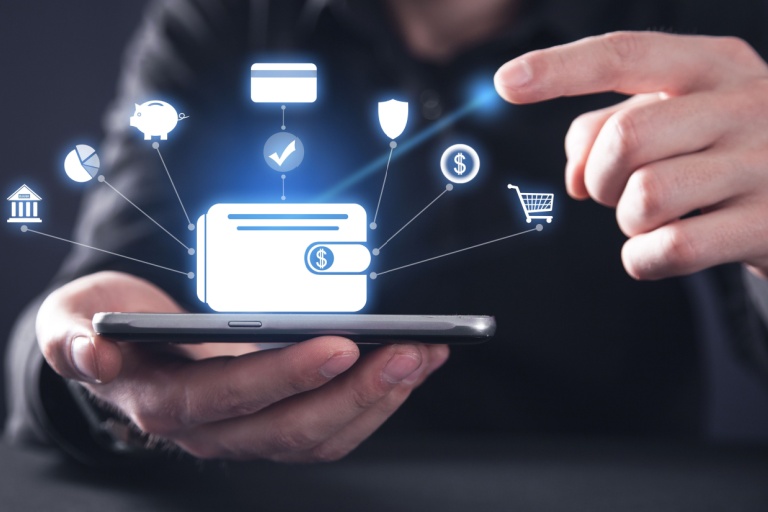
Governments and corporations now race to design systems that can prove you are who you say you are. The ISO/IEC 18013-5 standard defines the mobile driver’s license that will eventually replace the plastic card; it allows an official to verify a credential without seeing the underlying data. The European Digital Identity Wallet promises similar convenience. In the United States, Amazon’s One palm-pay and Mastercard’s biometric card make the body itself a transaction key.
Even cryptocurrency circles, founded on ideals of anonymity, have joined the faith. The project Worldcoin issues each participant a cryptographic “World ID” tied to an iris scan, calling it proof of personhood. The concept is defended by white papers and challenged by privacy regulators in equal measure. Vitalik Buterin, one of Ethereum’s creators, has warned that no technology can guarantee personhood without risking surveillance.
The pattern is unmistakable: as synthetic media multiplies, so do systems of verification. Each promises to separate the human from the imitation, yet each draws us deeper into the machinery of control. The prophecy’s logic unfolds again — commerce and identity fused in a single token. But beneath every scan and ledger lies the same ancient hunger — to know who truly belongs.
Spiritual resistance: Keeping your name unblemished
The same vision on Patmos that warned of a universal mark also described another sign: the names of the faithful written, not on skin, but in the “book of life.” The contrast is telling. One mark is imposed; the other is chosen.
In a secular age, that distinction survives as the difference between authentication and integrity. No algorithm can guarantee the latter. A verified identity can still tell lies; a pseudonymous one can still speak truth. The new digital order — AI content provenance, biometric commerce, government wallets — may well be necessary, but it is not redemptive. It secures the transaction, not the soul.
The question, then, is not whether the mark will come; it already has, in a thousand small acceptances. The real question is what remains unmarked within us. When every face must be scanned, every utterance signed, and every movement logged, authenticity becomes an act of quiet rebellion — a refusal to let verification replace character.
The ancient vision of beasts and marks did not predict silicon or blockchain, but it understood the temptation to exchange mystery for proof. The prophecy endures because it speaks to this: the fear that in making identity perfectly knowable, we might make ourselves unknowable.
Coda
Across research institutes and regulatory bodies, the fight for authenticity continues. The EU AI Act requires that synthetic images and voices be clearly labeled. The U.S. executive order on artificial intelligence mandates watermarking. The NIST AI 100-4 report catalogs the weaknesses of every detection scheme. Each measure draws a tighter circle around the visible world, yet none can secure what the Book of Revelation called the “spirit of truth.”
Perhaps the mark of the beast was never a prediction of a chip or a code, but a warning about the bargains we make when fear eclipses faith — in one another, in the possibility of honesty, in the human face itself. The tools of verification will grow ever more intricate; the question of authenticity will remain unsolved. In the end, the choice between being known and being real may prove to be the oldest of all.
Revelation and the language of signs
In the 13th chapter of Revelation, John describes a power that forces “all, small and great, rich and poor, free and slave” to receive a mark on the hand or forehead so that no one might buy or sell without it. For centuries, theologians debated whether the mark was literal or symbolic: a seal of allegiance, a test of worship, a metaphor for moral compromise.
Read alongside the 21st century’s technology stack, the passage begins to look like a map of our anxieties. The mark governs commerce (“buy or sell”), identity (“on the hand or forehead”), and loyalty (“the name or number”). Modern identity systems echo the same triad. A biometric or cryptographic credential grants access to trade, attaches verification to the body, and binds the individual to an issuing authority. The parallel is not prophecy fulfilled so much as a recurrence of a pattern: whenever humanity builds total systems of trust, it risks confusing verification with virtue.
The self-fulfilling vision
Apocalyptic writing often operates as a moral feedback loop rather than a prediction. People read a warning, design institutions to prevent it, and, in doing so, replicate the structure it describes. Revelation’s “mark” can thus be seen as a warning about the psychology of fear — how the longing for certainty breeds the very control it dreads.
In that sense, the present rush toward universal identification — block-chain wallets, biometric payment terminals, proof-of-personhood protocols — functions as a self-fulfilling revelation. We build the mark to escape deception; the mark becomes the instrument of compliance.
Humans, non-humans, and the ledger of being
The most startling frontier is the attempt to distinguish human from non-human actors in a world saturated by artificial intelligence. Blockchains promise incorruptible records; central banks experiment with digital currencies whose transactions can be traced and restricted. To participate in such systems, every entity must carry a unique cryptographic signature — a form of baptism by hash.
In the best scenario, this could protect dignity: proof-of-personhood schemes could stop bots from manipulating elections or economies. In a darker one, they could divide the species into verified and unverified, citizens and ghosts. If every economic act requires a credential tied to the body, then personhood becomes a permission, not a premise.
Revelation’s imagery again feels instructive. Its “book of life” records the names of those who remain true; its “mark” identifies those who conform. Between those two ledgers lies the entire modern debate over data, privacy, and agency. The question is no longer theological, but existential: Who writes our names now, and on what ledger?
Prophetic resonance
Across history, apocalyptic literature has served less to forecast the end than to expose the logic of power. The beast in Revelation symbolizes an empire that demands worship; today’s algorithms ask only for data, but achieve a similar level of submission. Each scan, each token, each verified transaction brings efficiency — and dependence.
Seen metaphorically, the prophecy is not coming true; it is being reenacted. The vision of a world where every transaction is marked, every participant cataloged, every dissent economically costly, is less divine foreknowledge than a mirror held up to human design.
The paradox of proof
Blockchain enthusiasts call their invention “trustless” because it eliminates the need for faith in intermediaries. Yet this is precisely the paradox the ancient text warns about: a society that trusts only what it can mathematically prove ends up worshipping its own proof. The mark ceases to be a symbol of corruption and becomes a symbol of dependence — the belief that identity must be certified before it can be real.
The challenge for this century is to build technologies that verify without enslaving, that record without branding. Revelation’s imagery endures because it keeps asking whether knowledge can coexist with mystery, whether a ledger can coexist with grace.
Follow us on X, Facebook, or Pinterest
