

If human destiny is predetermined by Heaven, can it ever be altered? Let’s consider the following legendary life story of a Qing Dynasty thief who rose to become a tycoon.
During the reign of Emperor Daoguang in the Qing Dynasty, in a certain place, there lived a destitute man named Li. He had begged for a living in his youth and later turned to petty theft. Yet within a few years, his fate took a dramatic turn — he became immensely wealthy, his descendants multiplied, and among his offspring were those who passed the imperial examinations and rose to high office as provincial governors. This astonishing reversal of fortune stemmed fundamentally from two acts of kindness he performed.
During his days as a thief, a wealthy family in the county had lost their husband and father, leaving behind three widowed sisters-in-law. The eldest and second wives bore no sons, while the third wife carried a posthumous child. All three widows fervently hoped for a boy to perpetuate the family line.
During the Qingming Festival, the eldest and second wives traveled to tend their ancestors’ graves, a three-day round-trip journey. The third wife, pregnant, remained at home with only an elderly woman to attend to her. Learning of this, Li conceived a plan to steal valuables. That night, he scaled the wall and entered. While the young and elderly women were checking the doors, he hid in a dark corner of the third wife’s bedroom, intending to steal valuables after she fell asleep.
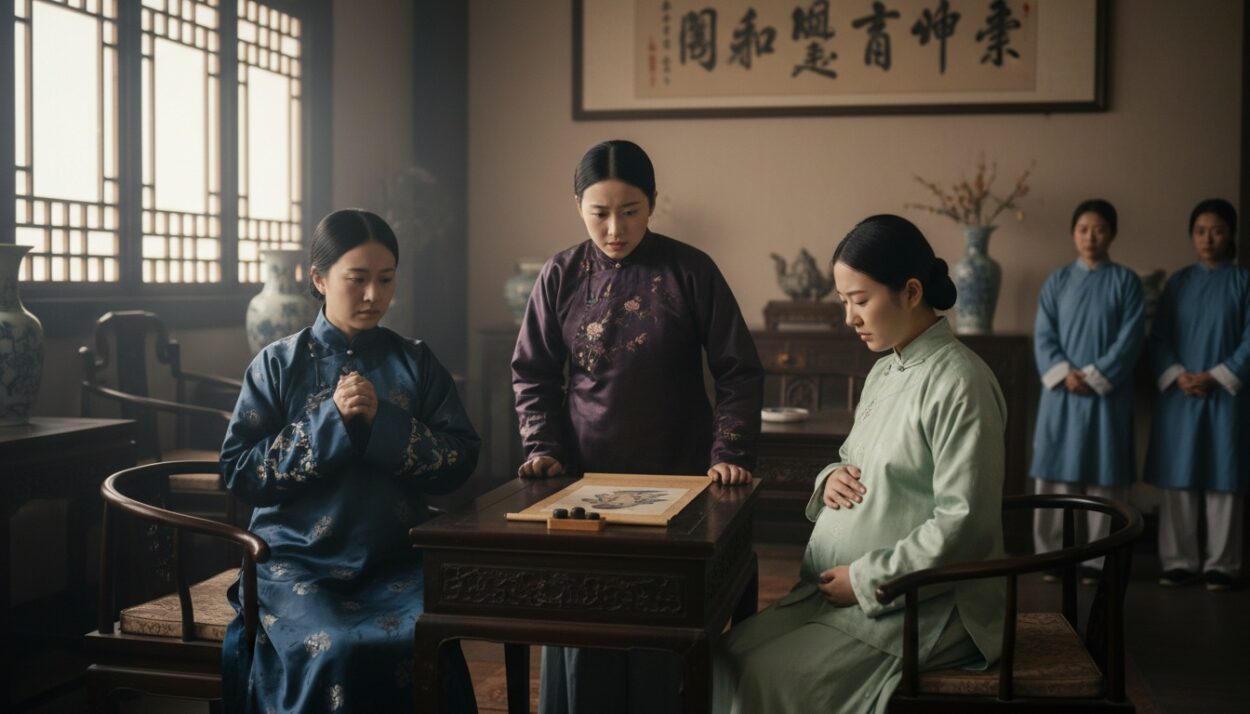
Unexpectedly, the young woman did not retire to bed after returning to her room but instead read by lamplight. The elderly woman, seemingly tipsy, urged her to go to bed early, and she was dismissed. Moments later, a well-dressed young man pushed open the door. The woman screamed for help, but the man forced himself upon her. She refused fiercely, calling for the old woman — yet no one answered. Seeing her resistance, he drew a knife: “Submit, or I’ll kill you!” She defiantly retorted: “An honorable woman would rather die than be dishonored!”
At this critical moment, Li leapt forward and, in an act of fury, snatched the sword and cut the man down. The woman froze in terror. Li flung open the door and shouted for help in catching the man. Neighbors rushed over to find a man, from the west, lying in a pool of blood. Fortunately, he was still alive.
The crowd delivered both men to the magistrate’s office. During interrogation, the man from the west falsely accused the woman of adultery with Li. The righteous man declared calmly: “I am a thief — the whole world knows it. Even if this woman were unfaithful, would she commit adultery with a thief?”
To prove his innocence, he even confessed to all his past thefts. After verifying his claims, the authorities subjected the second man to severe interrogation. He finally confessed the truth — he had coveted the woman’s beauty, bribed an old woman to guide him, and intended to commit an indecent act. The authorities proceeded to punish both men in accordance with the law. They honored the woman for her chastity and loyalty and recognized Li’s courage, thereby exempting him from punishment. Li’s actions preserved the woman’s virtue.
After his release, Li returned to a life of crime. One night, having been caught out in the act of stealing, he fled in panic into a dilapidated temple, hiding beneath the altar. Accidentally, he knocked over a clay statue and fell to the ground. In a dazed state, he saw a ghostly red-bearded, green-faced attendant brandishing a knife, shouting threats, and seeking to take his life.
Suddenly, a voice echoed from the hall: “This man preserved a woman’s virtue and safeguarded an heir to the imperial line. His hidden virtue is immense. The Heavenly Emperor has already bestowed rich rewards upon him. How dare the ghostly attendant harm him!” The attendant was rebuked and forced to retreat. The voice continued: “Beneath the vermilion steps, silver shall be bestowed upon him.”
Li knelt in gratitude and departed. In his dream, he saw a mountain of silver beneath the steps. Just as he was about to approach it, he stumbled and fell unconscious. He awoke at dawn the next day. Remembering the words from his dream, he searched the steps carefully but found only a single large coin inscribed “Kangxi Tongbao.” Thinking perhaps the gods were mocking him, he pocketed the coin and left.
At a village entrance, he used the coin to purchase some sweet potatoes to stave off his hunger. Soon, an old man came to buy some food, but in his haste to leave, he dropped his bag. Li retrieved the bag and, upon opening it, was astonished to find: two ingots of gold, over a hundred silver dollars, several hundred copper coins, and four account books detailing substantial unpaid sums.
A thought struck him: Could this be a divine gift? But then he realized that if the ledgers were lost, the old man would be ruined. Even if it seemed “Heaven-sent,” he shouldn’t take it. So he waited where he stood, hoping the owner would come back. Sure enough, the old man hurried back. Li returned the bag in full, keeping only a few coins for his food. Without checking, the old man invited him home.
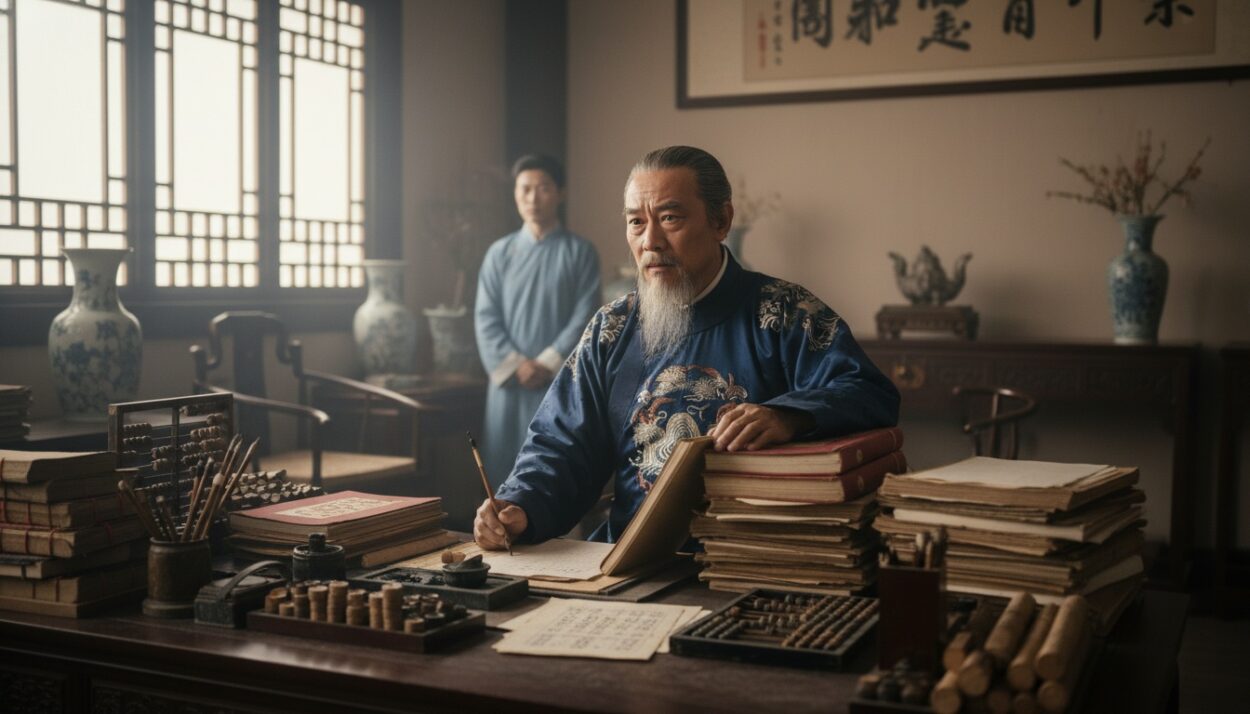
The old man was a wealthy merchant from Chu, having operated a lumber business for years with vast capital, much of it on credit. The loss of the ledger would have ruined his entire enterprise. Overwhelmed with gratitude, he offered a thousand taels of silver as a reward, but the young man firmly refused.
When the old man inquired about his livelihood, the young man confessed frankly: “Truthfully, I am a thief.” Hearing this, the old man rejoiced: “So you are the one who protected that chaste woman? Heaven and earth bear witness! Today, you refuse to gain, displaying integrity beyond even scholars. Will you join me in business?” Li gladly agreed.
From then on, Li learned commerce under the elders. Over two years, he worked diligently and meticulously, keeping accounts without a single discrepancy. The old man, advanced in years and childless, adopted him as his heir and brought him back to his hometown. The villagers knew nothing of his origins. After the old man passed away, Li inherited the family business, which flourished even more. His descendants multiplied, some passing the imperial examinations, others rising to high offices like provincial governors and military commanders, thus establishing a prominent clan in the Chu region.
From beggar to tycoon, from thief to patriarch of a noble house — the transformation in the fate of a certain individual may seem fortuitous, yet it was inevitable. An act of courage in the face of danger saved a life; a moment of integrity in the presence of wealth preserved his true self. It was precisely these two pivotal choices that altered the course of his entire life.
Fate may be predetermined, but virtue can alter its course. When kindness forms the foundation of destiny, even Heaven and Earth will rewrite their story.
Translated by Eva and edited by Maria
Follow us on X, Facebook, or Pinterest
