
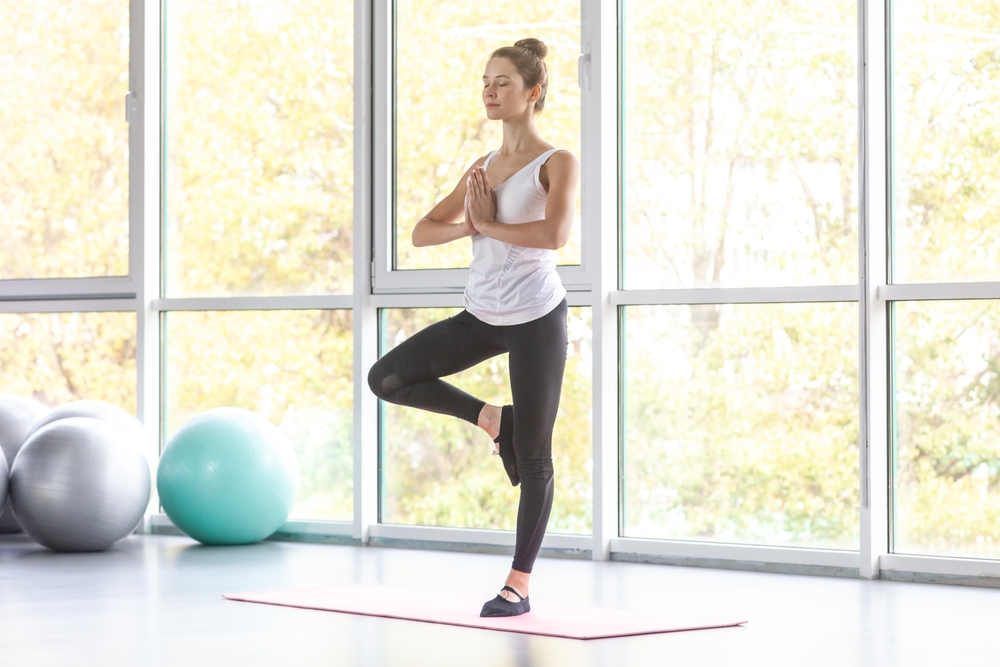
Try something for me right now. Wherever you are sitting, plant both feet, then lift one foot a few inches off the floor and hold it there. Notice how your standing ankle wakes up, how your hip steadies, how your whole body quietly negotiates with gravity. You are doing more work than it appears.
That small act, standing on one leg, sits behind one of the most repeated wellness claims of the past decade: that a single minute of it can equal 50 minutes of walking. The idea was popularized by Dr. Ishihara Yumi, a Japanese naturopath born in Nagasaki in 1948, whose ancestors served as imperial physicians. It spread across the Internet under the charming nickname “flamingo stand.”
The claim sounds too good to be true, and in one sense it is. But underneath the viral headline lies something genuinely worth knowing. There is real science here about your bones, your balance, and even how long you may live. And there is a quieter story too, an ancient Chinese practice that arrived at the same posture centuries ago and called it something far more poetic. Let us separate the myth from the medicine, and the East from the West.
Does standing on one leg equal 50 minutes of walking?
Here is the honest answer. One minute of standing on one leg does not burn the same calories or train your heart the way 50 minutes of walking does. The comparison was never about cardio. It is about the load your bones feel.
The figure traces back to Japanese orthopedic research on a method called dynamic flamingo therapy, developed by Dr. Yoshihiro Sakamoto. When you balance on a single leg, the head of your thighbone (the femur) carries roughly 2.75 times the load it bears when you stand on both feet, without you lifting a single weight. By this measure of bone loading, about one minute on each leg places a similar demand on the hip as nearly an hour of walking.
So the “50 minutes” number is real, but specific. It describes mechanical stress on the femoral neck, not energy burned or fitness gained. Think of it as a remarkably efficient way to signal your bones to stay strong, not a replacement for a daily walk. Both matter, and they do different jobs. Once that caveat is clear, the appeal of this tiny exercise only grows: a meaningful dose of bone-strengthening stimulus in the time it takes to brush your teeth.
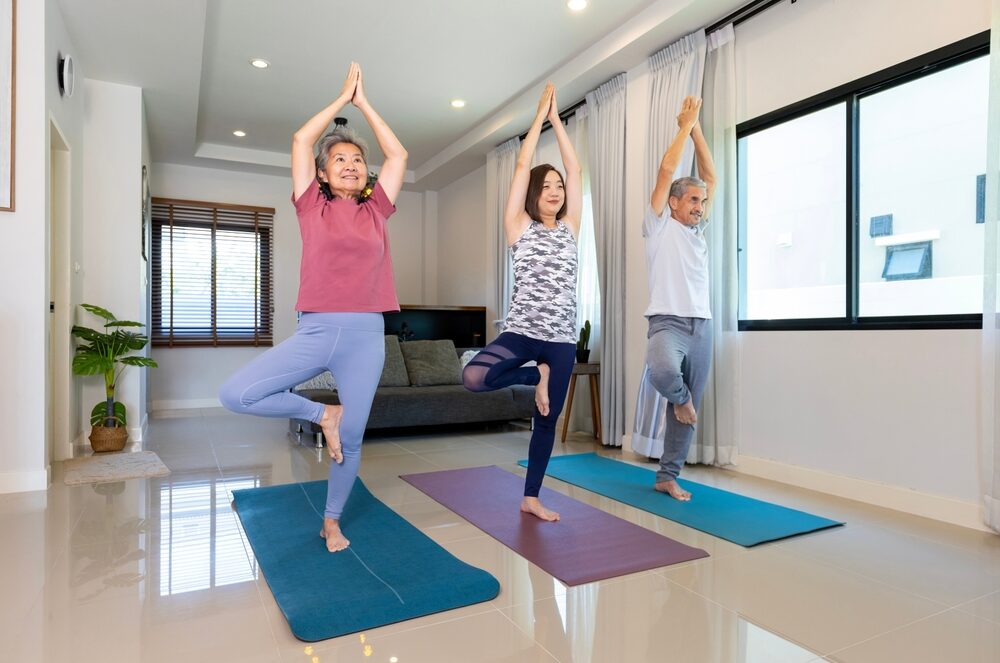
The science of the flamingo stand: Bones, balance, and longevity
Strip away the viral packaging, and you find three well-studied benefits, each backed by published research. This is where a simple party trick becomes a serious wellness practice.
Building stronger bones
The principle behind dynamic flamingo therapy predates the study itself. It rests on Wolff’s law, the observation that bone adapts to the loads it bears. Stress a bone in healthy ways, and it lays down more minerals; leave it idle, and it thins. By concentrating your body weight onto one leg, you give the hip a brief, intense signal to reinforce itself.
The results are encouraging. In Dr. Sakamoto’s research, regular one-leg stand practice improved bone mineral density in roughly 30 to 50 percent of patients, depending on how faithfully they maintained it. For older adults worried about thinning bones, that is a free, low-risk addition to whatever else they are doing, and it pairs naturally with other no-cost wellness habits drawn from traditional practice.
The balance test that predicts how you’re aging
Balance turns out to be a surprisingly honest mirror of your overall health. A 2022 study in the British Journal of Sports Medicine found that people aged 50 and over who could not hold a one-leg stand for even 10 seconds had roughly double the risk of dying in the following years compared with those who could.
Researchers at the Mayo Clinic reached a related conclusion in 2024: how long you can balance on one leg is a better marker of healthy aging than either grip strength or walking speed. Of all the measures they tracked, balance declined the fastest with age. Standing on one leg, in other words, is both a workout and a yearly check-up you can give yourself for free.
Fewer falls, more independence
For older adults, a fall is rarely just a fall. It is often the moment independence starts to slip away. This is where balance training earns its keep. After six months of dynamic flamingo practice, participants in Sakamoto’s work could stand longer on one leg with their eyes open and manage daily activities more independently.
Broader evidence agrees. A systematic review found that combining balance work with light strength training reduced falls among community-dwelling adults aged 65 and older by up to 50%. The exercise will not erase every risk, but few interventions this simple offer so much protection.
How long should you be able to stand on one leg?
A natural question follows: what counts as good? Researchers have measured this across age groups, and while individual results vary, the broad pattern is clear. Balance time tends to fall as the years pass, which is exactly why practicing it matters.
Here are rough reference points for standing on one leg with your eyes open, drawn from balance research, including a long-running Duke University study:
| Age group | About how long (eyes open) |
|---|---|
| In your 30s to 40s | Close to 60 seconds |
| In your 50s | Around 45 seconds |
| In your 60s | Around 30 seconds |
| In your 70s | Around 25 seconds |
| 80 and older | 10 seconds or less |
Treat these as friendly benchmarks, not a diagnosis. The Mayo Clinic suggests that holding a steady one-leg stand for about 30 seconds is a sign you are aging well. If you fall short today, that is useful information, not bad news. Balance is one of the most trainable abilities we have. The very act of practicing the test improves your score, much as gentle daily movement and choosing the best time of day to exercise compound into real gains over time.
The Golden Rooster Stands on One Leg: An ancient Chinese practice
Here is the twist that turns a fitness fad into something deeper. Long before any naturopath measured loads on a thighbone, Chinese practitioners were standing on one leg on purpose, and they gave the posture a beautiful name: the Golden Rooster Stands on One Leg (金鸡独立, Jīn Jī Dú Lì).
The pose appears in tai chi forms and in qigong practice, with roots reaching back to Shaolin training. What sets the traditional version apart from the modern flamingo stand is one instruction that changes everything: close your eyes. Without sight to steady you, your body must rely entirely on its own internal sensors, and the work becomes far more demanding and far more revealing.
In traditional Chinese medicine, the reasoning goes beyond muscles and bones. Six of the body’s meridians, the channels through which qi (气, qì) is believed to flow, run through the legs. Three are yin (the spleen, kidney, and liver channels) and three are yang (the stomach, bladder, and gallbladder channels). Practitioners hold that balancing on one leg with the eyes closed gently presses on whichever of these channels is weak, much like a self-administered massage, and that with patient practice, the weaker channels strengthen and the organs they connect to benefit in turn. It is also said to draw the body’s energy downward toward the feet, grounding a restless mind.
These are traditional beliefs, not clinical prescriptions, and they should be held lightly alongside modern evidence rather than in its place. Yet there is a quiet harmony in the meeting of the two views. Western science says the one-leg stand strengthens bone and sharpens balance. The Chinese tradition says it harmonizes the body’s inner channels and settles the spirit. Both, in their own language, point to the same conclusion: this humble posture is good for you. To explore more of this living wisdom, see Nspirement’s coverage of traditional Chinese health practices, where ancient methods and modern research continue to meet.

How to do the exercise safely
You need no equipment, no app, and no special clothing. You do need a little caution, especially at first. Stand near a wall, a sturdy chair, or a countertop so you have something to touch if you wobble.
- Set your base: Stand tall with your feet hip-width apart, shoulders relaxed, and arms loose at your sides. Breathe normally.
- Lift one leg: Slowly raise one knee until your thigh is roughly parallel to the floor, or as high as feels stable. Keep your back straight and your gaze soft.
- Hold for one minute: Aim for 60 seconds, but build up gradually. Even 10 or 20 seconds is a fine starting point.
- Switch legs: Lower the first foot and repeat on the other side for another minute.
- Repeat throughout the day: The routine studied is 1 minute per leg, 3 times a day, for about 6 minutes total.
- Progress to eyes closed: Once the eyes-open version feels secure, try the traditional Golden Rooster method with your eyes closed, always within reach of support. Expect it to be humbling.
A few words of care. If you live with osteoporosis, vertigo, inner-ear trouble, or have had a recent fall, talk with a healthcare professional before you begin, and never practice the eyes-closed version without something solid beside you. Balance work is gentle, but a fall is not. Treat the exercise the way you would treat any wellness habit worth keeping, with patience and respect for your own body. Building steady focus this way pairs nicely with other simple practices for mental sharpness.
Common questions about standing on one leg
Is it better to balance with your eyes open or closed?
Start with your eyes open until the position feels steady, then progress to eyes closed. Closing your eyes removes the visual cues your brain leans on, so your muscles and inner ear must work much harder. This is the traditional Golden Rooster method, and it is far more demanding. Keep a wall or chair within reach.
How many times a day should you practice?
The routine studied in Japan is 1 minute per leg, 3 times a day, for a total of roughly 6 minutes. Beginners can start with 10 to 20 seconds per leg and build up patiently. Consistency matters more than duration.
Can this exercise really help with osteoporosis?
In research on dynamic flamingo therapy, regular practice improved bone mineral density in a meaningful share of older adults. Think of it as a helpful complement to medical care, not a replacement. If you have osteoporosis or a high risk of falls, check with your doctor before you begin.
A small practice with a long reach
Strip away the viral headline, and what remains is genuinely worth your minute a day. Standing on one leg loads your bones in a way that can help keep them strong. It trains the balance that protects your independence as the years go by. It even offers a quiet, honest measure of how you are aging, one you can check whenever you like. And it carries the wisdom of two cultures, the modern flamingo stand and the ancient Golden Rooster, arriving by different paths at the same gift.
No, one minute will not replace your daily walk, and it was never meant to. But few things this simple, this free, and this portable give back so much. You can do it while the kettle boils, while you brush your teeth, while you wait for a video to load.
So the next time you find yourself with an idle moment, lift one foot from the floor and stand like a rooster greeting the dawn. Your bones, your balance, and perhaps your future self will quietly thank you. For more gentle wisdom on natural health and longevity, follow Nspirement on Facebook, Pinterest, or X, and keep nourishing your mind, body, and spirit one small habit at a time.
Follow us on X, Facebook, or Pinterest
