
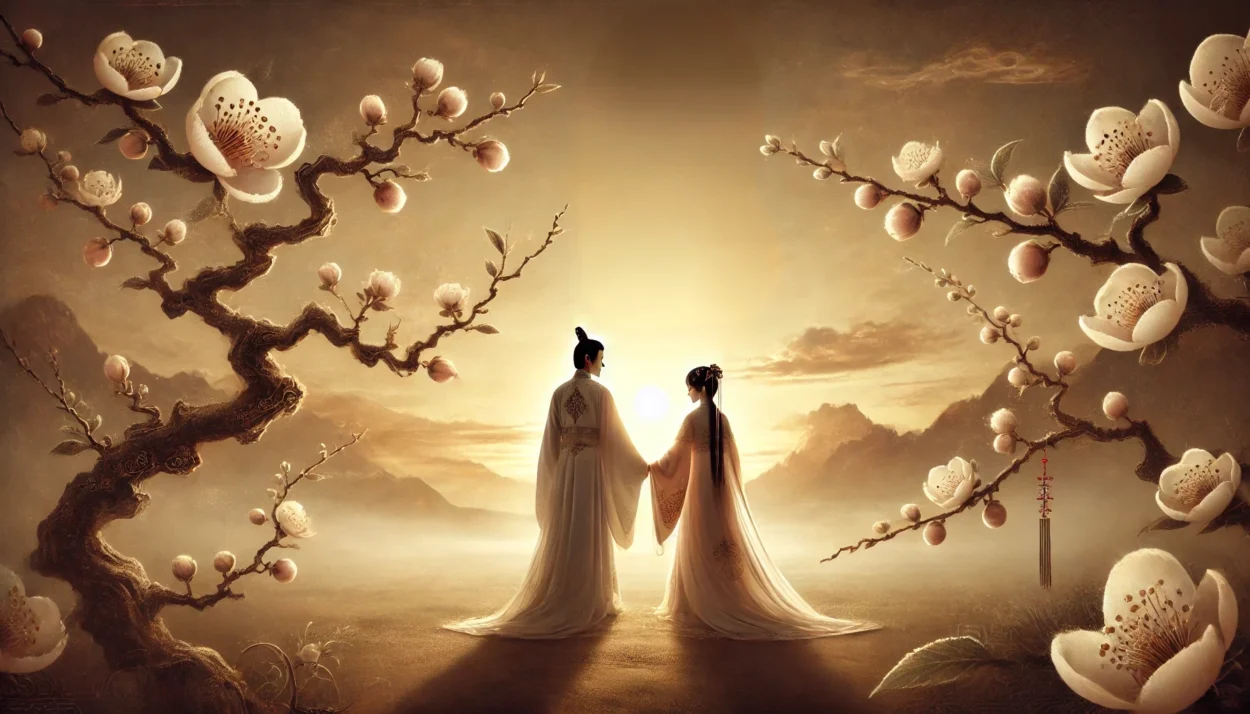
In a world where instant gratification often overrides long-term values, marital integrity has, for many, shifted from a sacred commitment to a flexible arrangement. Love, once anchored in duty, honor, and spiritual alignment, now too often flutters on emotional convenience. But what if marriage is not merely a social contract — but a karmic vow, binding two souls in a shared journey of growth, virtue, and mutual elevation?
Long before dating apps and no-fault divorces, ancient men and women saw marriage as a crucible for character. It was not beauty, wealth, or health that determined the worth of a spouse — but integrity, loyalty, and shared moral vision.
Stories from history offer a glimpse into this deep-rooted belief system, where commitment was honored even in the face of personal cost, and virtue was rewarded not just in status, but in legacy.
Let us journey into the past to discover how marital integrity and character forged blessings, healed hearts, and stood the test of time — and what we can learn from those ancient souls today.
The moral bedrock of marriage — ancient cultural foundations
In traditional Eastern cultures, particularly Confucian-influenced societies, marriage was not merely a union between individuals — it was a moral and societal cornerstone. The Book of Rites describes marriage as a sacred ritual, where the husband was expected to be righteous and protective, and the wife gentle, loyal, and dignified.
But beyond ritual, there was a deeper belief: that breaking a marriage promise invited spiritual debt. Upholding one’s vow, especially when circumstances changed for the worse, was seen as a test of one’s moral fiber — and the results echoed across generations.
This context forms the backdrop of the historical figures we’re about to explore — men who, when tested, chose character over convenience.
Real-life stories of unshakeable marital integrity
Zheng Shutong and the mute bride
Zheng Shutong, a man of letters during the Song Dynasty, had his marriage arranged in childhood, which was common in his time. Years later, after passing the imperial exam, he returned home only to discover that his fiancée had become mute due to illness. His family urged him to find another bride.
But Zheng responded with quiet nobility:
“To abandon her now is not what a gentleman does.”
He chose to honor his childhood betrothal, marrying her despite her condition. Not only did their marriage flourish in love and harmony, but their son later also rose to become a successful scholar. Character, it seems, bore fruit both in affection and fortune.
Su Ruhui and the ‘ugly wife’
Born in Shaanxi and orphaned young, Su Ruhui was also pledged to a bride in childhood. Upon coming of age, he learned that his fiancée was physically unattractive and had a disabled leg. Yet he never wavered.
When teased by friends for marrying a woman others might reject, Su offered a profound reply:
“If I hate her, it means I have forgotten my mother. To abandon my wife would be unfilial.”
Here, love was not rooted in lust or aesthetics, but in loyalty to lineage, memory, and virtue. Su Ruhui rose through the military ranks to become a general — his personal discipline mirrored in his public service.
Han Yunmen and the blind girl
In Ming Dynasty Henan, Han Yunmen was betrothed to a girl who became blind before marriage. Her family, embarrassed and resigned, offered to dissolve the engagement. Han’s own parents agreed.
But Han refused:
“If I only marry beauty, where is my virtue?”
He married the blind girl and sent back a beautiful maid offered as dowry, saying:
“A man’s heart is stirred by beauty — it is better that I not be tempted, for my wife and I to remain harmonious.”
This astonishing insight into the nature of temptation, discipline, and marital harmony speaks volumes. He later became an esteemed educational official, his life marked by the very harmony he sought to protect.
Liu Yiping and the sister dilemma
Perhaps the most dramatic of these tales comes from Liu Yiping of Shanxi. Betrothed to the eldest daughter of the Guan family, he discovered on his wedding night that he’d been deceived — the younger, healthy sister had taken her place due to the elder’s illness.
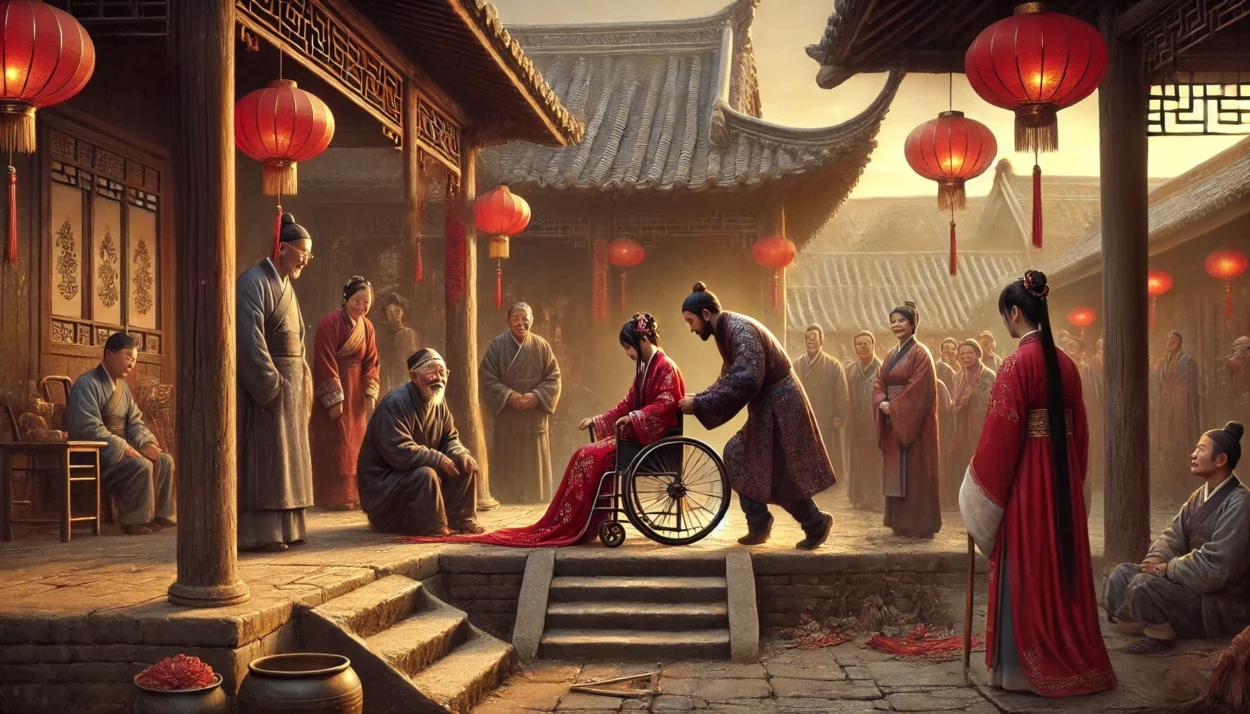
Rather than lash out or abandon either, Liu took extraordinary action. He arranged for his younger brother to marry the younger sister, and he went to find the sick fiancée. Upon visiting her, her spirit revived, and she quickly recovered.
Two weddings were held. Two lives restored. One man’s virtue created blessings for many.
Liu Yiping’s rise to Minister of the Imperial Household was, again, no coincidence in a karmic universe.
Lessons in integrity and spiritual law
Across these stories, a pattern emerges. These men were not saints — they were tested. Their fiancées became ill, disabled, blind, or deemed unattractive. Social pressure, family persuasion, and even opportunity tempted them to choose the easy way out.
Yet they chose righteousness over reputation, compassion over comfort, and vows over vanity.
And in each case, blessings followed: career advancement, family harmony, and societal respect. Their decisions weren’t just morally superior — they were karmically rewarded.
In traditional thought, especially Confucian and Taoist teachings, virtue aligns one with the natural order. To honor one’s promise in marriage — especially when tested — is to build unseen spiritual merit, the kind that silently shapes destiny.
Ancient vs. modern marital values
Contrast this with modern marriage culture, where:
- Pre-wedding breakups are common over cosmetic issues or minor incompatibilities.
- Divorce is often treated as a first resort, not a last resort.
- Commitment is conditional — on health, income, beauty, or convenience.
In the age of choice overload and swiping left, loyalty is rare. Character is often seen as negotiable. Yet we now also see rising loneliness, broken families, and emotional instability — perhaps the karmic result of these shifting values.
Ancient people understood something we’ve forgotten: that marriage is not about perfection — it’s about promise. And honoring that promise brings peace, strength, and blessings that no fleeting romance can offer.
Conclusion: reclaiming the sacred promise
What can we learn from Zheng Shutong, Su Ruhui, Han Yunmen, and Liu Yiping?
That marital integrity is not weakness — it is power.
That character, when tested, reveals our soul’s true strength.
That when vows are kept in the storm, blessings follow in the calm.
Marriage is more than love. It is the soul’s promise to another soul: “I will not leave you, even when life does.”
It is in this vow that true partnership, peace, and prosperity are born.
In an age of endless choice and shallow values, may we look to these ancient stories not as folklore, but as signposts — a call to return to what matters: honor, faithfulness, and the quiet strength of keeping our word.
Let us not marry for the perfect body, the ideal status, or fleeting attraction — but for the opportunity to become better people together. For that is where the real blessing lies.
Based on a translation by Chua BC
Follow us on X, Facebook, or Pinterest
