
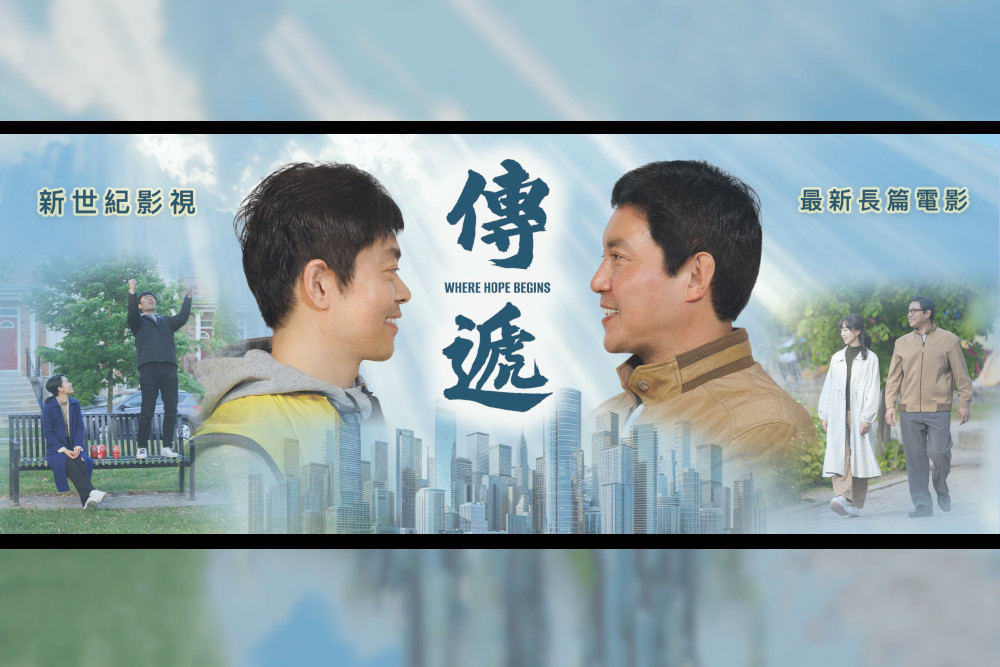
After watching That Which We Pass On, the latest feature film from New Century Films commemorating the July 20 crackdown — the day in 1999 when the Chinese Communist Party launched a nationwide campaign to suppress Falun Gong — I couldn’t stop thinking about it.
There are no flashy special effects. Instead, the film uses simple, understated cinematography to tell the story of a brother and sister navigating hardship, redemption, and the quiet power of kindness. That restraint and sincerity are exactly what make it so moving.
I found myself asking again and again:
“If I had received that letter, what would I have done?”
“In a place like China, where fear is constant, would I have the courage to make things right like Yang Fan did?”
“In a world where moral values are eroding, can I still hold onto my conscience — and pass on kindness?”
A crisis of conscience and the road to redemption
That Which We Pass On is a story about guilt, repentance, and the resilience of the human spirit.
Yang Fan, a graduate student, has been raising his younger sister, Yang Yun, since childhood. Just as he’s about to graduate and begin a new chapter in life, tragedy strikes — his sister falls seriously ill.
To save her, Yang Fan abandons his studies and takes on multiple jobs, trying desperately to pay for her treatment. But in a society where a single illness can bankrupt a family, his efforts aren’t enough. In a moment of despair, he makes a terrible decision: He sends an anonymous blackmail letter to a family known to practice Falun Gong.

In China, Falun Gong — a spiritual practice based on the principles of Truthfulness, Compassion, and Forbearance — has long been targeted by the Chinese Communist Party (CCP). Sending a threatening letter to such a family, especially in an environment of ongoing suppression, could have serious consequences.
But what no one expects is the family’s response.
Kindness when it’s least deserved
Yang Fan later discovers that the family he targeted includes his own academic advisor. Overcome with shame and fear, he breaks down. But instead of exposing him, the professor chooses compassion. He helps Yang Fan quietly, preserving his dignity and privacy.
It is this act of unconditional kindness — at Yang Fan’s lowest moment — that gives him the strength to face his wrongdoing and begin the journey of making things right.
The emotional weight of the story feels especially real in today’s China. On the surface, society may appear stable, even prosperous. But for many families like Yang Fan and Yang Yun, life is a fragile balancing act. One illness, one accident, and everything can fall apart.
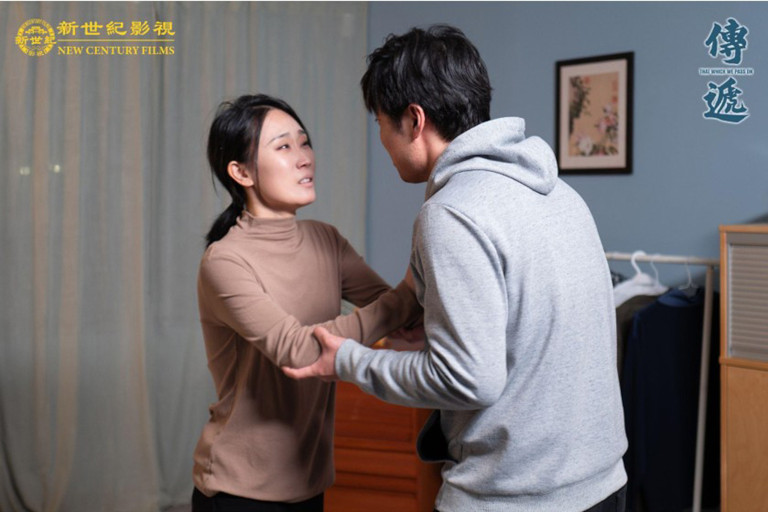
There’s a scene where Yang Yun, in pain and despair, tells her brother: “I don’t want to be treated anymore.” That one line is devastating. It speaks to the helplessness of so many families who fall through the cracks.
As many netizens in China have said with bitter resignation: “One person’s illness can drag the entire family into poverty.” Without savings or hospital deposits, many are denied treatment, forced to stop medication, or even discharged prematurely. Only those who’ve lived through it truly understand how desperate it can be.
Finding hope through faith
In the film, Yang Yun eventually recovers after taking up the practice of Falun Gong (also known as Falun Dafa). While this may seem miraculous to some, such stories are not uncommon among practitioners.
Actress Leah Feng, the lead in another award-winning New Century film Silver Screen Dreams, is one real-life example. She shared during a premiere event that she suffered from serious liver problems as a child, and doctors predicted she wouldn’t live past 20. But after taking up Falun Gong, her health dramatically improved. Today, she continues to share stories of virtue and compassion on screen.
In That Which We Pass On, the professor’s kindness is portrayed not as weakness, but as strength rooted in faith. Though he knew Yang Fan had sent the letter, he chose to protect him. His decision was guided by his belief in the principles of Truthfulness, Compassion, and Forbearance.
A reminder of what matters most
The film ends with the signature style of New Century Films — bright, hopeful, and uplifting. Yang Yun recovers. Yang Fan regains his sense of purpose. The pieces of their shattered lives are gently reassembled, and they move forward with dignity and courage.
More than just a touching story, the film raises questions we all must consider: In a world that feels increasingly noisy and chaotic, do we still have the courage to choose goodness? Can we still pass on what is pure, even when it’s hard?
For me, That Which We Pass On is a quiet but powerful reminder that no act of conscience is ever wasted — and that sometimes, the kindest people are those who have every reason not to be.
Translated by Chua BC
Follow us on X, Facebook, or Pinterest
