
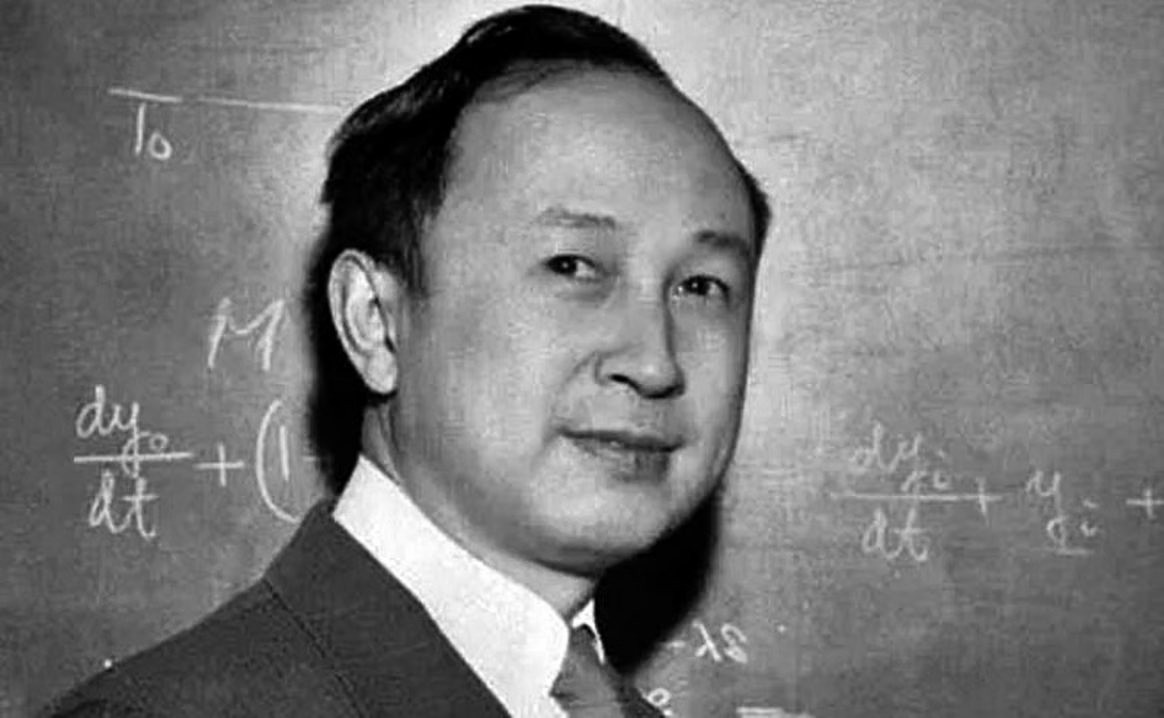
Qian Xuesen (1911-2009), revered as the Father of Chinese Aerospace, is remembered across the nation for his pioneering achievements in aerodynamics and rocketry. Yet few recall the lesser-known chapter of his life — when this towering scientist turned his gaze inward, exploring the mysteries of the human body and spirit.
Qian Xuesen was not only a leading expert in aerodynamics and systems science but also one of the founders of control theory and an academician of both the Chinese Academy of Sciences and the Chinese Academy of Engineering. His brilliance shaped the development of rocket, missile, and space programs in both China and the United States.
In 1935, he traveled to the United States for advanced study, where he studied under the legendary aerodynamics expert Professor Theodore von Kármán. He later taught at MIT and Caltech before returning to China in 1954. There, he played a decisive role in establishing the Ministry of Defense’s Fifth Research Institute and the Institute of Mechanics at the Chinese Academy of Sciences. His leadership was central to China’s historic “Two Bombs, One Satellite” project — developing the atomic bomb, hydrogen bomb, and artificial satellite — which earned him the title of “Father of Chinese Aerospace”. It cemented his place as a pioneer of modern science.
In the 1980s, a wave of interest in qigong swept across China, drawing attention to the exploration of extraordinary human abilities, also known as supernormal abilities. During this period, Qian Xuesen introduced a new term: “Human Body Science.” He not only coined the phrase but also assumed a leadership role in the Chinese Society of Human Body Science, where he made invaluable contributions.
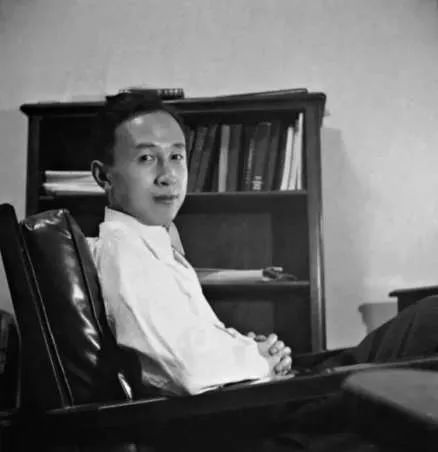
Qian Xuesen defined this emerging discipline as comprising three parts: extraordinary human abilities, qigong, and Traditional Chinese Medicine, with qigong as its core. To him, this was no superstition, but the seed of a scientific revolution — one that could prove even more transformative than the theory of relativity or quantum physics.
As a prominent supporter of research into human extraordinary abilities, Qian Xuesen declared: “Every new science faces resistance at its inception. Courage is essential to stand firm. Extraordinary human abilities may be too rare to gain quick acceptance, but qigong is within reach — it heals, strengthens, and awakens innate potential.”
He envisioned a future in which millions would practice qigong, guided by tens of thousands of teachers dedicated to uplifting both body and mind — cultivating health, intelligence, and the hidden capacities of the human being. For Qian Xuesen, this was not idle speculation, but a conviction born of deep study and certainty.
Yet his support for extraordinary abilities and qigong met with resistance. Skeptics, including Yu Guangyuan, dismissed the field as “pseudoscience.” In 1982, undeterred, Qian Xuesen wrote to Yu Wen, Vice Minister of the Propaganda Department, declaring with solemn resolve: “I pledge on my honor and Party loyalty: extraordinary human abilities are real. Yes, there are fakes and deceivers, but that is not the essence. The true phenomenon is inseparably bound to qigong and the wisdom of traditional Chinese medicine.”
He stressed the need to integrate every stream of knowledge into Human Body Science: clinical medicine, Western medicine, Traditional Chinese Medicine, folk practices, psychological therapy, qigong, and extraordinary abilities. For Qian Xuesen, probing the microcosm of physics and unraveling the mystery of life were not separate pursuits, but twin reflections of the same truth. Science, he believed, must one day converge with spirit.
Jiang Zemin’s outburst
In later years, as political winds shifted and calls for suppression grew louder, Qian Xuesen remained unshaken. He would neither denounce what he knew to be real nor abandon the principles of inquiry and integrity that had guided his life. Many reports, even years later, failed to acknowledge this crucial aspect of his character — his courage to resist political pressure and uphold his convictions.
For example, after July 1999, when Jiang Zemin launched a nationwide crackdown on Falun Gong — a practice that teaches one to live by the principles of truthfulness, compassion, and forbearance, and includes five gentle qigong exercises for good health — The Paper, a Chinese state-owned digital newspaper, did not mention that Jiang personally appealed to Qian Xuesen, seeking his endorsement of the suppression of Falun Gong. True to his principles, he steadfastly refused to support the campaign.
According to People’s Daily reports, on July 20, 1999, Jiang Zemin mobilized the full weight of state power to suppress Falun Gong, also known as Falun Dafa. While many religious figures and intellectuals quickly aligned themselves publicly with the Party line, Qian Xuesen — the very founder of China’s Human Body Science movement in the 1980s — remained silent. His refusal to take a public stance left Jiang deeply embarrassed.
Sources recount that Jiang repeatedly sent envoys to Qian Xuesen’s home, pressing him to issue a statement supporting the persecution of Falun Gong, but he declined each time. Ultimately, Jiang himself went in person. He lavished praise on Qian Xuesen’s life’s work, to which Qian Xuesen responded with quiet politeness, saying: “Thank you, thank you.”
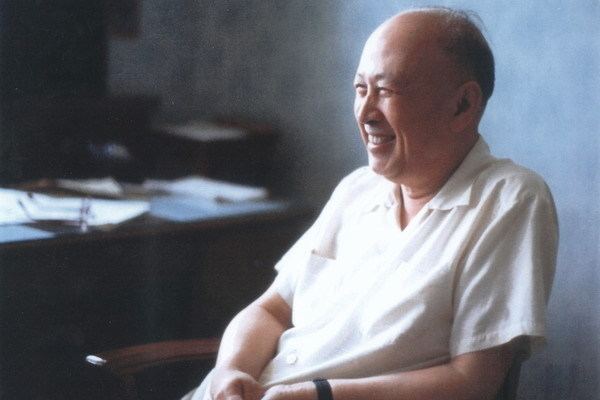
When Jiang finally steered the conversation to his true purpose — urging Qian Xuesen to denounce Falun Gong — he remained silent. Jiang even suggested drafting a statement that could be read publicly or published in the media, but Qian’s expression revealed no willingness to compromise. The meeting ended without agreement, and Jiang left in frustration.
According to reports, Jiang later exploded in anger: “If he weren’t Qian Xuesen, I wouldn’t let him live another day!” Humiliated and enraged, he ultimately sought to silence Qian Xuesen, freezing his public voice and curtailing his influence.
In silence, Qian Xuesen spoke more powerfully than any words could: the mysteries of life deserve reverence, not ridicule, truth cannot be erased by decree, and guarding the dignity of the human spirit is itself an act of courage.
Qian Xuesen’s legacy, therefore, is not only written in rockets that reach the stars, but also in his vision of the infinite cosmos within. His life reminds us that to explore the universe outside without exploring the universe within is to understand only half of creation.
Translated by Katy Liu and edited by Tatiana Denning
Follow us on X, Facebook, or Pinterest
