
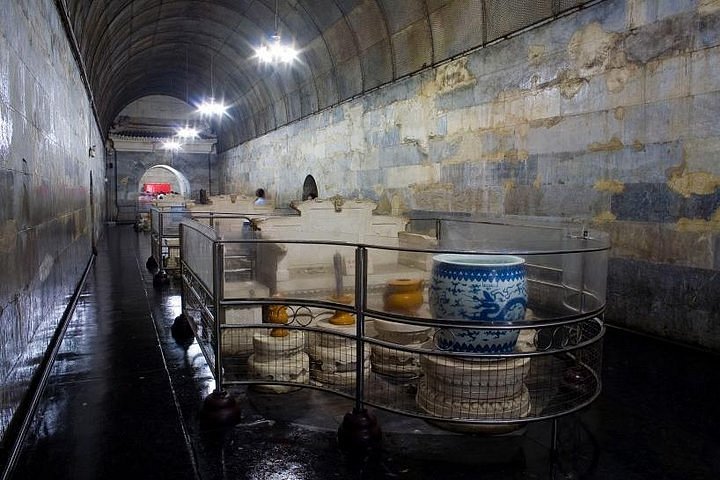
On September 6, 1958, the Chinese Communist authorities announced shocking news to the world: the Dingling Mausoleum, one of the Ming Dynasty’s Thirteen Tombs, had been opened. It was the first and only time in history that the underground palace of a Ming emperor had been fully excavated.
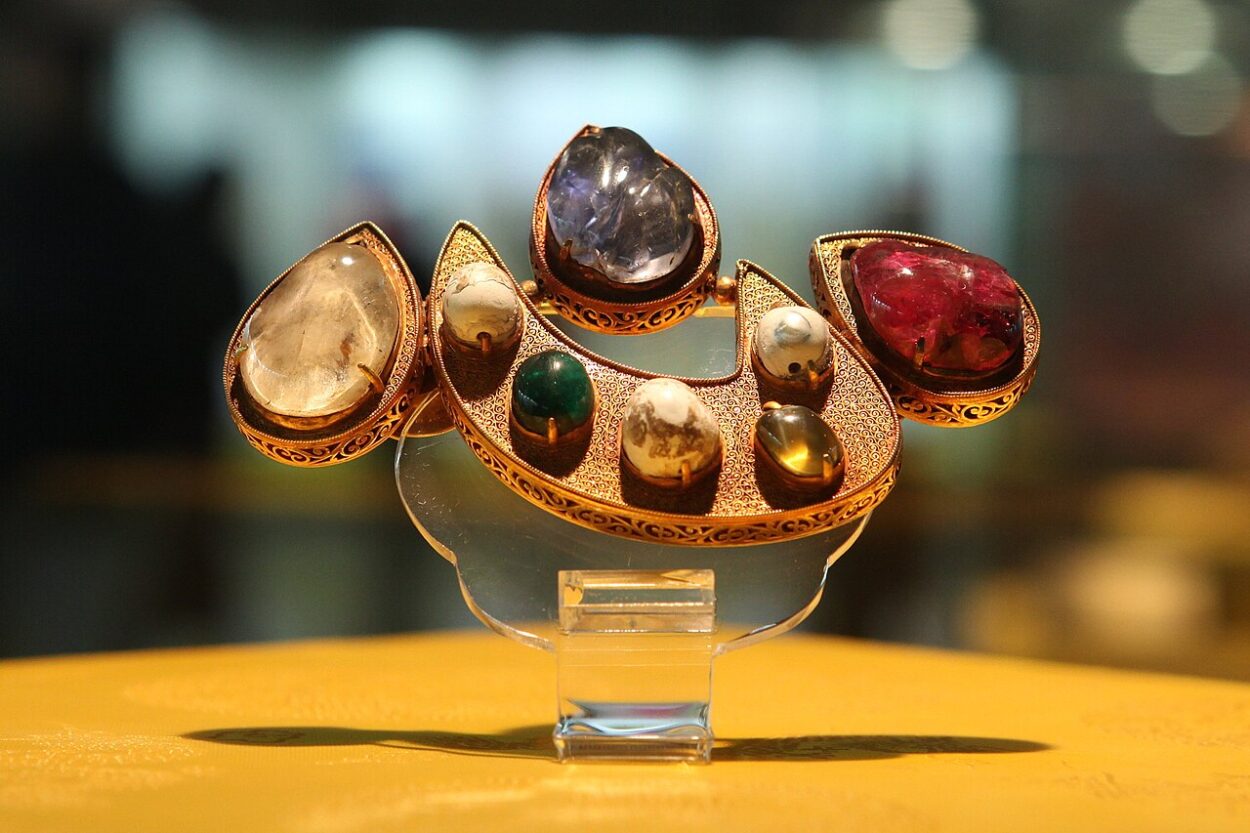
Inside, the scene was breathtaking — an imperial resting place of magnificent scale. The tomb held the coffins of Emperor Wanli, Zhu Yijun, and his two empresses. Piled around them were treasures beyond counting: gold and silver jewelry and ornaments, paintings and calligraphy, silks and brocades, and, most remarkably, perfectly preserved Ming Dynasty textiles of unparalleled historical value. Yet decades have passed, and not a single official archaeological report has ever been published. This silence sparked doubt worldwide: Why has China’s archaeological community refused to respond?
The truth was grim: The excavation of Dingling became one of the greatest disasters in Chinese archaeological history. Countless artifacts were ruined; the coffins, once opened, decayed instantly from oxidation. Some scholars even denounced the act as nothing more than “legalized tomb robbery.”
The man who led the project was Guo Moruo — celebrated as a “patriotic man of letters,” but also known as an official mouthpiece and literary opportunist. For his role in this cultural calamity, he was later cursed as the “arch-criminal of Chinese archaeology” and branded the “greatest tomb raider in history.” Even stranger, those who participated in the excavation — including experts and villagers — began to die one after another under mysterious and unexplained circumstances.
So what truly happened after the tomb was opened? Why did this imperial resting place, sealed for over three hundred years, become the beginning of a tragic chain of events? To understand, we must first look at the story of the Thirteen Tombs themselves.
The Ming Dynasty’s Thirteen Tombs lie at the foot of Tianshou Mountain, about 50 kilometers from Beijing. Spanning over 40 square kilometers, they form the most magnificent imperial necropolis of the Ming era, housing the remains of thirteen emperors. The Ming Dynasty lasted 276 years, with a total of 16 emperors. Why, then, are there only thirteen tombs? The answer lies in history:
The founding emperor, Zhu Yuanzhang, was buried in the Ming Xiaoling in Nanjing and remains there to this day. His grandson Zhu Yunwen, the second emperor, disappeared during the Jingnan Rebellion and was never interred in an imperial tomb. Emperor Jingtai, Zhu Qizhen’s brother, was deposed in a struggle for the throne and denied burial honors. Two of them were not honoured to be in any tombs. Thus arose the saying: “Sixteen emperors of the Ming, only thirteen tombs remain.”
The story begins with Emperor Yongle (Zhu Di), who, after seizing the throne, sought to move the capital from Nanjing to Beijing. When his consort, Empress Xu, died in the 5th year of his reign, he ordered his ministers to search for a sacred burial ground near the new capital.
The Minister of Rites, Zhao Gong, and the famed feng shui master Liao Junqing scoured the surrounding countryside for two years. Many sites were rejected for ominous names. At last, in the 7th year of Yongle’s reign, they chose the foothills of Yellow Earth Mountain in Changping County.
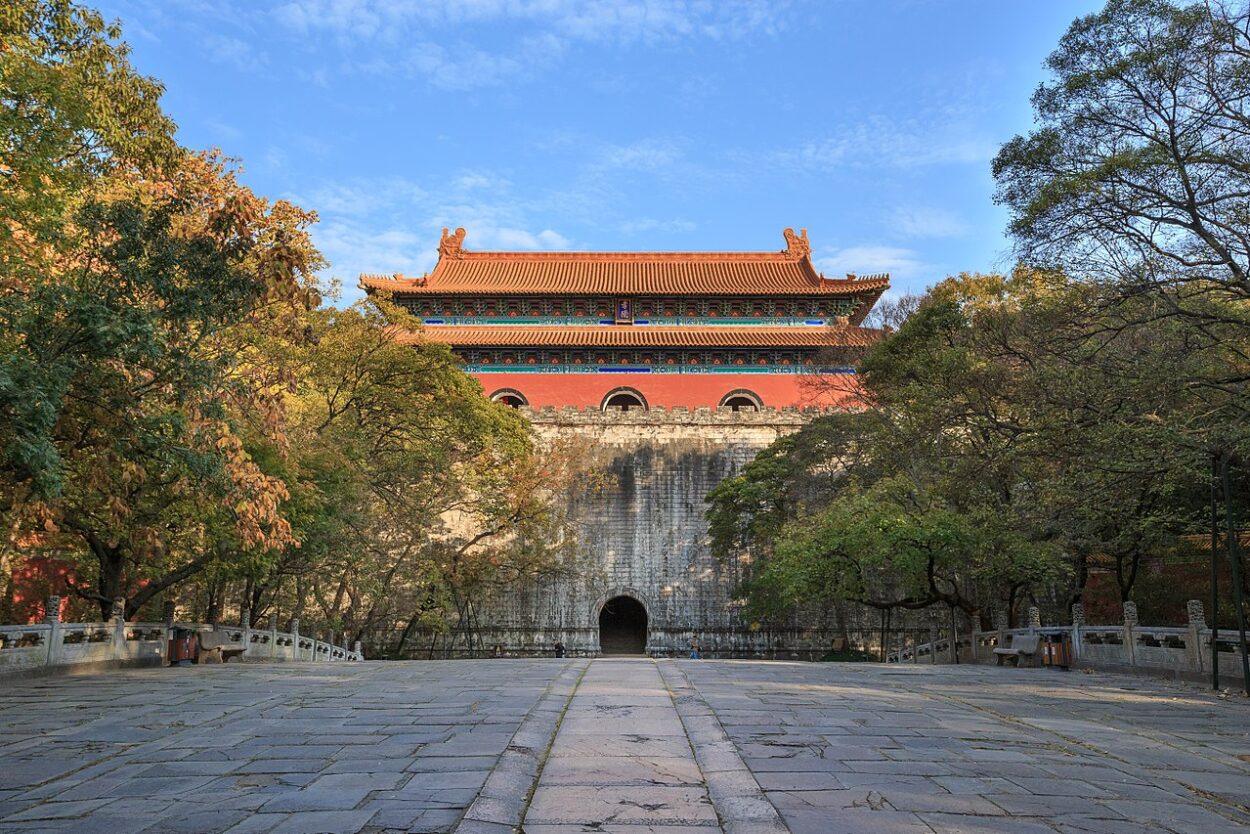
When Zhu Di inspected it personally, he was overjoyed. The site was encircled by mountains on all four sides, corresponding perfectly to the ancient geomantic pattern of the Azure Dragon, White Tiger, Vermilion Bird, and Black Tortoise. A river flowed before it, and the environment was serene and auspicious. The chosen location — Changling — was a geomantic treasure known as the “falling star of Venus,” a symbol of immense prosperity.
The three peaks of Tianshou Mountain stood like guardians of wealth and nobility. The monk Yao Guangxiao, Zhu Di’s spiritual advisor, whispered: “Here, the dynasty may rest for ten thousand generations.” The emperor rejoiced, but Yao’s words carried a hidden warning. “Ten thousand generations” secretly hinted at the Wanli reign — beyond which the Ming would fall. History proved him right: the dynasty collapsed under Emperor Chongzhen.
Yet for centuries, the Ming Tombs endured storms and invasions, remaining majestic and largely untouched. Until 1955, on October 9th, Beijing’s Vice Mayor Wu Han, an expert on Ming history, led a group of cultural figures — including Guo Moruo, then President of the Chinese Academy of Sciences — to tour the tombs. No one could have foreseen that this visit would ignite what many call the greatest catastrophe in the history of Chinese archaeology.
Translated by Katy Liu
Follow us on X, Facebook, or Pinterest
