
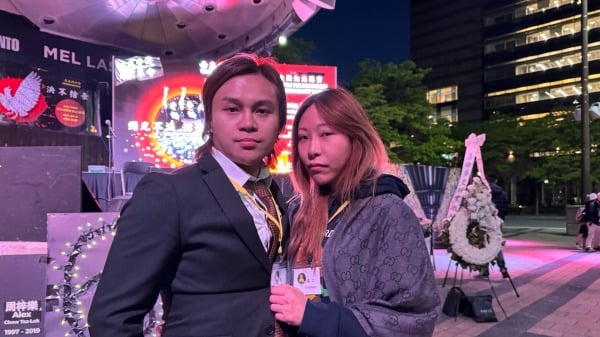
During the 2019 Hong Kong anti-extradition movement, Muay Thai champion Cuitong (Chan Jin-yeh) rose to prominence, exposing the Yuen Long 721 incident and his father’s involvement in gang violence. That summer, Hong Kong became a symbol of democratic resistance as Cuitong called for public action through the media. Becoming a police target, he fled to Canada, where he continues his fight for democracy.
Cuitong’s story not only reflects his personal journey, but also his broader cultural context. It also mirrors the struggles of Hong Kong, showcasing how individual determination under pressure can echo the city’s fight for its values.
From a poor boy to a king in the ring
Cuitong was born in Yuen Long, Hong Kong, where tradition and poverty met. Amid narrow alleys and instability in his parents’ relationship, his foster mother became his guiding force, teaching him resilience and the value of hard work. In the Kam Tin squatter area, he learned independence and built a strong character. He remembers his foster-mother in their small house, teaching him kindness, lessons that have stayed with him.
Cuitong worked part-time while studying, became a hairstylist by the age of 18, and offered free haircuts to the elderly. In Canada, he continued with community service and training, fulfilling the teachings of his foster mother. Running a car detailing business and spending 13 years learning criminal law prepared him to use legal knowledge for protection. He said: “The law is a tool to protect justice; I learned to use it to protect myself and others.”
At the age of 15, Cuitong began training in Muay Thai, transforming adversity into championship success. By 2019, he had become a champion, having found mental resilience and strength to oppose totalitarianism. His roles — as hairstylist, businessman, legal practitioner, and athlete — intertwined, fortifying his resistance.
The peak of Cuitong’s personal conflicts came when he exposed his father’s involvement in the infamous 721 Yuen Long Incident, a decision that would forever change his family ties.
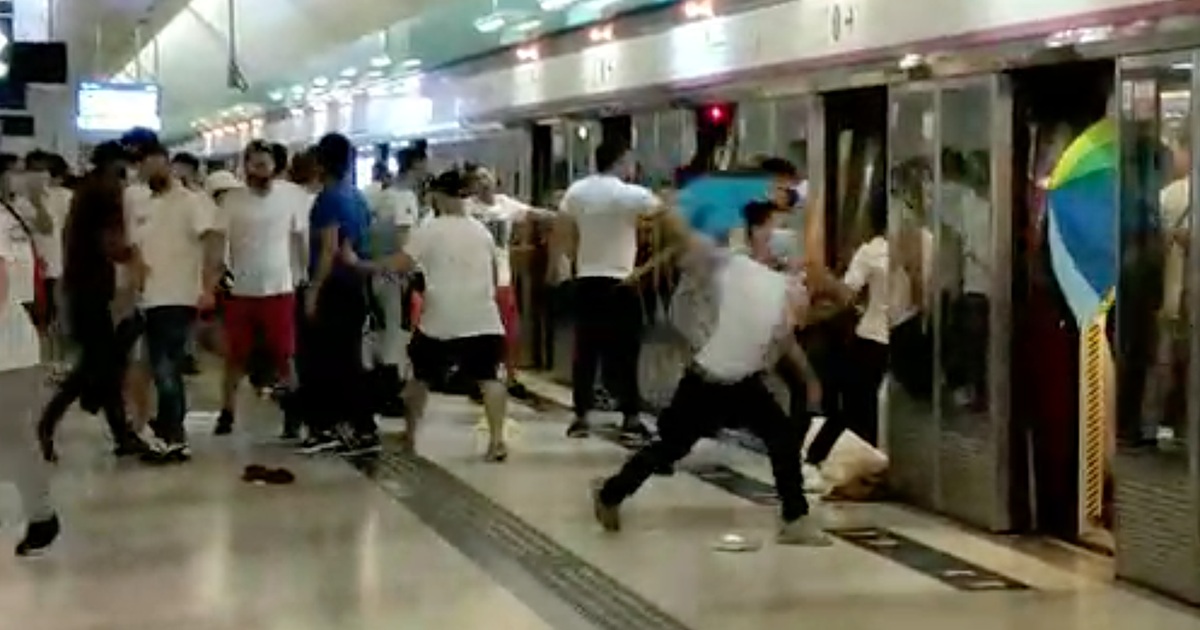
‘721 indiscriminate attack incident’
On July 21, 2019, the “721 indiscriminate attack incident” happened at Yuen Long West Rail Station. The attack also spread to nearby streets. A group of men in white, armed with sticks, rattan, and iron pipes, attacked citizens at random. At least 45 people were injured, including pregnant women, journalists, and bystanders. The incident lasted over an hour.
The police arrived late, raising public suspicion about collusion with gangs. Independent investigations said hundreds of men in white gathered on Fung Yau North Street and at the Chicken Farm. Online messages suggested the attack was well-organized and may have involved mainland forces.
Cuitong’s father was reportedly involved in planning the incident. He posted in the family WhatsApp group about being compensated to “beat cockroaches” and suggested the use of rattan instead of knives was intended to “teach a lesson” to protesters.
Cuitong initially considered this bragging typical of his father. After learning more details, he publicly disagreed with his father’s actions in the group, stating: “You are attacking the innocent indiscriminately; pregnant women and bystanders are victims, and that is wrong! Right and wrong should be judged by a judge, not through lynching.” He left the family groups, distanced himself from his father, and made clear his position based on his personal principles.
In 2020, Cuitong revealed his identity in an Epoch Times interview, detailing 721 incident truths and his father’s involvement. After exposure, his father was jailed in mainland China. Cuitong’s principled stance earned respect, but his revelations also drew police attention.
Cuitong’s body became his protest. His tattoos, including the Bauhinia flag and protest slogans, violated the Hong Kong National Security Law, but he accepted the risk. He viewed his tattoos as lasting memories of the movement, keeping his beliefs visible even during matches.
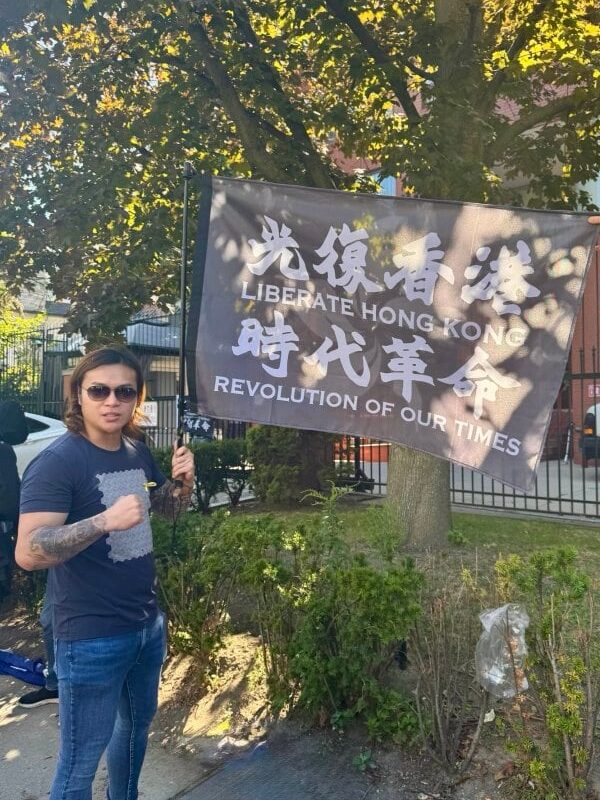
‘Fighting the CCP’s evil is a holy war’
Cuitong resisted with caution, masking his identity and using his car detailing skills for safe protest logistics. He posted political commentary on Facebook, donated to pro-democracy causes, and used newspaper ads to call for unity. He avoided language that could lead to prosecution and focused on rallying support for the anti-extradition movement’s five demands.
Cuitong’s understanding of the Chinese Communist Party’s (CCP) essence evolved gradually. In his childhood, his foster-mother and foster-father criticized the corruption and persecution of intellectuals, such as during the 1989 Tiananmen Square massacre of students. Cuitong was only two months old in 1989.
Later, he studied history in the library, teaching himself about the grievances between the Kuomintang and the Communist Party. During the 2014 Umbrella Movement, he participated peacefully, camping overnight in Mong Kok without witnessing violence; in 2019, during the anti-extradition movement, he saw police losing control, firing tear gas, and beating protesters.
Cuitong suspected that the events of August 31 at Prince Edward Station involved Mandarin-speaking armed police, indicating CCP militarization. In the 721 incident, the triads were utilized, and his father’s “lesson” narrative may have originated from CCP directives, intending to intimidate citizens by using “insiders to beat insiders.”
When arrested in 2024, Cuitong encountered Mandarin-speaking police, confirming the CCP’s cross-border suppression efforts. After the implementation of the National Security Law, Hong Kong’s judicial independence was compromised, the Chief Executive could appoint judges, and media and civil society faced repression, with dozens arrested and elections distorted, while cultural education was “cleansed.”
After arriving in Canada, Cuitong participated in a July rally against the persecution of Falun Gong, attended by thousands: “I was thrilled and moved, with tears in my eyes, because I saw people of all ages, including young and old. There were also Caucasian practitioners handing out flyers. They were passing their ideals to the next generation.”
He stated that until 2019, many Hong Kong people had not realized that what Falun Gong practitioners spoke about was true, including the revelations of the CCP’s atrocities, such as organ harvesting. Cuitong called on the world to understand that Falun Gong upholds the principles of Truth, Compassion, and Forbearance, and that the CCP has always been lying and even altering history: “The CCP says bad things; in fact, they [Falun Gong] are good.”
As a Christian, Cuitong believes that resistance is a holy war: “The CCP is a demon; we must fight for justice.” In the face of his girlfriend’s sexual assault and the oppression of Hong Kong people, he chose to speak out peacefully: “Jesus teaches us to face suffering directly.”
Exiled new life: Perseverance and hope in Canada
On the evening of November 14, 2024, 10 police officers, without a search warrant, followed a food delivery person into Cuitong’s home, kicking down the door and arresting him and his girlfriend. Batons fell on them like rain, and the beating continued for half an hour, forcing him to admit to charges of subversion and collusion with foreign forces.
Cuitong insisted on his innocence, while the police sexually assaulted his girlfriend, threatening to “kill her.” Ultimately, he was charged with extortion and misleading police, but due to insufficient evidence, he was held in Lai Chi Kok Prison for 16 days before being released on bail by the High Court, with his passport returned and the curfew lifted. He immediately fled to Canada, like a bird escaping from a cage, flying into the sky of freedom.
His girlfriend, Lo Ka-yee, suffered severe trauma during the anti-extradition movement and was diagnosed with post-traumatic stress disorder (PTSD), unable to go out or work alone. Currently receiving psychological and psychiatric treatment, she still strongly supports Cuitong, participating in media interviews to recount the atrocities.
In Canada, Cuitong quickly adapted and began teaching Muay Thai. He stated that he had witnessed fellow inmates committing suicide or suffering in Hong Kong prisons, and he felt fortunate to arrive in a free world. Even if it meant sacrificing weekends to earn money, he insisted on continuing the fight.
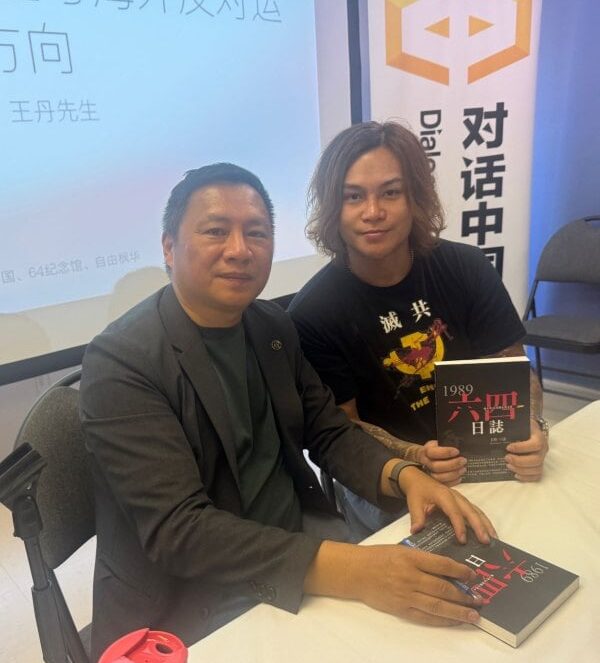
Recently, he attended a forum hosted by Wang Dan, a leader of the June 4 student movement, in Toronto, where he agreed with Wang’s call for overseas Hong Kongers to form closer connections with other anti-CCP groups and democratic movements to jointly end the CCP’s rule.
Cuitong hopes to settle down in Canada, have children, and “I want to have many children in the future, to build a family, and I will teach each child how to eliminate the CCP, telling them that the Communist Party is bad.” As a Christian, Cuitong uses his faith as a torch to illuminate the path of justice. He firmly believes that the fire of freedom will ultimately burn away tyranny.
Translated by Joseph Wu
Follow us on Twitter, Facebook, or Pinterest
