
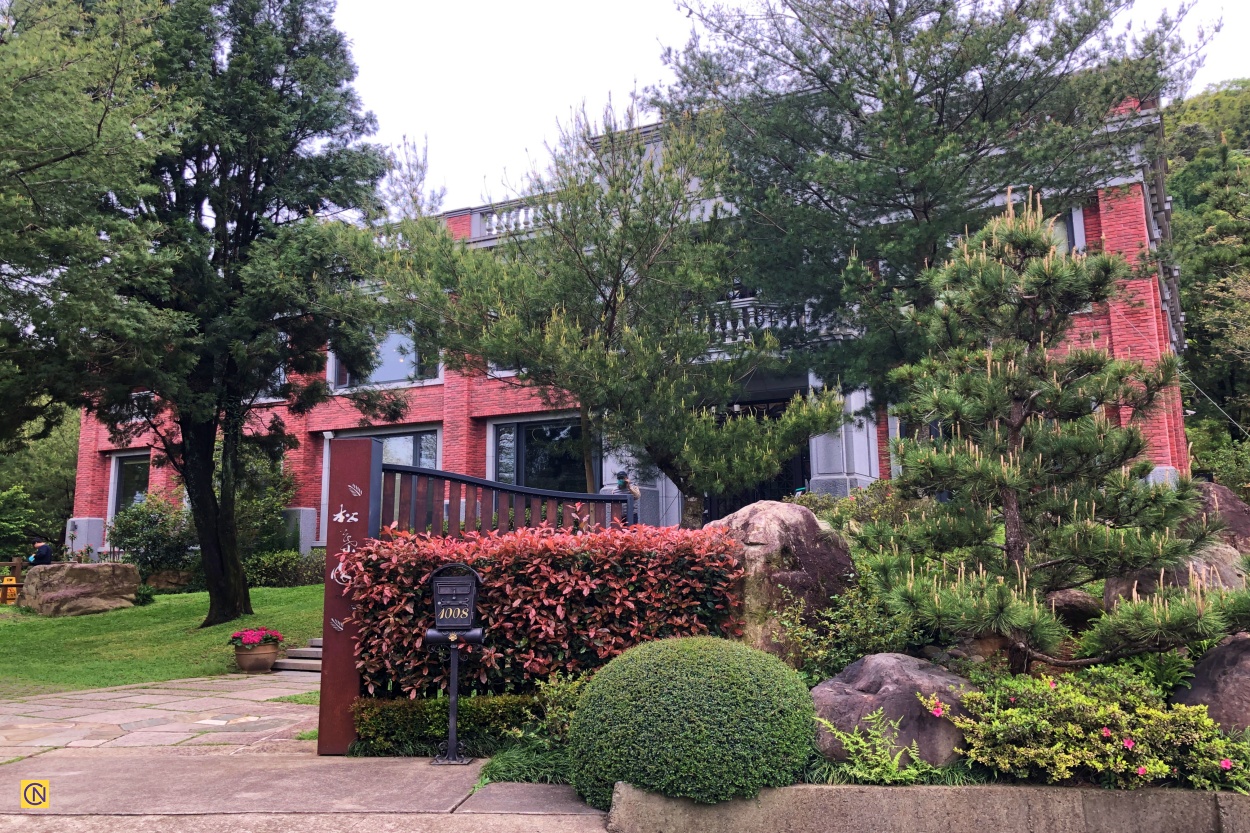
Set against the backdrop of the lush green hills in Taoyuan’s Longtan District in northern Taiwan, Pine Garden Restaurant (松葉園人文景觀餐廳) is a destination where art, nature, and fine dining come together in harmony. Established in 2003, the restaurant began with a serene, Zen-inspired concept before evolving into a vibrant cultural landmark that celebrates beauty in every form — from its European-style gardens to its exquisite ceramic art displays.
From Zen retreat to Hakka cultural landmark
Originally a minimalist Japanese-style restaurant offering quiet elegance in the hills of Longtan, Pine Garden underwent a bold 18-month transformation that culminated in 2014. The renovation turned it into a two-storey red-brick mansion surrounded by manicured gardens, koi ponds, and sweeping mountain views. The new design brought with it not only architectural grandeur, but also a stronger emphasis on art and culture. In 2018, the Hakka Affairs Council recognized Pine Garden as a “Hakka Model & Feature Restaurant,” affirming its dedication to both culinary craftsmanship and the preservation of local heritage.
A garden that nurtures the senses
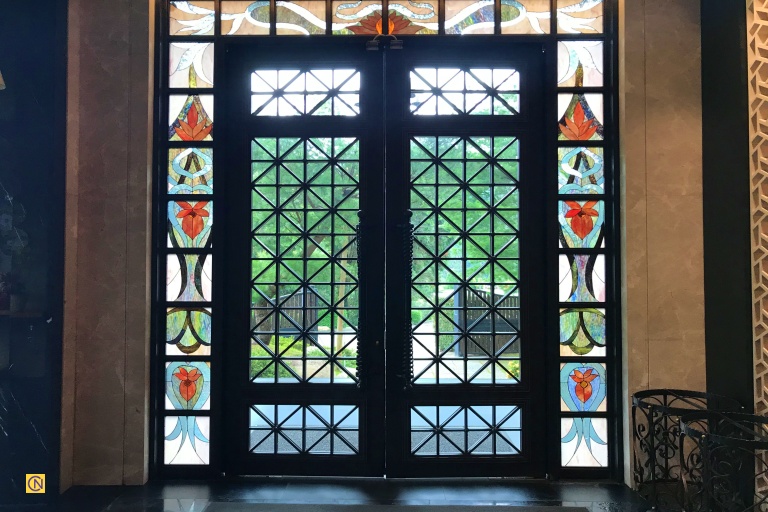
Arriving at Pine Garden, guests are greeted by an expansive parking lot, a koi pond full of plump carp, and tree-lined walkways winding through open grass lawns — an ideal start to a leisurely meal. The two-storey main building is anchored in natural surroundings, with floor-to-ceiling windows on the first level and banquet rooms on the second. The interior melds wood, stone and natural tones to create a warm ambience that invites lingering.
Art in every detail: signed plates and carved ceramics
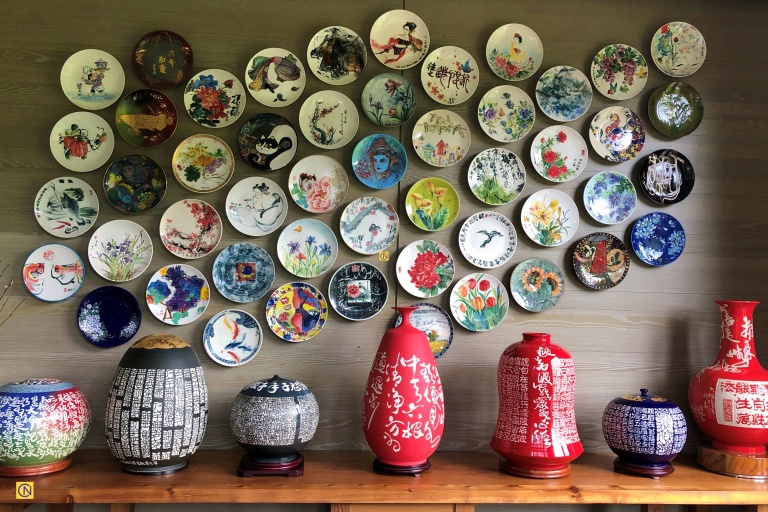
Perhaps the most distinctive feature of Pine Garden is its deep integration of art into the dining experience. The walls showcase dozens of decorative plates created by artists, each one signed by its creator — a gallery within a restaurant. These pieces reflect diverse styles and spark a sense of wonder as guests dine. The owner, Dr. Liang Cheng-Fu (梁成福), himself a doctor‐turned‐ceramic sculptor, also contributes his work. He began carving ceramics in his 60s and collaborates with calligrapher Li Yuan-Ching (李元慶): Li writes brush calligraphy on clay, Liang carves them, then they are kiln-fired, producing highly collectible works. Some of their pieces have been exhibited internationally — including at the Louvre in France — and are housed in major collections.
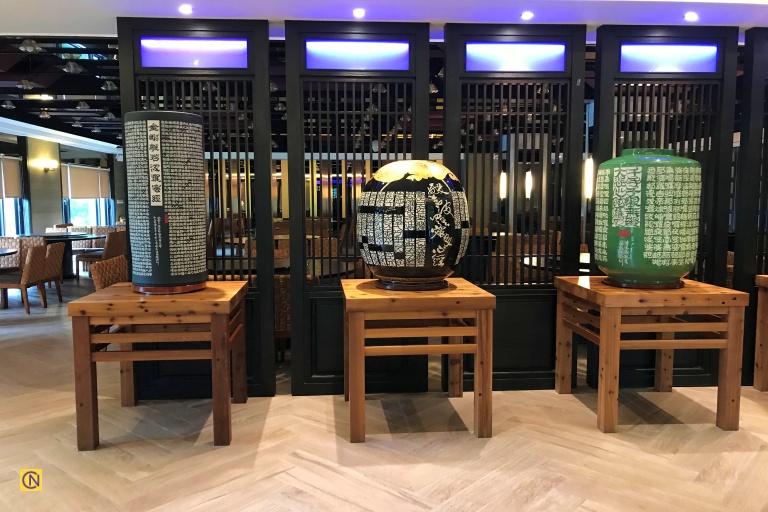
Inside the restaurant, guests will find over 50 signed plates by various artists, and nearly 100 carved ceramic works by Liang and Li collaborating — each telling a cultural story, from Buddhist sutras to folk songs. These pieces elevate the atmosphere, transforming a dinner into an immersion in humanistic art.
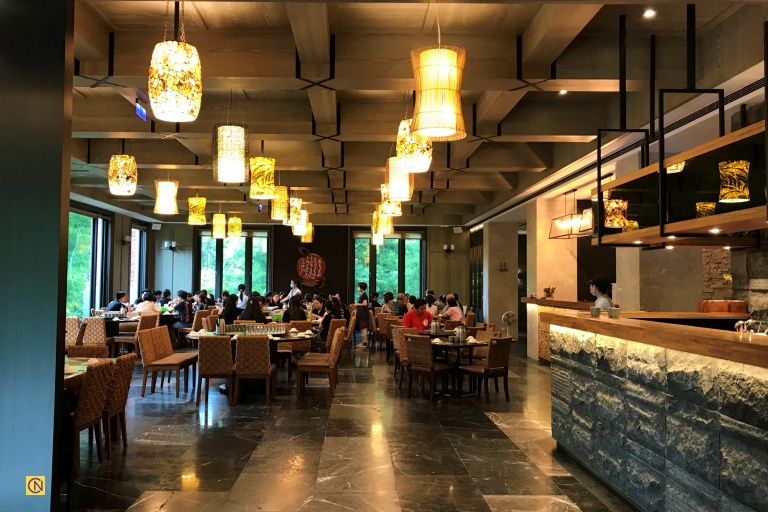
Hakka cuisine meets creative interpretation
At its culinary core, Pine Garden honours Hakka cuisine, while injecting modern creativity and local produce. Dishes such as Hakka chopped boiled chicken, sour-sweet orange-sauce tofu and Hakka lei-cha (pounded tea) are standouts, and present the warmth, depth, and authenticity of Hakka flavour. The restaurant’s guiding principle — “food in nature, flavour in culture” — is evident in every plate, marrying health, locality, and tradition into a memorable meal.
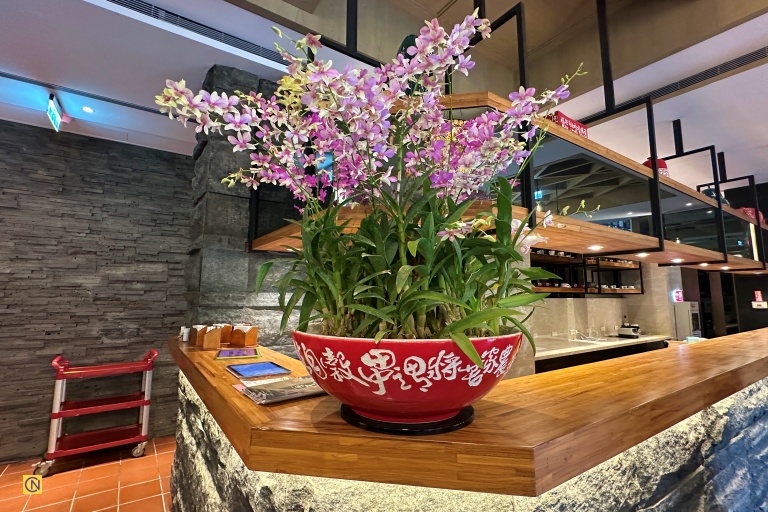
Dining in a living work of art
As the afternoon sun filters through the trees and the pond’s surface glitters with light, guests might find themselves holding their bowl a moment longer. The interplay of food, art, and nature makes time slow down. It is here that the restaurant ceases to be just a meal, and becomes a cultural experience. Dr. Liang hopes every visitor will sense the philosophy “life is art” in the settings, creations, and even tableware of the restaurant.
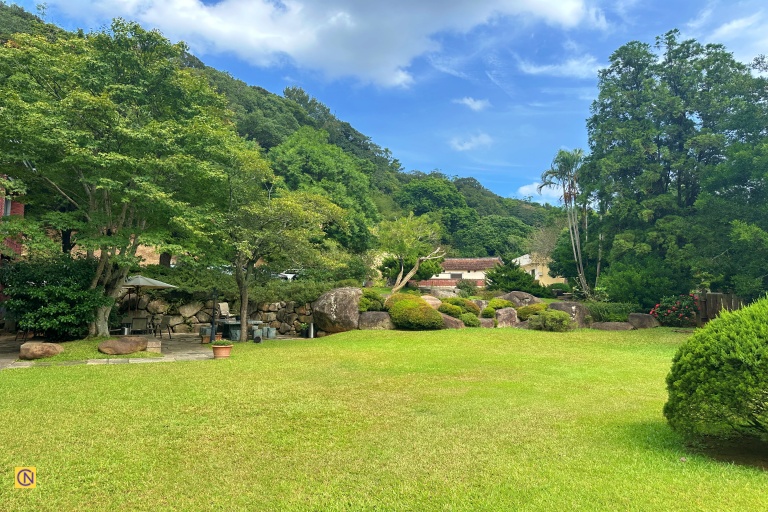
Conclusion: A cultural feast in Longtan
With its seamless integration of garden-scapes, fine-art ceramics and inspired Hakka cuisine, Pine Garden Restaurant stands out as one of Longtan’s most distinguished dining destinations. Whether you visit for a family gathering, special celebration or simply a serene escape, the restaurant offers more than dinner — it offers an opportunity to savour the convergence of culture, nature and taste.
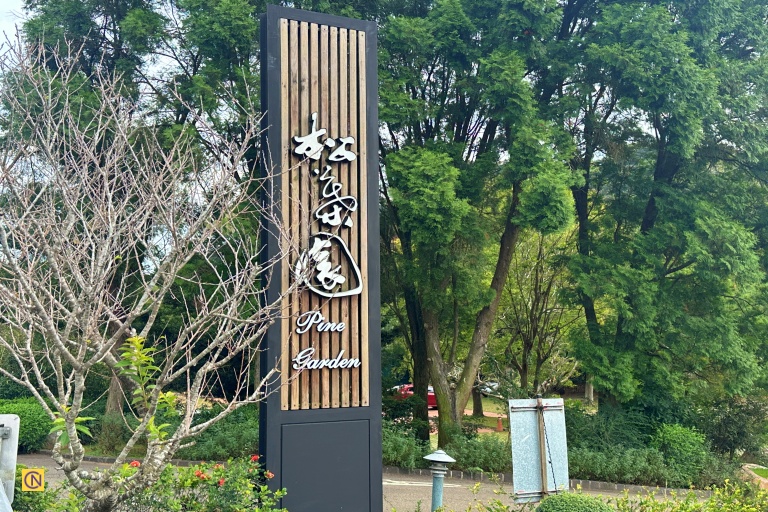
For anyone travelling to Taoyuan’s scenic Longtan area, this “hidden gem” invites you to slow down, look around and engage all your senses.
Follow us on X, Facebook, or Pinterest
