
Traditional Chinese culture has long emphasized the idea that “food and medicine share the same origin.” Many ingredients that appear in everyday meals have also been valued for their nourishing qualities. Over generations, people observed how ordinary foods affected the body and gradually incorporated them into traditional health practices.
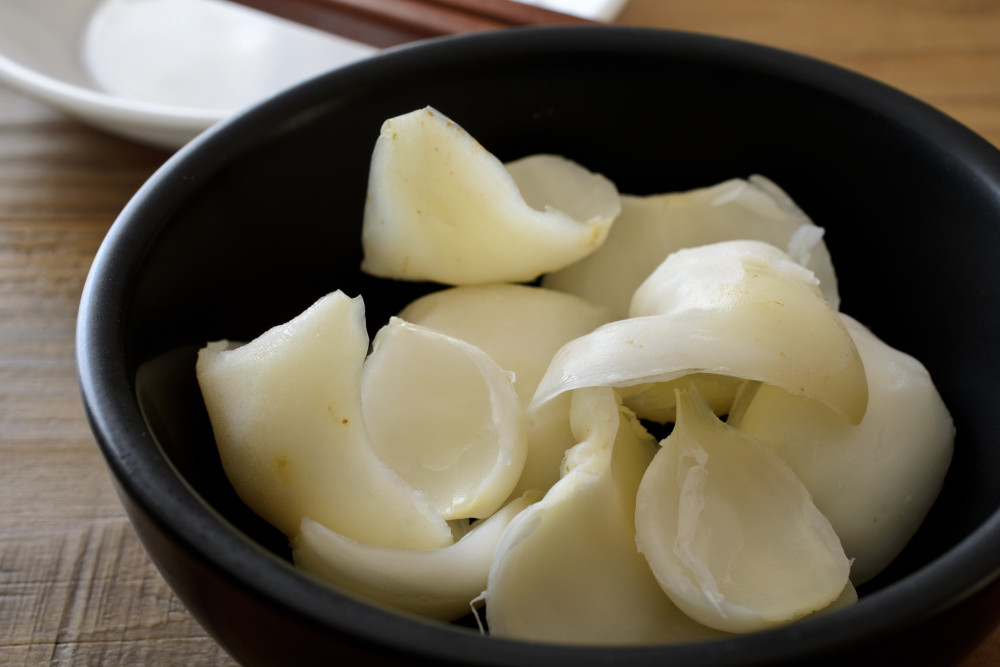
One such ingredient is the lily bulb, known in Chinese as bai he (百合). While many people recognize lilies as elegant flowers, traditional Chinese cuisine and medicine value the bulb that grows beneath the soil. These edible lily bulbs come from specific varieties cultivated for food, forming clusters of overlapping white scales that fit tightly together.
Its name carries both symbolic and practical meanings.
A name that reflects harmony
The Chinese name bai he can be understood as “many scales joined together.” Because the bulb is made of dozens of tightly layered segments, it has long been associated with harmony and unity. The same characters appear in the traditional wedding blessing “百年好合,” meaning “a hundred years of harmony,” which is why lilies are often associated with marital happiness in Chinese culture.
This sense of harmony also reflects how lily bulbs are understood in traditional Chinese medicine. They are believed to help restore balance within the body, particularly between the heart and lungs.
Ancient physicians observed that lilies tend to grow in cool, damp places. In traditional Chinese medicine, the environment where a plant grows was thought to offer clues about its properties. Because lilies thrive in moist conditions, they were believed to help counter dryness and internal heat in the body.
Historical accounts also describe how lily soup was sometimes prepared during periods of upheaval, when displaced people suffered from anxiety, insomnia, and troubling dreams. Physicians found that a simple broth made from lily bulbs not only provided nourishment but also seemed to calm unsettled minds. Over time, lily bulbs became associated with soothing what traditional medicine described as “stagnation” affecting the heart and lungs — a state linked to emotional distress and restless sleep.
Moistening the lungs and calming the spirit
In traditional Chinese medicine, lily bulbs are considered slightly cooling in nature and sweet in flavor. They are said to act on the lung and heart meridians, with their primary function described as “moistening.”
According to traditional theory, the lungs prefer moisture and are easily affected by dryness. Seasonal dryness, long hours in air-conditioned environments, or exposure to polluted air can all irritate the respiratory system. When dryness affects the lungs, symptoms such as a dry cough or throat irritation may appear.
Lily bulbs contain natural mucilage — a soothing, gel-like substance — that traditional practitioners believe creates a gentle protective layer for the respiratory system.
Lily bulbs are also associated with calming the mind. In Chinese medical thought, the heart is closely connected with emotional balance and mental clarity. When internal “heat” disturbs the heart, people may experience restlessness, anxiety, or difficulty sleeping.
Rather than forcing sleep, lily bulbs are traditionally believed to help restore internal balance, allowing the mind to settle more naturally. Classical Chinese medical texts even describe a condition sometimes called “lily disease,” characterized by confusion, agitation, and unsettled sleep.
A nourishing ingredient in everyday cooking
Beyond their traditional associations, lily bulbs are also valued as an ingredient in Chinese cuisine. Their flavor is mild and slightly sweet with a faint bitterness, and when cooked, they develop a soft, starchy texture.
Several simple dishes highlight both their culinary appeal and their place in traditional food culture.
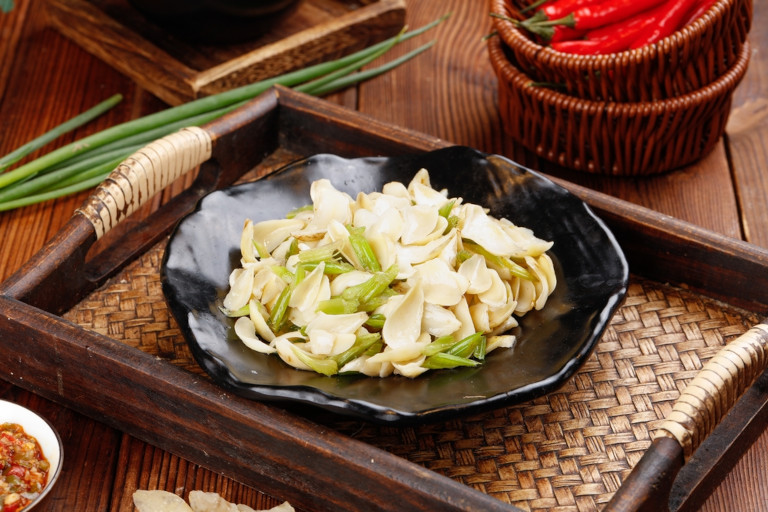
One common preparation is stir-fried lily bulbs with celery. Fresh lily bulb scales are separated and briefly stir-fried with sliced celery, creating a dish traditionally considered light and refreshing.
Another popular recipe is lily bulb and lotus seed congee. In many households, about 15 grams of lily bulbs and 10 grams of lotus seeds are simmered with rice until the mixture becomes soft and porridge-like. Lotus seeds are also traditionally associated with calming qualities, and the combination is often enjoyed in the evening.
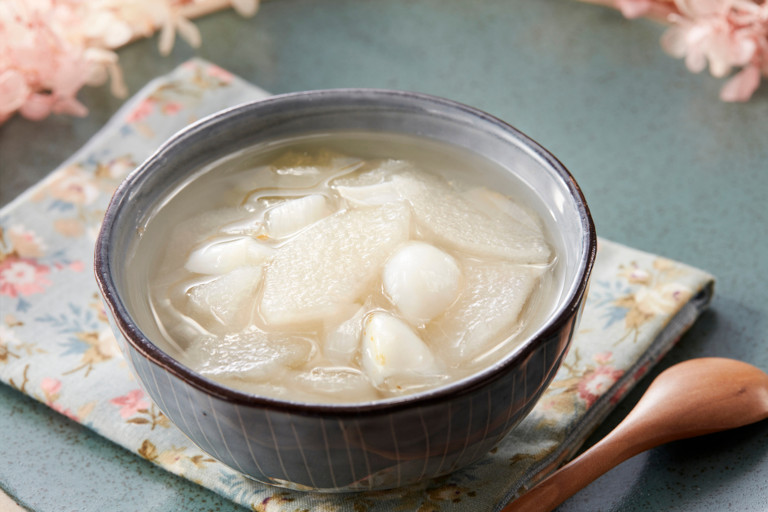
A third classic dish is white fungus and lily bulb soup. White fungus, also known as tremella, is valued for its delicate texture and nourishing reputation. When simmered with lily bulbs and lightly sweetened with rock sugar, the result is a gentle dessert soup traditionally believed to help ease dryness.
A gentle tradition of nourishment
In traditional Chinese health philosophy, maintaining balance often begins with small, consistent habits rather than dramatic interventions. Foods that nourish the body gradually are seen as an important part of everyday well-being.
Lily bulbs reflect this gentle approach. Their mild nature, calming reputation, and versatility in cooking have made them a long-standing part of traditional food culture.
While they are not a substitute for medical care when illness is serious, lily bulbs remain one example of how everyday ingredients have long been used to support comfort and balance in daily life.
Translated by Cecilia
Follow us on X, Facebook, or Pinterest
