

Your child is in the living room. The screen glows. They are playing Fortnite, or Valorant, or some other title whose name you have heard a hundred times without ever quite knowing what it means. You can hear the sounds — the quick percussive rhythm of digital combat, the occasional shout. Everything seems normal. You go back to whatever you were doing.
What you do not know — what almost no one knows — is that sitting between your child and their game is a structure that has been two thousand years in the making. Not a conspiracy. Something more patient and more ordinary than that. A method. A science. A discipline that was already old by the time Edward Bernays gave it its modern name in 1928 — propaganda.
The word makes people flinch. It should not. It is simply the organized effort to shape what people believe. The flinch is itself a product of the method — because the most effective propaganda convinces its audience that what they are receiving is not propaganda at all, but entertainment, education, culture, news, fun. When we understand this, we are in a position to ask the right questions. Not “is someone trying to influence me?” — they always are. But: “Who? toward what? And do I consent?”
Where the word propaganda was born — and what it actually means
In January 1622, Pope Gregory XV issued the papal bull establishing the Sacra Congregatio de Propaganda Fide — the Sacred Congregation for the Propagation of the Faith. It was a missionary institution, charged with coordinating the spread of Catholicism into newly discovered territories. It maintained a printing press that produced catechisms in dozens of languages. It trained priests to carry a message into places it had never reached before.
The word propaganda comes from this institution. Propagare — to propagate, to spread, to plant and cause to grow. The Congregation used it entirely without shame. They were propagating a faith they believed was true. The method was the same as what any modern marketer would recognize: identify the audience, find the message that reaches them, and build the infrastructure to deliver it at scale. The word propaganda carries no intrinsic moral charge. It is a delivery system. What matters is what it carries — and who controls the vehicle.
For three centuries, the term remained relatively neutral. Then the 20th century arrived, and with it came two world wars and regimes that used mass communication technology to manufacture consent for catastrophe. Propaganda became a dirty word. And that — paradoxically — made it more dangerous. Because the moment a method becomes associated with the enemy, people stop looking for it in themselves.
Engineering consent — Bernays and the science of the invisible
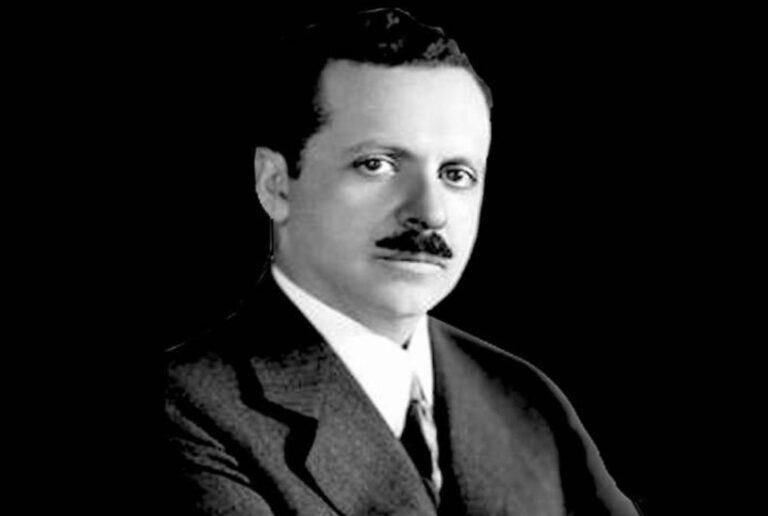
Edward Bernays was born in Vienna in 1891. His mother was Freud’s sister. His father’s family had produced Anna Freud. He grew up saturated in the early language of psychoanalysis — the idea that human behavior is driven by forces the individual neither sees nor controls.
He was also a practical man. During the First World War, he served on the U.S. Committee on Public Information, the apparatus mobilized to sell the American public on involvement in a conflict most of them had wanted no part of. He watched, with the analytical detachment of a craftsman, as mass media was used to move an entire nation from neutrality to war fever.
After the war, Bernays sat down and wrote Propaganda. Published in 1928, it is one of the most candid books ever produced about the mechanics of political and commercial power. He did not write it as a warning. He wrote it as a manual — and as a defense of what he saw as a necessary and inevitable function of modern democratic life. “We are governed, our minds are molded, our tastes formed, our ideas suggested, largely by men we have never heard of,” said Edward Bernays in 1928.
His argument was disarmingly simple. Modern society is too complex for individuals to form independent judgments on every question they face. Someone must organize information, frame choices, and guide mass behavior. Since this is unavoidable, it is better to do it scientifically, rationally, and in the service of broadly beneficial ends. The alternative — an unguided mass public — is, in his view, chaos.
He was not entirely wrong in his diagnosis. He was catastrophically wrong in his prescription. Because the structure he described — invisible governors shaping the beliefs of the governed through carefully engineered messages — has no built-in corrective mechanism. It depends entirely on the virtue and good faith of those who hold the wheel.
Bernays coined a phrase that persists to this day: the engineering of consent. He gave it to politicians, to corporations, to governments. He demonstrated it with cigarettes, with bacon, with war. His methods became the foundation of modern advertising, modern public relations, and — though few would say so plainly — modern media.
The overt architecture — China’s children and the pixel classroom
The most visible form of propaganda in the digital age is the kind China practices. Visible not because it is transparent, but because it is unashamed. The Chinese Communist Party has never pretended that its media does not carry a message. Newspapers, films, textbooks, and now video games — all are understood to be instruments of state communication.
Tencent, the world’s largest video game company, is a critical node in this architecture. It holds significant stakes in Riot Games (the maker of Valorant and League of Legends), Epic Games (Fortnite), and has sought to acquire shares in Ubisoft, the French studio behind Assassin’s Creed. These are not merely financial investments. They represent the CCP’s acquisition of reach. In 2019, Tencent collaborated directly with the People’s Daily — the official mouthpiece of the Chinese Communist Party — to produce a game called Homeland Dream, in which players simulate building a city while implementing Xi Jinping’s policy goals.
The content concern is matched by a surveillance concern of equal weight. In 2020, Valorant’s anti-cheat software — a Riot Games product, Tencent-owned — was found to launch at system startup, independently of whether the game was open, and to log all user activity. In 2019, it was reported that over 300 million user messages on Tencent platforms had been stored on a database accessible to Chinese law enforcement.
Parents who see their children hunched over a phone playing a free mobile game developed by a Chinese studio are, without realizing it, allowing a data-collection operation to run in their homes. The game is the interface. The harvest is the point. But the propaganda is subtler than the spyware. It operates at the level of narrative. When a child spends a thousand hours inside a game world — its aesthetics, its values, its historical framings — those framings become the wallpaper of the child’s imagination. The CCP understands this. They have invested accordingly.
The covert architecture — how the West shapes minds without admitting it
The Western method is harder to see. This is not accidental. Bernays understood that overt propaganda triggers resistance. The engineering of consent only works when the subject does not know they are consenting to something engineered. Western soft power has therefore been delivered not through commissars and state edicts, but through culture — through the movies, the series, and the streaming platforms that feel like pure entertainment and carry their payload invisibly.
Netflix is the clearest contemporary example. But to understand it properly, we need to follow the genealogy. Marc Randolph, the co-founder and first CEO of Netflix, openly describes his family history: Edward Bernays — the father of propaganda — was his great-uncle. Freud was his great-granduncle. As Randolph recounts in his memoir, his home while he was growing up was full of Freud’s books. He has spoken in interviews about Bernays’ influence on his worldview, noting that his great-uncle helped run a CIA-backed propaganda campaign to facilitate a coup in Guatemala.
This is not guilt by association. Randolph may be an entirely good-faith actor who absorbed none of his great-uncle’s methodology. The question is whether the institution he built — and the culture it embodies — operates according to principles that Bernays would recognize. In 2026, Netflix faced direct questioning in a U.S. Senate hearing, where senators accused it of holding an outsized role in socially engineering Americans. Netflix co-CEO Ted Sarandos told the committee: “We have no political agenda.”
The content record tells a more complicated story. Netflix signed a multi-year production deal with Barack and Michelle Obama in 2018. It placed former Obama National Security Advisor Susan Rice on its board of directors. A 47-page report by the Heritage Foundation’s Oversight Project characterized the platform as advancing a consistent ideological framework across its programming. The report specifically noted the Randolph-Bernays connection.
Specific titles have attracted sustained scrutiny. House of Cards — Netflix’s very first original production — was a portrait of power as pure cynicism, a world where moral agency is a form of stupidity and the only question is who manipulates whom most effectively. Whether or not this was intentional as a message, it is a worldview, and it was delivered to tens of millions of people as entertainment.
The crucial distinction between the Chinese and Western methods is this: China’s propaganda is mandatory and state-directed. Western propaganda is optional and market-mediated. But optional does not mean absent. It means that the audience must choose to consume it — and algorithms, recommendation engines, and the architecture of addictive streaming have ensured that the choice is made continuously at scale.
Two methods, one structure — what propaganda actually does to a mind
Understanding Bernays helps us see what both methods have in common. Propaganda does not primarily work by lying. The most effective propaganda contains mostly true statements. What it manipulates is not the facts but the frame — the questions you think to ask, the emotions you attach to a category, the sense of what is normal.
Bernays observed that human beings do not form opinions from first principles. We adopt the opinions of those we trust, we absorb the assumptions of the culture we swim in, and we rationalize them afterward as our own conclusions. This is not a weakness. It is how cognition works in a complex world. Propaganda exploits this mechanism.
The CCP version does this through repetition and control: if the only stories told affirm the party’s worldview, those stories become the baseline of imagination. The Western version does it through abundance: flood the culture with a specific range of values, framings, and emotional associations, and those become the invisible furniture of the mind.
In both cases, the target is the same. The child playing the Chinese game who builds cities in line with Belt and Road principles. The teenager watching Netflix originals that present a specific political and cultural lens as simply the enlightened lens. Both are receiving a message. Neither knows it. Bernays argued that emotional responses inherent in propaganda limit the audience’s choices by creating a binary mentality — and that this binary mentality produces quicker, more enthusiastic responses. The speed is the tell.

Immunity — how to think for yourself in a world designed to think for you
The answer is not paranoia. Paranoia is itself a prison — it makes every piece of information suspect and leaves the mind unable to evaluate anything. The answer is something more demanding and more rewarding than that: the cultivation of a stable set of inner principles against which incoming information can be tested.
The philosophical traditions that have proven most resilient against manipulation are those built on three qualities: truthfulness, compassion, and forbearance. Not as slogans. As actual disciplines. Truthfulness means refusing to believe something simply because it is convenient, flattering, or emotionally satisfying. Compassion means extending genuine goodwill even to those whose worldview differs from yours — which immediately inoculates against the binary mentality Bernays described. Forbearance means tolerating uncertainty without filling it with borrowed certainty.
These three qualities are not passive. They require active, regular exercise. They are a practice. And like all practices, they produce a different quality of awareness over time. A person who has genuinely cultivated truthfulness notices, with surprising ease, when a narrative they encounter is trying to elicit an emotional response before providing evidence. That noticing is the first act of freedom.
For practical self-examination, these questions are reliable tools
When did I form this belief — and who was in the room?
Beliefs adopted in childhood, from trusted authorities, or during emotionally intense moments, are the most likely to have been installed rather than chosen.
Can I steelman the opposing view?
If you cannot articulate the strongest version of the argument against your own position, you probably don’t understand your own position well enough to hold it. You are holding its emotional residue.
Who benefits from my believing this?
This is Bernays’ own test, turned against his method. Every major propaganda effort serves a beneficiary. Tracing the interest attached to a belief is not proof of manipulation — but it is a useful filter.
Am I reacting or am I reasoning?
Propaganda is designed to produce fast, felt responses. The speed is often the signal. If you find yourself certain before you have thought it through, slow down. The certainty may be real. It may also be engineered.
Am I willing to change my mind?
This is perhaps the most important test. A person with actual principles holds them firmly but revises them in the face of genuine evidence. A person whose beliefs are propagandistic holds them with a kind of religious fixity — not because the beliefs are true but because the beliefs are load-bearing parts of an identity that cannot be questioned without threatening the whole structure.
The strongest propaganda creates the impression that having the opposite opinion is not merely wrong but somehow morally deficient. When you feel that a given position is not just incorrect but evil, check who taught you to feel that way — and why.

The oldest antidote
None of this is new. Every society in human history has produced mechanisms for shaping belief. The Catholic Church established the Congregation for the Propagation of the Faith in 1622 because it understood that ideas need infrastructure to travel. Bernays systematized what propagandists had been doing by instinct for centuries. China is doing it at scale with 21st-century tools. Netflix is doing it with the aesthetics of prestige drama.
What is new is the reach. A single platform can now deliver a consistent set of values to 300 million households simultaneously. A single game studio can shape the historical imagination of a generation of children across dozens of countries. The machinery Bernays described — invisible governors, engineered consent, the managed mind — has been built to a scale he could not have imagined.
This is not cause for despair. It is cause for seriousness. The people who have historically been most resistant to propaganda are not the most intelligent or the most educated. They are the most rooted — people with a genuine inner life that runs deeper than what the screen offers, people with real relationships, practices, and principles formed outside the media environment.
Your child is still in the living room. The screen still glows. The question was never whether to shield them completely from the information environment — that is not possible, and attempting to do so produces its own distortions. The question is whether they have been given something older and quieter than the algorithm. Something that, when the screen goes dark, still holds.
That something cannot be installed. It has to be cultivated. But it can be. And in a world where every platform knows exactly which emotional frequency makes you stay, the ability to turn the screen off and remain whole is not a small thing. It is, in the oldest sense of the word, a kind of freedom.
Follow us on X, Facebook, or Pinterest
