
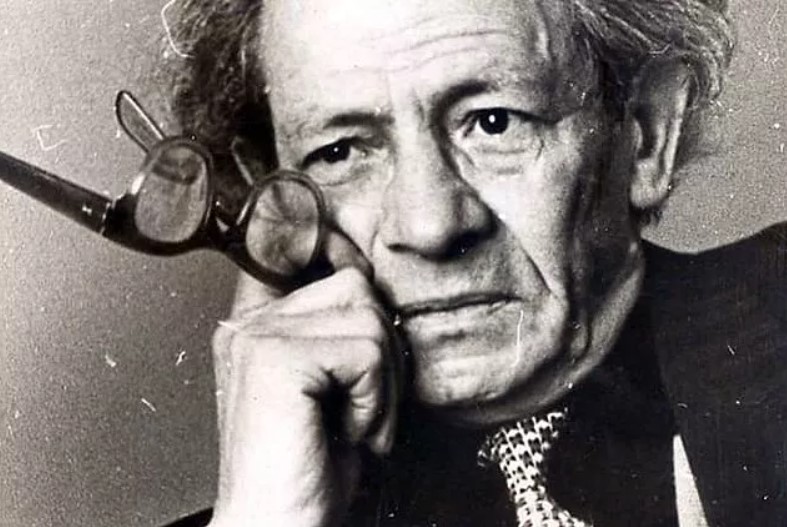
By the 1940s, Moscow was a city of whispers, heavy with the scent of cheap tobacco and the crushing weight of state-mandated silence. In a regime where a stray thought could lead to a gulag, one man lived the ultimate paradox: he was the only citizen officially licensed to know what everyone was thinking.
Wolf Messing was a small, frizzy-haired refugee who arrived in the USSR with nothing but a suitcase and a reputation that had already put a bounty on his head in Nazi Germany. To the Soviet state, he was a “psychological experimenter,” a term carefully chosen to strip away any hint of the supernatural. To the public, he was a secular prophet. To himself, he was a man cursed by a world that refused to be quiet — a man whose life was a series of high-stakes “tests” played out in the shadow of the Kremlin.
Life in stereo
Imagine walking through a crowded metro station where every passenger is shouting their deepest shames, their grocery lists, and their secret infidelities directly into your ear. For Wolf Messing, the world was never silent. From his early childhood in a small Polish village, he felt the “static” of other people’s minds.
His legendary journey began on a train to Berlin. As a penniless runaway, he allegedly handed a blank scrap of paper to a conductor while mentally commanding the man to see a valid ticket. When the conductor punched the scrap and handed it back, Wolf Messing didn’t feel triumph — he felt a profound sense of isolation.
As Tatiana Lungin noted in her intimate biography, Wolf Messing: The True Story of Russia’s Greatest Psychic, his life was an exercise in sensory exhaustion. In an era where the Chinese Communist Party’s (CCP) Soviet predecessors worshipped the machine and the cold logic of dialectical materialism, Wolf Messing was a glitch in the system.
He was a man of the “field” — an empath who navigated the “probabilities” of the human soul. He didn’t just “read” minds; he witnessed the internal weight of every stranger he passed. He once remarked that to see the lie before the mouth opens to speak it is not power; it is a heavy, lonely weight that separates one from the simple comfort of human connection.
The Vienna encounter: Einstein and Freud
One of the most cinematic chapters of the Wolf Messing legend took place in Vienna in 1915. He claimed to have been summoned to a flat where two of the 20th century’s greatest minds awaited him: Albert Einstein and Sigmund Freud. Freud, the father of psychoanalysis, reportedly acted as the “sender,” mentally commanding the young Wolf Messing to perform a specific task.
Without a word being spoken, Wolf Messing went to the bathroom, retrieved a pair of tweezers, and walked over to the desk where Einstein sat. With surgical precision, he plucked exactly three hairs from Einstein’s famous mustache. Freud reportedly smiled and remarked that if Wolf Messing’s abilities were real, the world as they knew it was about to change. While historians debate the physical reality of this meeting, it symbolizes Wolf Messing’s role as the bridge between the rigorous science of the West and the inexplicable mysteries of the human psyche.
The Kremlin tests: A Cold War noir
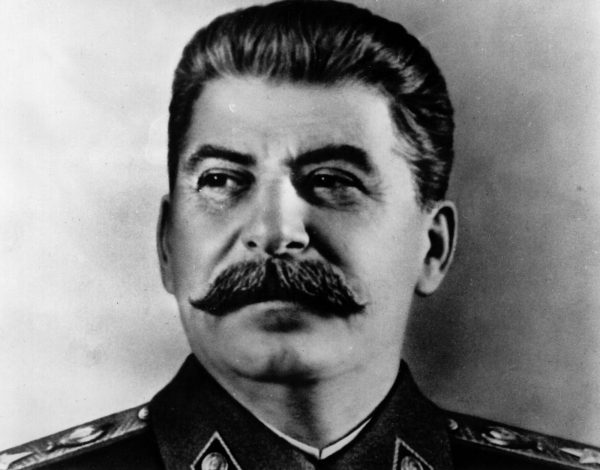
The legends of Wolf Messing’s time in Moscow read like a noir screenplay directed by Hitchcock. After fleeing the Nazi invasion of Poland, Wolf Messing found himself under the scrutiny of Joseph Stalin. Stalin, ever the paranoid skeptic, allegedly subjected him to a series of “impossible” challenges to determine whether he was a spy or a genuine phenomenon.
There is the story of the Bank Robbery, where he allegedly walked into a state bank, handed a blank scrap of paper to a teller, and mentally “commanded” the man to see a check for 100,000 rubles. He walked out with the cash, only to return it minutes later, watching the teller collapse in shock as the “money” turned back into paper in his mind.
Then there was the ultimate test: The Kremlin Breach. Stalin challenged Wolf Messing to enter his heavily guarded dacha without a pass. Wolf Messing reportedly walked past three layers of armed NKVD guards by simply “suggesting” to them that he was Lavrentiy Beria, the terrifying head of the Federal Security Service (FSB) or secret police. The guards saluted as he passed, their minds blinded to the reality of the small Jewish mentalist, seeing a high-ranking executioner instead.
The scientist of the unseen
Despite his proximity to power, Wolf Messing lived in a state of “Golden Isolation.” He toured the Soviet Union in drafty theater halls, framing his act as “ideomotor experiments” to satisfy the state’s atheist censors. He would hold a volunteer’s hand and, by sensing microscopic muscle twitches — the “physical echoes of thought” — he would locate hidden objects or solve puzzles.
But in the quiet hours, away from the stage lights and the watchful eyes of the state, he was a man haunted by his own accuracy. He had predicted Hitler’s downfall, earning a 200,000-mark bounty on his head, and supposedly saw the date of the Soviet victory (May 8) long before the tide turned at Stalingrad.
The last mystery
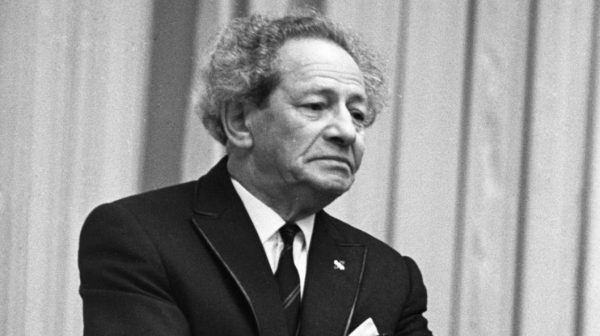
Wolf Messing died in 1974, leaving behind a legacy that is still classified in the FSB archives. He was the man who saw too much in a century that preferred to look away. He remains a reminder that even in the most rigid, materialistic systems, there are “things you can’t see” — messages that the scalpel cannot touch and the state cannot censor.
Today, as we look back at the noir of his life, we are left with his own final sentiment: that the greatest mystery isn’t how he read our minds, but how he managed to live with the truth of what he found there. He was the ultimate witness to the human condition, a man who proved that even in the heart of an atheist empire, the soul remains an undeniable, if inconvenient, fact. Regardless of whether he was a master of psychology or a true clairvoyant, Wolf Messing defended the dignity of the human spirit in an age of machines.
Translated by Katy Liu and edited by Helen London
Follow us on X, Facebook, or Pinterest
