
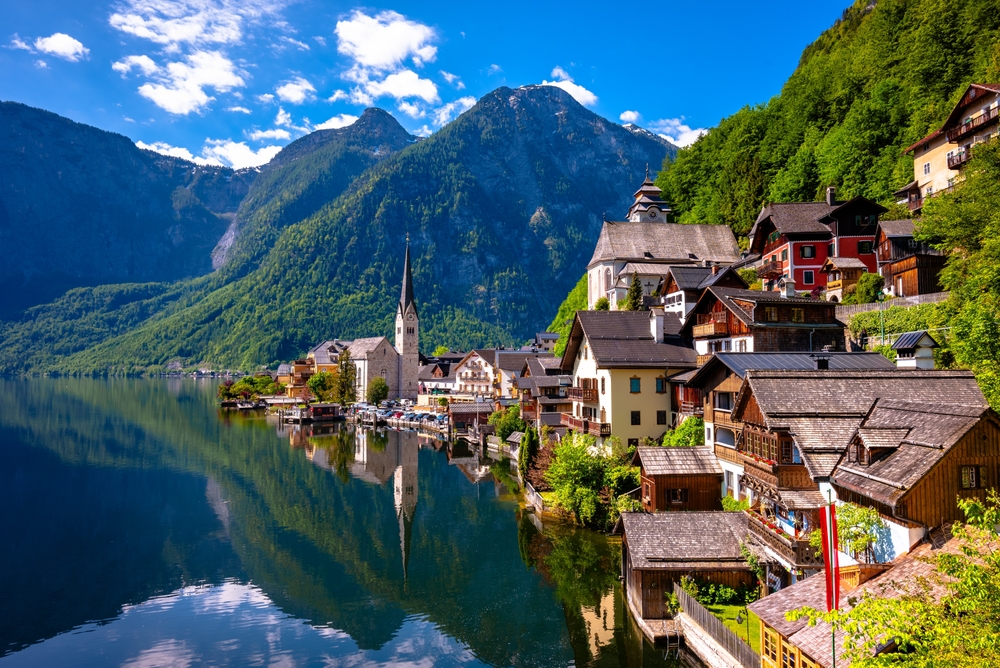
The small Austrian town of Hallstatt is home to only about 1,000 residents. So secluded is this picturesque village that many Europeans have never even heard of it. Yet despite its modest size, Hallstatt attracts a steady stream of visitors from across Asia, drawn by its growing reputation.
Just a few years ago, the town was burdened with debt. Today, however, its fortunes have been completely reversed, and Hallstatt now enjoys a budget surplus. But this unexpected prosperity has not come without costs. The constant influx of tourists has caused inconvenience and disruption to daily life, leaving residents grappling with balancing economic benefits against the pressures of tourism.
From hidden village to Asian tourism sensation
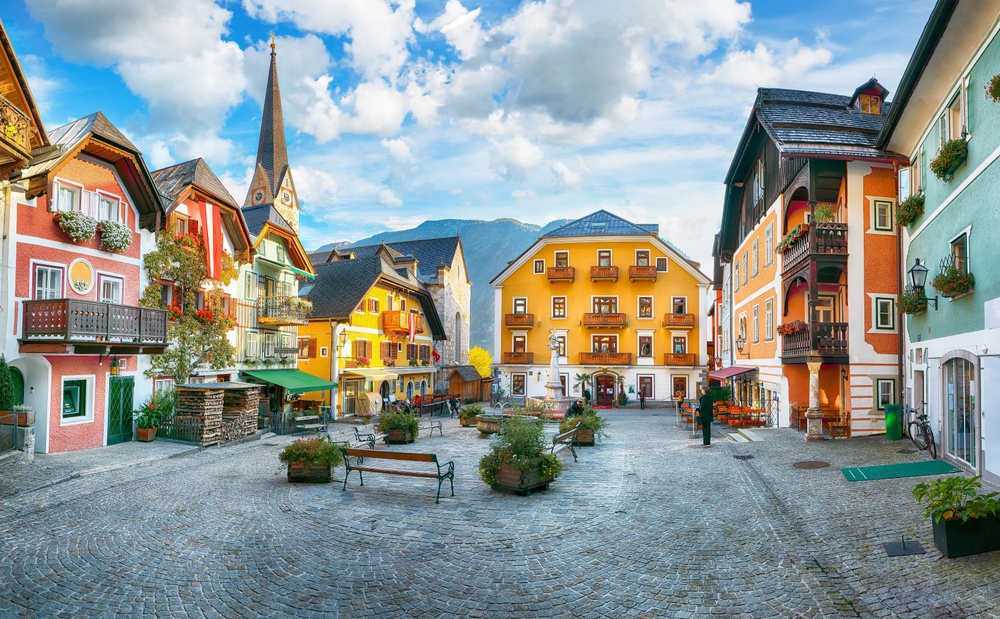
According to Chinese media reports, citing a Der Spiegel article titled “Tourists Have Saved a Once-Indebted Austrian Town” (October 20), Hallstatt has undergone a remarkable turnaround, shifting from debt to prosperity through tourism. Although Hallstatt is a small and relatively remote community, it has unexpectedly become a popular destination for visitors from across Asia, many of whom travel long distances to experience its scenic beauty and unique charm firsthand.
Hallstatt is located in the Salzkammergut region of Upper Austria. Nestled between towering mountains and the tranquil waters of Lake Hallstatt, it is renowned for its breathtaking scenery and storybook charm. On the Chinese internet, it has even earned the title of “the most beautiful small town in the world.”
Der Spiegel quoted a female tourist from Chongqing, China, who explained the village’s appeal to Chinese visitors: “Every Chinese person knows about Hallstatt. To us, Hallstatt represents a kind of simple happiness. It has mountains and a lake, the town is beautiful, and its residents seem content.” Her remarks reflect the idyllic image Hallstatt has cultivated among many Chinese travelers, who view the village as a peaceful retreat from the pressures and pace of modern urban life.
The widespread sharing of photographs showcasing Hallstatt’s idyllic beauty — its charming lakeside setting, traditional Alpine architecture, and dramatic mountain backdrop — has helped transform the once-obscure village into an internationally recognized travel destination. Through enthusiastic word-of-mouth recommendations and viral circulation on social media, the town has experienced an extraordinary tourism boom.
Despite its population of only about 1,000 residents — and the fact that many Europeans have never even heard of it — Hallstatt continues to attract a steady stream of visitors from across Asia. As a result, many Asian travel agencies organizing tours to major European cities, including Prague, Munich, Salzburg, and Vienna, have added the village to their itineraries.
In fact, Hallstatt is expected to welcome nearly one million visitors this year, a staggering figure for such a small community. Of those, approximately 150,000 are projected to stay overnight, while the vast majority arrive as day-trippers eager to experience its picturesque scenery firsthand.
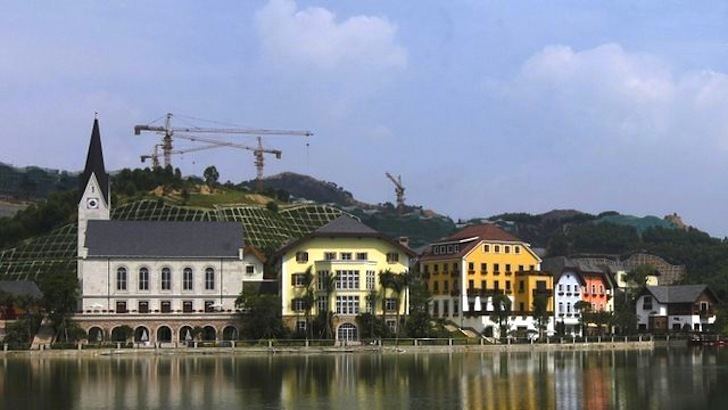
The village’s popularity in China became especially evident in 2012, when the city of Huizhou in Guangdong Province invested approximately 6 billion RMB to construct a near full-scale replica of Hallstatt in Luoyang Town, Boluo County. The project proceeded without prior consultation with the Austrian village itself.
Ironically, what might have been viewed as an act of imitation instead helped elevate Hallstatt’s international profile. News of the replica attracted widespread media attention, introducing the picturesque Austrian village to an even larger global audience, and further fueling interest among travelers eager to experience the original town firsthand.
A delicate balancing act
According to reports, Hallstatt’s mayor, Alexander Scheutz, views the tourism boom as a largely positive development for the village. He pointed out that only a few years ago, Hallstatt was burdened with debt and faced the possibility of being absorbed into a larger administrative district. Today, however, the town’s financial situation has been completely transformed, with a budget surplus of approximately 160,000 euros.
Tourism has become such an important source of revenue that the town’s public restrooms alone generate around 150,000 euros annually — an amount that surpasses the revenue collected from local land taxes. For Scheutz, these figures serve as tangible evidence of the economic benefits that the steady influx of visitors has brought to the once-struggling community.
Not all residents, however, are enthusiastic about the influx of tourists. Some have voiced concerns about the loss of peace and quiet from morning until evening, as well as the disturbances caused by visitors who fly drones without regard for local residents’ privacy and tranquility.
Balancing the economic benefits of tourism with the quality of life of the local community remains an ongoing challenge. Nevertheless, Mayor Alexander Scheutz does not support imposing limits on visitor numbers. Instead, he advocates what he calls “quality tourism” — encouraging travelers to stay for several days rather than merely passing through on brief sightseeing excursions. By attracting visitors who spend more time in the village, he hopes they will develop a deeper appreciation for Hallstatt’s natural beauty and relaxed atmosphere while contributing more meaningfully to the local economy.
Translated by Patty Zhang and edited by Tatiana Denning
Follow us on X, Facebook, or Pinterest
