
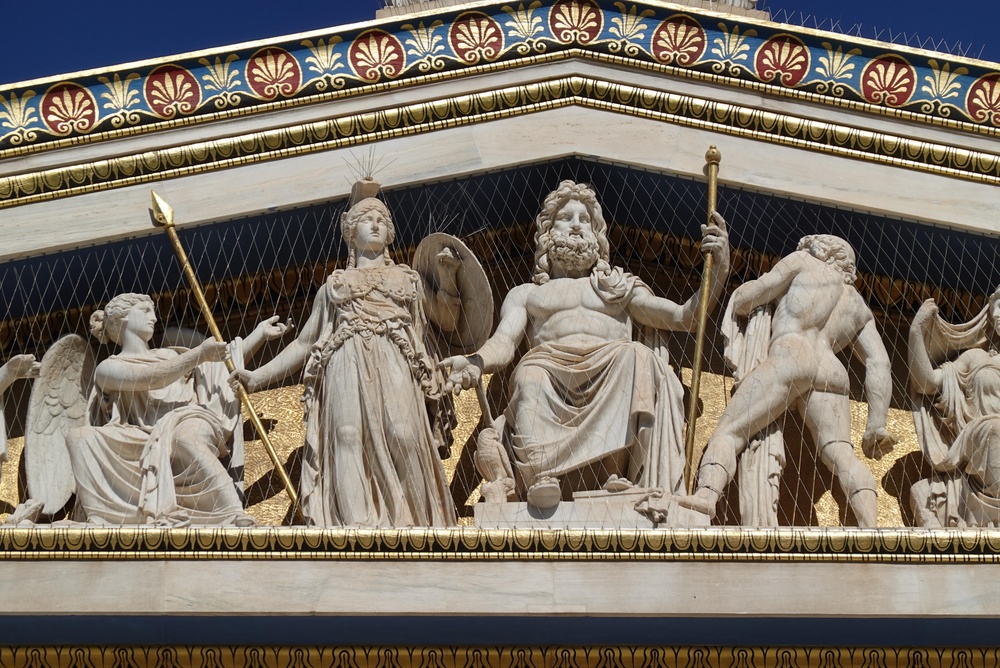
In the legends of ancient China, tales abound of immortals descending from the heavens to walk among mortals, testing humanity’s hearts to discern between good and evil. Similarly, motifs also emerge within Greek mythology. Today, we turn to one such story.
A tale from ancient Greece
Ancient Greek mythology preserves accounts of the gods taking mortal guise and moving unseen among humanity to observe human virtue and vice. In one such story, Zeus, the king of the gods, and Hermes, his swift-footed messenger, assumed the appearance of weary wanderers and traveled among men to witness their true character.
One evening, as shadows lengthened and a bitter chill began to bite at the air, they arrived at a bustling village. Zeus gestured toward a household that appeared to be wealthy, and Hermes stepped forward to knock firmly upon the gate.
When the door finally opened, the occupants looked out and saw only two bedraggled travelers standing in the gloom. Disdain clouded their faces. Not only did they refuse to offer shelter to the strangers, but with cold indifference, they released their vicious hounds to drive the wanderers away.
Although the villagers’ attitude was cruel, the compassionate gods still wished to enlighten them. So the two deities continued down the road, knocking on door after door, asking only for a place to rest and a little food to ease their hunger. But each time a door creaked open, the moment people caught sight of their ragged, beggar‑like appearance, fear and disgust flashed across their faces. Before the gods could utter a single word, the doors were slammed shut — sometimes with muttered curses, sometimes with cold, contemptuous silence.
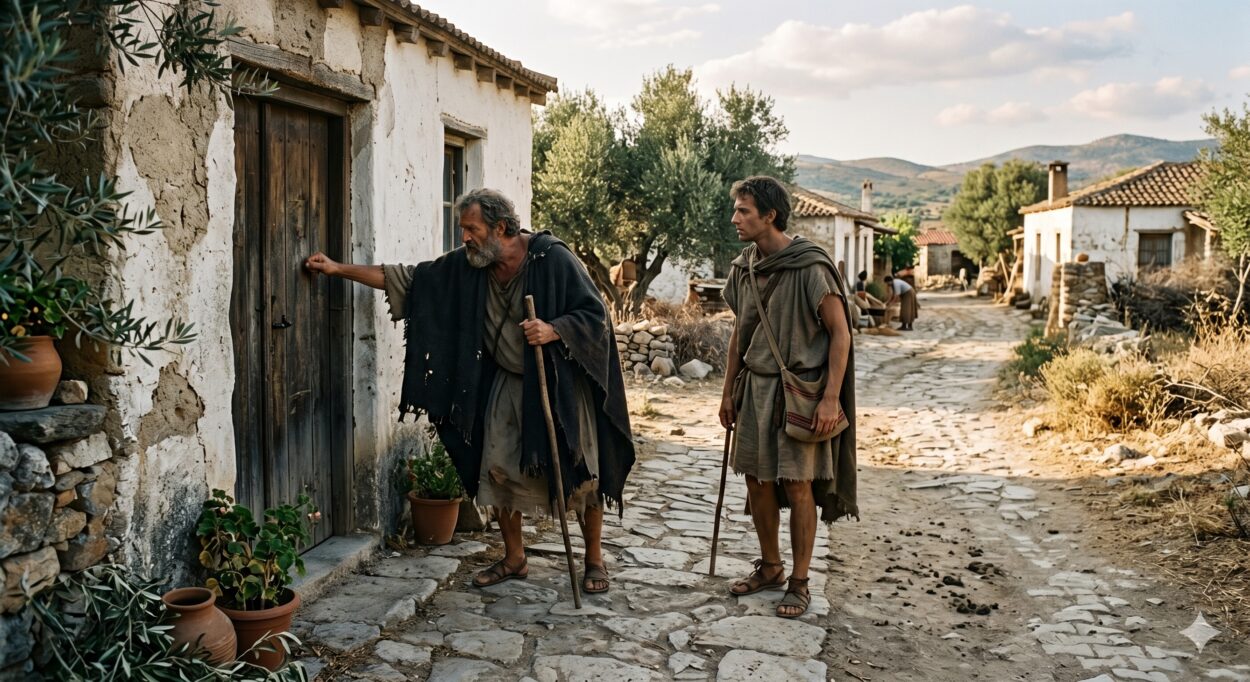
The rejection repeated itself from one end of the village to the other, the sky darkening as if mirroring the hardness of human hearts. Just when it seemed there was no kindness left in the world, the two gods reached a humble little hut at the edge of the village.
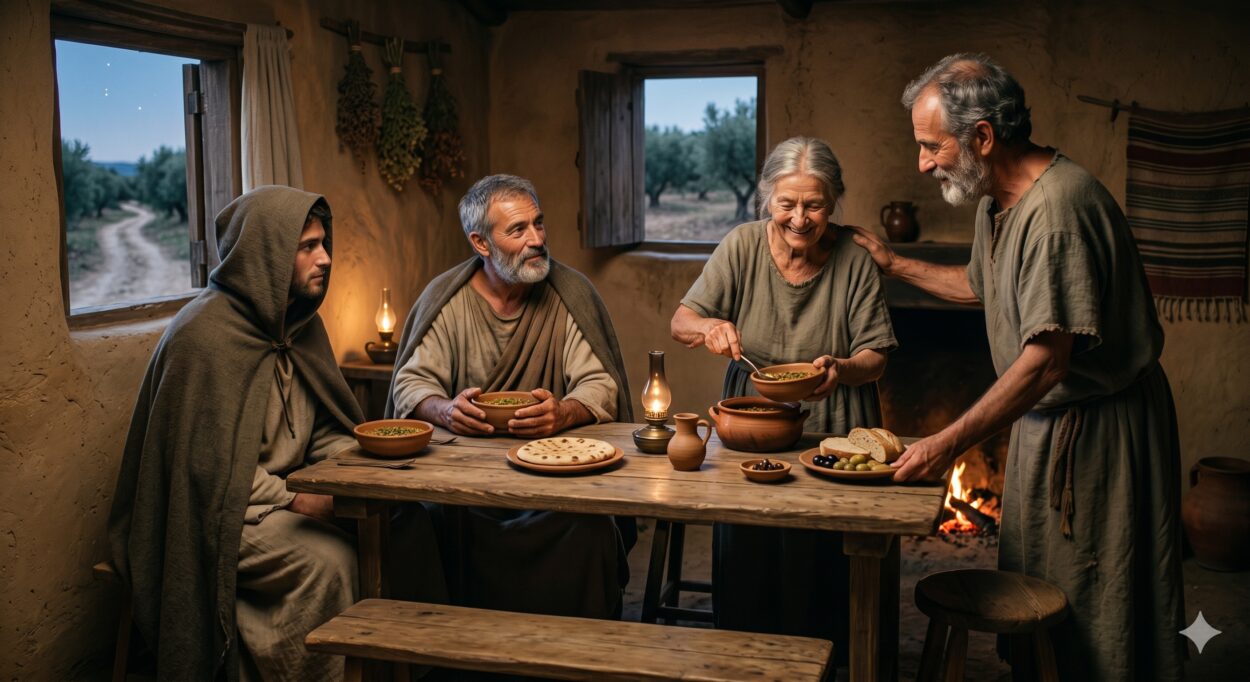
This modest structure was the home of an elderly couple, Philemon and his wife, Baucis. Despite having endured a lifetime of hardship and toil, their spirits remained unbroken. They harbored no resentment for their station, living instead in a state of quiet grace, always filled with deep gratitude and humble reverence toward the gods who watched over their weary lives.
When the two gods arrived, the elderly couple welcomed them with genuine joy and immediately set about preparing a warm meal. The gods, observing that although the hut was worn and simple, its inhabitants possessed hearts of immense kindness, were deeply moved. Recognizing the purity of their hosts’ hearts, the travelers chose to reveal their true celestial forms. Zeus looked upon the couple and spoke with divine authority: “We are gods. Because of your grace, you shall be freed from your life of hardship and misfortune. However, your neighbors must face the consequences of their wickedness. Come with us, and climb to the safety of the mountain heights.”
As they neared the safety of the mountain summit, the couple paused to look back at the valley below. To their shock, the entire village had vanished, completely submerged in rising floodwaters. The land they had known was gone, washed clean by the tide of divine judgment.
Years later, when their long lives finally came to an end, the souls of the kind-hearted couple were not forgotten. As a final reward for their virtue, they were granted the honor of entering the temple of Zeus, where they could dwell in the presence of the gods.
Reflection
In the Greek world, this story serves as the quintessential expression of xenia — the sacred law of hospitality. As Zeus was the protector of travelers and the divine patron of guest-friendship, the village’s refusal to offer shelter was not merely a social failing; it was a profound violation of the divine order. It was this breach of sacred duty that, in the mythic tradition, invited such absolute judgment.
Thus, whether in the East or the West, we remain bound by the timeless principle that our actions carry their own rewards. The kind are met with grace, while those who persist in hardness of heart and doing bad deeds invite their own undoing. This moral symmetry acts as a mirror held up to every generation — a quiet reminder that our daily choices, however small or unseen, shape the world we inhabit, define the legacy we leave behind, and ultimately dictate the trajectory of our lives.
Translated by Cecilia and edited by Tatiana Denning
Follow us on X, Facebook, or Pinterest
