

A landmark scientific study from Japan has brought compelling evidence to light about the strong link between canine companionship and cognitive longevity in senior citizens. Research highlights that elderly individuals who maintain a household with a dog experience a startling 48% reduction in the overall risk of developing disabling dementia requiring long-term care services compared to those without canine companions.
The rigorous longitudinal investigation followed a massive cohort of 11,224 senior residents across Tokyo over a comprehensive seven-and-a-half-year tracking period. The extensive timeframe allowed scholars to monitor behavioral, physical, and neural trends across aging demographics in real time.
Beyond serving as mere emotional companions, dogs appear to function as dynamic catalysts for physical mobility, biological stimulation, and sustained social integration. As public health systems globally grapple with the skyrocketing challenges of aging populations, these findings offer a groundbreaking, non-pharmacological approach to neuroprotective health strategies.
The core research group was formed through a strategic collaboration between the National Institute for Environmental Studies, the Tokyo Metropolitan Institute for Geriatrics and Gerontology, and the University of Tokyo. The research findings were formally reviewed and published in the peer-reviewed International Journal of Environmental Research and Public Health.
Food safety expert and science communicator Wayne (Yang Shiwei) highlighted that the primary goal of this research paper was twofold: to establish the precise physiological and psychological impact of dog ownership on the onset of dementia among older demographics, and to rigorously assess the broader socio-economic and cost-effective implications of pet ownership for modern society. The study specifically surveyed seniors aged 65 to 84 living independently in urban neighborhoods.
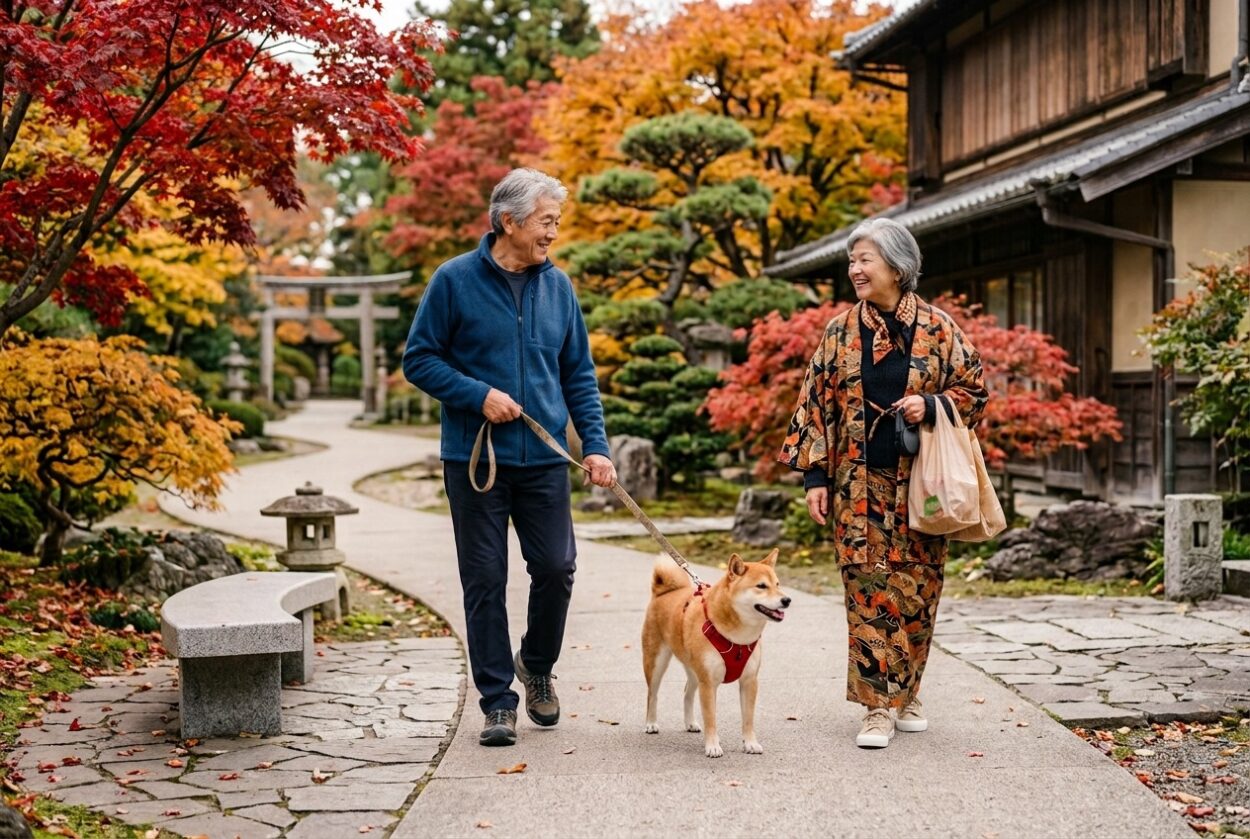
Experts identify three key physiological and social mechanisms that protect pet owners from cognitive deterioration
The joint research team proposed three foundational mechanisms to explain why owning a dog yields such a dramatic neuroprotective effect on the human body and mind. The first mechanism centers on daily physical routines: walking a dog consistently reduces sedentary habits and creates frequent opportunities for casual conversations with neighbors, helping prevent social isolation.
The second mechanism involves neurochemical bonding. Making direct eye contact or stroking a dog triggers the release of oxytocin — a key hormone linked to emotional bonding, social trust, and anxiety reduction — which supports brain function, neural plasticity, and metabolic balance.
The third mechanism highlights environmental exposure. Frequent outdoor excursions expose owners to natural sunlight, natural landscapes, and beneficial outdoor soil microorganisms, all of which enrich the human gut microbiome and reinforce systemic immune performance.
Furthermore, exposure to diverse environmental elements provides vital microbial nourishment that modulates neuroinflammation via the gut-brain axis, further protecting the central nervous system against age-related damage.
These combined mechanisms suggest that the neuroprotective benefits of pet ownership are unique to animals that require active, structured care, which helps maintain daily rhythms and circadian balance in aging adults.
Economic models reveal a complex financial picture balancing societal investments against public healthcare savings
Beyond biological factors, the researchers conducted an exhaustive economic impact analysis of dog ownership in aging societies. Their financial projections suggested that if the proportion of elderly pet owners in Japan increased to 13.4%, total national expenditure — including household costs like pet food, veterinary care, and supplies — would reach roughly 4.63 trillion yen (about US$29.5 billion) over four years.
Conversely, from a public finance perspective, the study demonstrated that healthier seniors saved the state substantial sums. Reductions in institutional long-term care and clinical medical visits yielded estimated public healthcare savings of approximately 592 billion yen (about US$3.8 billion) over that same four-year span.
Thus, while pet ownership creates high localized costs for private households, it also provides notable relief to taxpayers and state-funded medical systems.
Despite these benefits, only 8.6% of survey participants currently owned a dog because they feared declining health or mortality. Overcoming these hesitation barriers requires community-level support structures, such as pet-fostering networks and veterinary backup programs, alongside updated municipal infrastructure that encourages dog-friendly living for seniors.
Growing concerns over dementia prompt broader scientific discussions regarding modern lifestyle factors and brain health
The dramatic findings from the Tokyo study arrive amidst heightened global awareness and public discussion surrounding the prevention of neurodegenerative diseases. Families, healthcare professionals, and researchers worldwide are scrutinizing daily habits to isolate choices that either mitigate or accelerate cognitive decline.
Alongside discussions of positive behaviors like exercise and pet companionship, medical professionals are issuing stark warnings about passive, sedentary daily habits. Prominent Taiwanese nephrologist Dr. Jiang Shou-Shan has brought significant attention to recent neurological research examining how passive leisure activities impact the human brain.
Dr. Jiang pointed out that lifestyle patterns established long before old age — specifically during middle age — play a decisive role in determining whether a person maintains robust cognitive reserves or suffers premature brain atrophy in their twilight years.

Citing recent studies, doctors warn that excessive television viewing and passive sitting damage key brain structures
Citing landmark research published in The Journal of the Alzheimer’s Association, Dr. Jiang Shou-Shan warned that excessive television consumption during middle adulthood poses severe long-term risks to neurological structural integrity. The study found that people who frequently watched television in midlife had significantly smaller brain volumes in key memory-related regions later in life.
Neuroimaging data showed noticeable tissue loss across both the frontal and occipital lobes, along with severe damage to white matter pathways. Crucially, sitting while watching television damages the brain in ways that occupational desk work does not, as passive screen viewing lacks the cognitive engagement that preserves neural architecture.
When researchers disaggregated the MRI data by gender, they discovered that men experienced a disproportionate level of these negative brain changes compared to women.
Combining active pet ownership with mentally stimulating habits while minimizing passive screen time ultimately provides the most accessible and powerful defense against future cognitive decline, emphasizing that lifestyle interventions remain our best shield for long-term health.
Translated by Elaine and reviewed by Amanda
Follow us on X, Facebook, or Pinterest
