
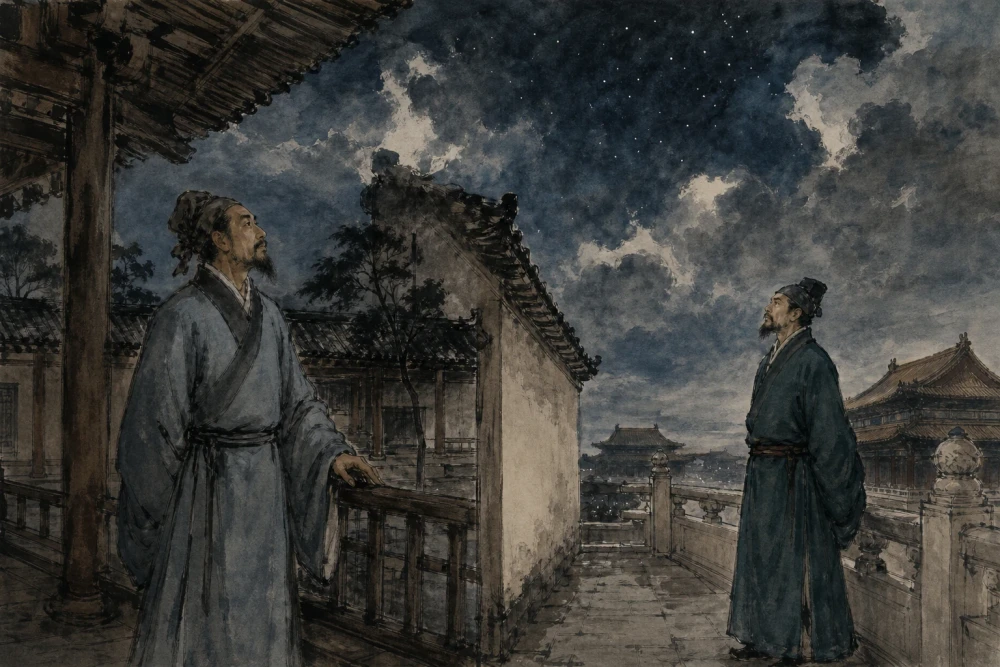
Throughout history, extraordinary individuals were believed to possess a rare ability to perceive what others could not — reading subtle signs in the heavens, foreseeing coming disasters, and understanding the deep connection between celestial phenomena and human conduct.
In ancient China, such individuals were regarded as vital messengers of Heaven, entrusted with urgent warnings that carried profound consequences for those who heeded them or foolishly ignored them.
Two such extraordinary figures, a father and son, became widely celebrated across the empire for their remarkable predictions and unwavering integrity. Lang Yi, whose courtesy name was Yaguang, was a native of Anqiu in Beihai, and the official historical text, the Book of the Later Han, records his notable life and deeds.
His father, Lang Zong, whose courtesy name was Zhong Sui, was equally skilled in observing celestial phenomena and interpreting their ultimate significance for the human world. Together, their legacy illustrated the timeless principle that moral conduct on Earth is directly mirrored in the cosmos’s grand movements.
A devoted magistrate foretells a distant disaster and rejects worldly fame
During the reign of Emperor An of the Han Dynasty, Lang Zong was appointed magistrate of Wu County, where he earned a reputation for conscientious service. At the time, violent, erratic winds frequently arose across the region without warning.
Carefully observing these unusual occurrences and correlating them with traditional astrological principles, Lang Zong predicted that a devastating fire would soon break out in the distant imperial capital.
To prove his prediction, he calculated the exact date, recorded it, and sent trusted messengers to await news from the capital. Sure enough, a major fire broke out in the capital on the exact day he had predicted, astonishing court officials.
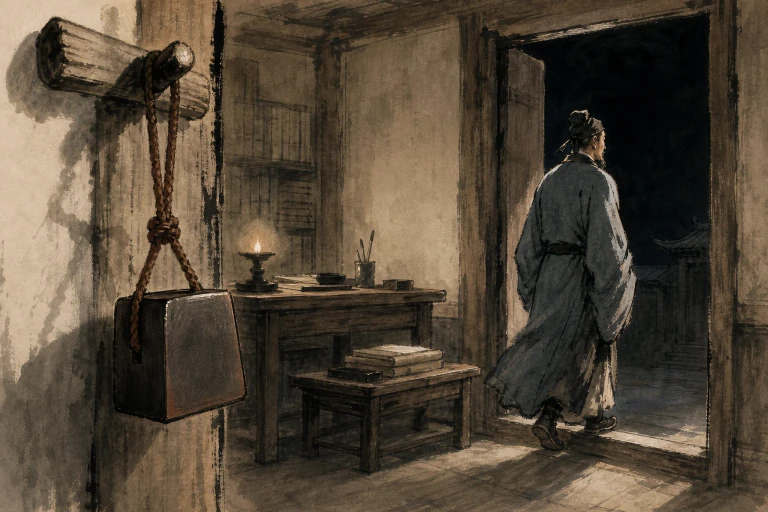
When the emperor learned of Lang Zong’s astonishingly accurate prediction, he sought to summon him to court to appoint him as a boshi, a prestigious scholar-official position. However, Lang Zong believed it would be deeply shameful to use his divine abilities as a mere instrument for pursuing personal fame and official rank.
That very night, he quietly hung his official magistrate seal at the county government office and departed into obscurity, choosing never to hold public office again.
A courageous son warns the imperial court to correct its course
His son, Lang Yi, inherited his father’s profound knowledge and perceptive abilities, becoming exceptionally skilled at observing celestial phenomena and discerning what they portended for humanity. During the reign of Emperor Shun of the Han Dynasty, natural disasters and unnatural occurrences struck the empire with alarming frequency.
Recognizing his talent, the imperial court summoned Lang Yi to offer his insight. In response, he submitted a detailed written memorial — a formal, direct appeal offering counsel to the throne. He explained that unusual celestial phenomena and natural disasters were not random occurrences, but stern warnings from Heaven signaling that the emperor and his court had strayed from the proper path.
He argued that the court urgently needed to correct its conduct and moral character so that government affairs could be restored to a righteous course. Lang Yi earnestly urged the emperor to examine himself daily, reflect deeply on his personal shortcomings, and correct his errors to avert coming catastrophes.
Drawing upon the wisdom of ancient classics, he boldly identified serious systemic problems within the imperial administration: excessive extravagance and debauchery, the failure to appoint virtuous and capable officials, reliance on harsh punishments, and the rise of complacent, self-indulgent bureaucrats.
Most strikingly, Lang Yi made a specific, verifiable prediction: around the beginning of summer, a severe earthquake would strike, accompanied by the ground splitting open and destructive floodwaters surging forth across the land.
After reviewing the memorial, the emperor sent a senior official to interrogate Lang Yi about his daring claims. Rather than backing down out of fear, Lang Yi knowingly risked incurring the emperor’s intense displeasure — and potentially forfeiting his life — by submitting a second, even more detailed memorial.
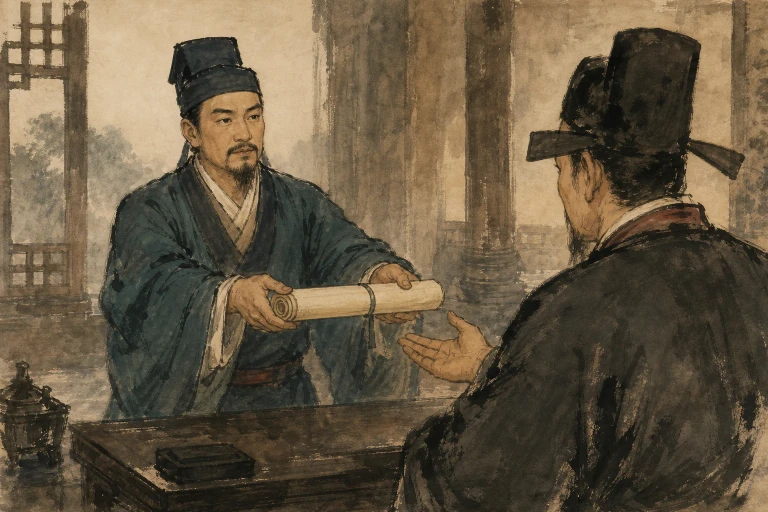
In this follow-up appeal, he elaborated extensively on the inescapable relationship between celestial signs, environmental disasters, and state governance. He proposed specific, practical measures the court could implement immediately to avert or lessen the impending calamities.
Among his primary recommendations were four crucial reforms that he believed would immediately stabilize the nation. He boldly declared that if the imperial government corrected its course without delay, timely, life-giving rain would arrive by early summer; conversely, if the court refused to act, he was willing to stake his own life on the accuracy of his dire prediction.
Moved by the depth of the second memorial, the emperor summoned Lang Yi and appointed him langzhong, an honorable official position within the imperial governance structure. Lang Yi, however, pleaded illness, declined the appointment, and quietly left the capital to return to his peaceful hometown.
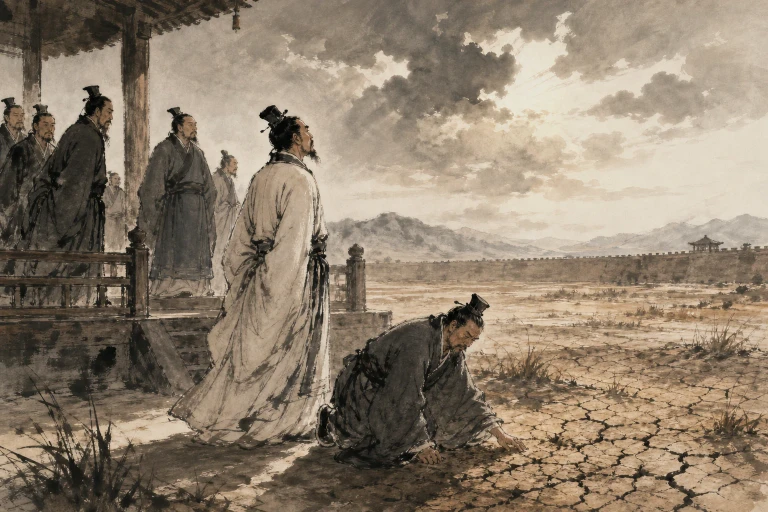
Unfortunately, the emperor failed to examine his shortcomings before Heaven, nor did the imperial court make any genuine effort to reform its corrupted practices. Then, in April of that very year, an earthquake struck the empire precisely as foretold, causing the ground to crack open and sink.
Summer arrived without a drop of rain, bringing a devastating and prolonged drought that ruined crops across the region. In the autumn, external pressures mounted as the Xianbei forces invaded the strategic city of Mayi, followed the next year by the Western Qiang invading Longxi.
According to historical records, these tragic events closely matched every aspect of the calamities Lang Yi had foretold. Although the imperial court eventually tried to summon him again to serve the nation, Lang Yi steadfastly refused to return.
Divine signs remind humanity that earthly power requires reverence and moral integrity
The ancient Chinese held a foundational belief summarized by a traditional saying: when human beings commit wrongdoing, Heaven provides a clear warning, and if they stubbornly refuse to correct themselves, Heaven sends punishment.
According to this traditional worldview, changes in the heavens correspond directly to moral shifts in the human world. When individuals or rulers act in ways that violate the natural order and Heaven’s will, unusual celestial signs or natural disasters appear as merciful calls to reflection.
If people fail to recognize their mistakes and alter their course in time, far greater calamities inevitably follow as a natural consequence. Traditional Chinese civilization did not view these concepts as mere superstition or primitive myth.
Rather, it held that these principles pointed to profound cosmic truths that extended beyond the limits of mundane knowledge — what modern thinkers might describe as a higher form of spiritual science.
Ancient Chinese culture was deeply shaped by a divine heritage wherein people revered Heaven and sought to align human society with destiny. Both within the imperial court and among ordinary citizens, spiritual cultivators and wise scholars sought to decipher celestial movements without seeking personal wealth or fame, seeing themselves as humble messengers conveying Heaven’s intentions to mankind.
Official government institutions, including the historical Directorate of Astronomy and the later Imperial Astronomical Bureau, were established specifically to monitor these cosmic indicators.
Ultimately, the ancient belief that Heaven responds directly to human conduct rests on an enduring principle: the ultimate well-being of the human world is inseparable from moral virtue, serving as a timeless reminder that no degree of earthly authority can ever replace genuine reverence, moral responsibility, and harmony with the universe.
Translated by Katy Liu and reviewed by Tatiana Denning
Follow us on X, Facebook, or Pinterest
