

The mind rarely sits still. Between the buzzing phone, the unfinished to-do list, and the worry that arrives uninvited at 3:00 a.m., many of us have forgotten what quiet feels like. Yet long before stress became a modern epidemic, people across China were turning inward each morning to find a steadier kind of calm.
The health benefits of meditation are not a new discovery. For thousands of years, Daoist sages and Buddhist monks practiced stillness as a path to vitality, clarity, and long life. What is new is the science. In laboratories from Harvard to Beijing, researchers are now measuring what these traditions long understood: that a few quiet minutes a day can reshape the brain, soften the body’s stress response, and gently support the heart.
This is the meeting place of ancient wisdom and modern medicine. In the pages ahead, we will explore where meditation comes from, how it works, what it can and cannot do for your health, and how to begin, even if your mind never seems to stop racing.
What is meditation?
Meditation is the practice of training attention, often through the breath, quiet focus, or gentle awareness, to settle the mind and bring it into the present moment. It is not about emptying your thoughts or forcing a blank mind. It is about noticing where your attention goes and gently learning to guide it back.
The roots of meditation reach further than written history. In China, its lineage flows through Dao Yin, the ancient art of guiding and stretching that joins breath, movement, and inner focus. Over centuries, Dao Yin matured into Qigong, the cultivation of qi, or life energy. Archaeologists have found Neolithic artifacts nearly 7,000 years old depicting a figure seated in a meditative posture, a reminder that the human longing for stillness is older than any dynasty.
By the time of the Han Dynasty (206 BCE to 220 CE), these practices were woven into Daoist philosophy and traditional Chinese medicine (TCM). Alongside acupuncture and herbal medicine, meditation became a way to keep qi flowing smoothly through the body’s meridians and to settle the shen, the spirit or consciousness that TCM sees as the seat of mental clarity. Buddhist traditions, arriving from India, deepened this inheritance with their own contemplative methods.
To explore meditation, then, is to step into living wisdom, not a museum piece. These are practices people still use today, much like the no-cost wellness habits of traditional Chinese medicine that require only a little time. Refined across more than 2,000 years of human experience, meditation remains one of the gentlest gifts that tradition has handed down to us.
Sitting still or moving: The many faces of meditation
Meditation is not a single technique but a whole family of techniques. Some traditions quiet the body completely; others, especially in China, set it gently in motion.
- Mindfulness meditation invites you to notice the present moment, often your breath or bodily sensations, without judgment.
- Focused-attention meditation rests the mind on a single anchor, such as a candle flame, a word, or a sound.
- Loving-kindness meditation, known as metta in the Buddhist tradition, cultivates warmth toward yourself and others.
Then there is China’s distinctive contribution: moving meditation. In qigong and tai chi, a still mind meets slow, flowing movement. The practitioner breathes deeply, follows each gesture with full attention, and guides qi through the body. For those who find sitting difficult, these gentle movement practices offer the same inward calm while the body is in motion. They are a quiet reminder that meditation has always been less about posture than about presence.

How meditation works: Calming the body’s stress response
To understand the health benefits of meditation, it helps to look at what happens inside the body when we feel stressed. When the mind senses pressure, the sympathetic nervous system, often called the “fight or flight” response, springs into action. Heart rate climbs, breathing quickens, and stress hormones such as cortisol flood the bloodstream. In short bursts, this is useful. Living day after day, it slowly wears the body down.
Meditation works largely by tipping the balance the other way. Slowing the breath and steadying attention activates the parasympathetic nervous system, the body’s “rest and digest” mode. Heart rate eases. Breathing deepens. The body shifts from alarm toward repair.
This idea is not new. The healers of traditional Chinese health wisdom described it long ago in their own language. When the mind is agitated, TCM teaches that qi becomes turbulent and the shen grows restless. Stillness allows qi to settle and flow smoothly once more. Where modern science sees a calmer nervous system, the ancient texts saw harmonious energy. There are two windows looking onto the same quiet room. This is why even brief practice matters. You are not forcing relaxation. You are giving the body permission to do what it already knows how to do, the moment the mind stops sounding the alarm.
The mental health benefits of meditation
Some of the most striking benefits of meditation appear in the mind itself.
Relief from stress and anxiety
Across hundreds of randomized controlled trials, consistent meditation has been shown to lower stress and ease anxiety, often without the side effects, cost, or waiting lists that other approaches involve. Encouragingly, studies suggest benefits can begin to appear in as little as 10 minutes a day over about two weeks. For readers who love a calming ritual, pairing practice with traditional Chinese teas can make the new habit easier to maintain.
Mood, depression, and emotional balance
The benefits extend beyond everyday worry. A widely cited research review published in JAMA Internal Medicine found that mindfulness meditation can help relieve anxiety, pain, and depression. For depression, the review found meditation to be roughly as effective as an antidepressant, a remarkable result for a practice that asks only for your attention.
Sharper focus and mental clarity
Meditation is, at its heart, attention training. With regular practice, many people find their focus steadies and their thinking clears. This echoes a long-held belief in TCM that a settled shen sharpens the mind. For more ways to keep your mind nimble as you age, explore these simple practices for mental sharpness.

The physical health benefits of meditation
The body listens to the mind. As the nervous system calms, measurable changes follow.
Blood pressure and heart health
Does meditation lower blood pressure? The research suggests it can. A 2015 analysis of 12 randomized clinical trials found that Transcendental Meditation produced a mean reduction in blood pressure of about 4/2 mmHg, systolic over diastolic. The American Heart Association notes that meditation may modestly support cardiovascular health as part of a broader healthy lifestyle. The effect is gentle rather than a cure, but for the heart, small and steady improvements matter.
Immune function and inflammation
Chronic stress keeps the body in a low simmer of inflammation. Research reviewed in recent medical literature suggests that meditation can lower levels of inflammatory cytokines, the molecular signals that drive inflammation, and may support healthier immune function over time. In TCM terms, smoothing the flow of qi was always understood to protect the body’s natural defenses.
Better sleep and relief from pain
Many people come to meditation through a racing mind at bedtime. By quieting that mental chatter, practice can make it easier to fall and stay asleep. Meditation has also been studied in numerous trials for chronic pain, where it has been shown to reduce pain intensity and improve quality of life, not by erasing the pain, but by gently changing one’s relationship to it.
Your brain on meditation: What the scans reveal
Perhaps the most compelling modern evidence comes from inside the skull. Using magnetic resonance imaging (MRI), scientists have observed that meditation reshapes the brain.
Two changes stand out. The amygdala, the brain’s alarm center for fear and stress, tends to shrink and grow less reactive with consistent practice. At the same time, the prefrontal cortex, which governs planning and decision-making, and the anterior cingulate cortex, which helps regulate attention and emotion, grow measurably thicker.
In plain terms, meditation appears to quiet the part of the brain that panics while strengthening the parts that stay calm and focused. A 2026 review from researchers at Harvard described these structural shifts as among the best-documented effects of long-term practice.
There is poetry in this. For centuries, Chinese tradition taught that cultivating inner stillness could transform a person from the inside out. Today, the scans offer a glimpse of that very transformation, written in the brain’s living tissue.
Meditation for beginners
The beauty of meditation is its simplicity. You need no equipment, no membership, and no perfect silence, only a few minutes and a willingness to try. If you are wondering how to start meditating, these three beginner-friendly methods are a gentle place to begin.
- Breath awareness. Sit comfortably and close your eyes. Bring your attention to your breath, the cool air entering, the warm air leaving. You are not changing the breath; you are only noticing it. Begin with two or three minutes.
- Body scan. Starting at the top of your head, slowly move your attention downward, part by part, through your face, shoulders, chest, and all the way to your toes. Greet each area without judgment.
- Loving-kindness. Silently offer a few warm wishes, first to yourself and then to others: “May I be well. May I be at peace.” This tender practice can soften difficult emotions and nurture compassion.
- A few words of encouragement. Your mind will wander. This is not failure; it is the practice. Each time you notice your attention drifting and guide it back, you strengthen the very muscle that meditation builds.
- Start small. Five to 10 minutes a day is far more powerful than 30 minutes once a week. As the old wisdom holds, it is consistency, not intensity, that brings the biggest change.
An honest word: Meditation is powerful, not magic
In the spirit of gentle honesty, meditation is a practice, not a miracle. While its benefits are real, it is not a substitute for medical care. If you are managing a serious physical or mental health condition, meditation can be a helpful companion to professional treatment, never a replacement for it.
It is also worth knowing that stillness is not always comfortable. According to the National Center for Complementary and Integrative Health, meditation is generally safe for most people, yet a smaller number encounter difficult experiences along the way, such as surfacing emotions or restlessness. For most, these pass. For some, especially those carrying past trauma, the guidance of an experienced teacher or therapist makes all the difference. None of this dims meditation’s promise. It simply asks us to approach the practice the way the old masters did: with patience, humility, and respect for our own pace.
Common questions about the benefits of meditation
- How long should you meditate to see benefits? Research suggests that even 10 minutes a day can bring measurable improvements in stress and focus within about 2 weeks. Consistency matters far more than length. Five to 10 minutes daily will serve you better than a single long session once a week.
- Can meditation really lower blood pressure? Yes, gently. A 2015 review of 12 clinical trials found that regular meditation modestly reduced blood pressure. It works best as one part of a heart-healthy lifestyle, alongside good sleep, movement, and nutrition, rather than as a stand-alone treatment.
- Is meditation safe for beginners? For most people, yes. Begin with short, simple sessions and be patient with a wandering mind. If you live with past trauma or a serious mental health condition, consider practicing with a qualified teacher or therapist who can guide you safely.
- Do I need to follow a religion to meditate? Not at all. While meditation grew from Daoist, Buddhist, and other spiritual traditions, the practice itself is simply attention training. Anyone, of any faith or none, can enjoy the health benefits of meditation.
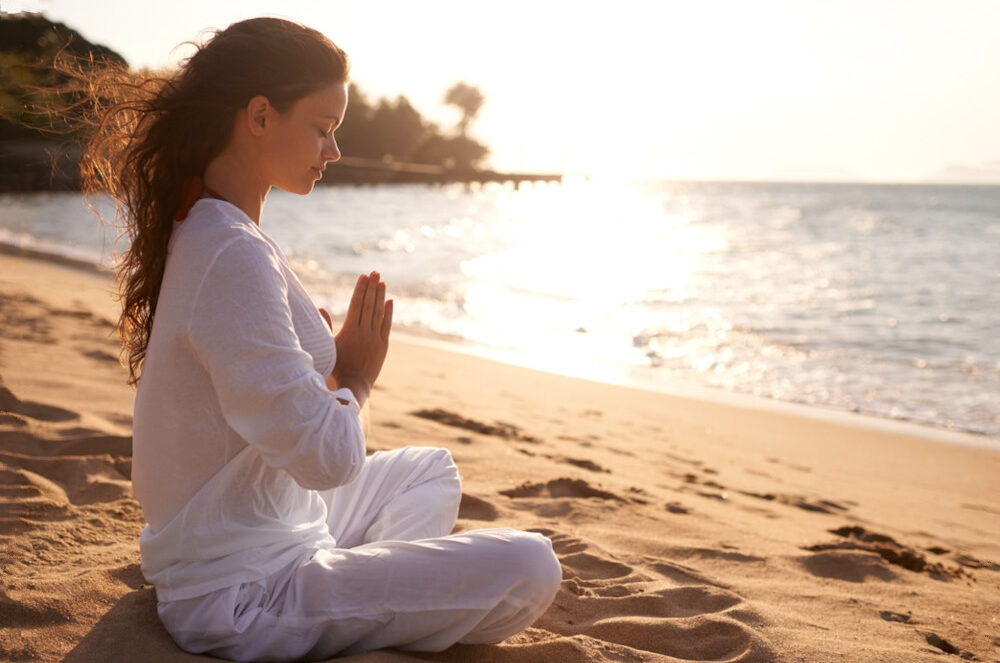
Conclusion: A quiet gift within reach
The health benefits of meditation form a bridge between two worlds. On one side stand the Daoist sages and Buddhist monks who, more than 2,000 years ago, discovered that stillness could heal. On the other hand, modern researchers with their brain scans and clinical trials, quietly confirm what those traditions long believed.
The takeaways are simple. Meditation can ease stress and anxiety, lift mood, and sharpen focus. It can gently support the heart, calm inflammation, and improve sleep. It can even reshape the brain, softening fear while strengthening calm. And it asks for so little in return: a few minutes, a steady breath, and the willingness to begin again each time the mind wanders.
In a noisy world, that may be the most hopeful news of all. The calm we long for is not sold in a bottle or locked behind a clinic door. It has been within us all along, waiting in the quiet, just as it waited for those who sat in stillness long before us.
Follow us on X, Facebook, or Pinterest
