
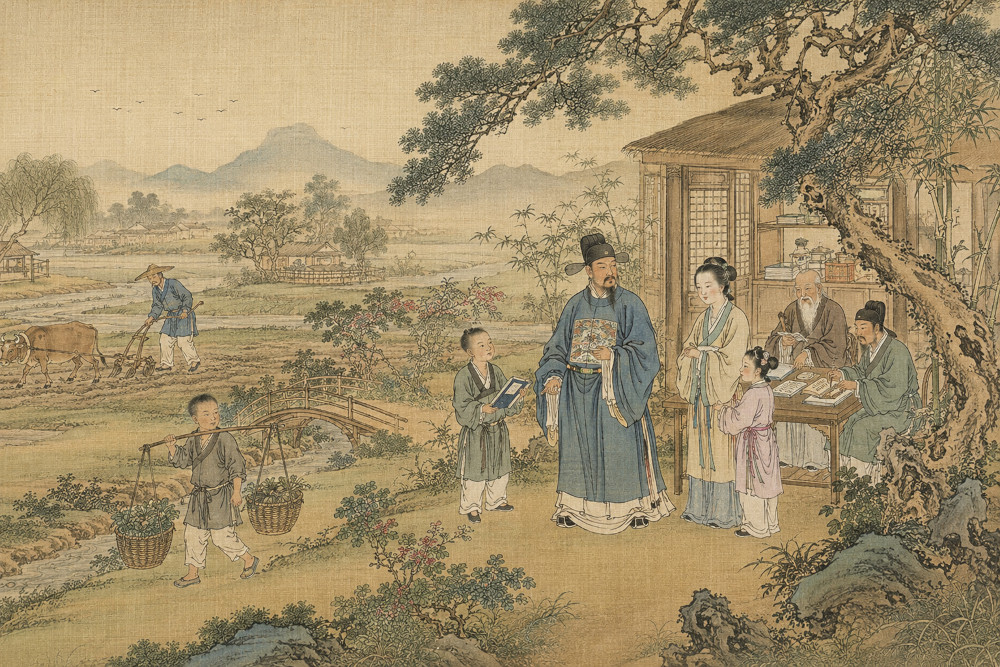
During the Jiaqing and Daoguang reigns of the Qing Dynasty, a prominent court minister named Tao Shu emerged from Anhua County in Hunan Province.
Tao was born in the 43rd year of the Qianlong reign, 1778. That summer, the region suffered a severe drought, and by winter grain prices had soared. His father, deeply concerned for the country and its people, hoped his newborn son would one day be like nourishing rain, bringing benefit to the land and relief to the people. He therefore named him Shu, meaning rain that nourishes all things, and gave him the courtesy name Zilin. Looking back on Tao Shu’s life, one can see that he did indeed devote himself to benefiting the people and serving the nation.
A father’s example
Tao’s father was a learned man of noble character. Although he never entered official service, he had a compassionate heart and cared deeply about the suffering of others. During the year of the great drought, people who had starved to death could be seen along the roads. Unable to bear the sight of bodies lying exposed, he carried out an old broken door plank from his home and used it to cover them. When that was not enough, he raised donations and used the money to hire people to bury the dead.
Tao’s father was also a well-known local teacher, and he was especially strict with his son. Even when traveling, if they had only a short break for a meal, he would earnestly teach Tao the principles of proper conduct and how to handle affairs. At night, he would remind him to review what he had learned during the day and not become lazy or careless.
Whether Tao was composing poetry or writing essays, his father encouraged him to express his own understanding rather than simply follow convention. Growing up at his father’s side, Tao heard many stories about the ancient sages. Gradually, he developed the aspiration to bring peace to the people and serve the world.
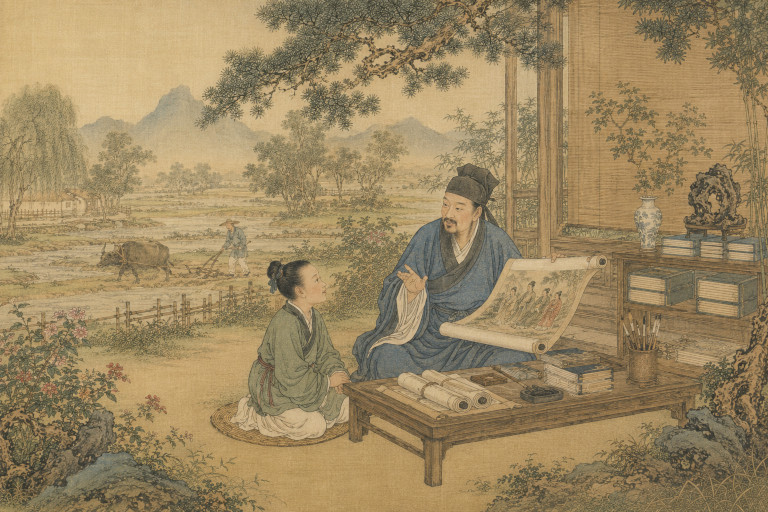
Under his father’s careful guidance, Tao’s path through the imperial examinations went smoothly. In the fifth year of Jiaqing, 1800, he passed the provincial examination and became a juren. In the seventh year of Jiaqing, 1802, he passed the metropolitan examination and became a jinshi, or presented scholar. He was later selected as a probationary scholar of the Hanlin Academy. After his father passed away, Tao observed the mourning period and taught at a local academy.
It was not until the first year of Daoguang, 1821, that Tao was recognized by a high official from Sichuan and recommended for provincial posts. He served in Shanxi, Fujian, and Anhui as judicial commissioner and administrative commissioner. Less than ten years later, he was promoted to governor-general of Liangjiang and concurrently served as governor of Jiangsu, becoming a true high-ranking regional official.
During his time in office, Tao saved the imperial court a great deal of money. He also used his own salary to help disaster victims. Because he was highly regarded by the emperor, he was posthumously granted the name Wenyi.
Repaying betrayal with kindness
Like his father, Tao Shu was kind and generous. In his youth, he was engaged to a young woman from his hometown whose family name was Huang. She was considered attractive, and a wealthy local family surnamed Wu also took an interest in her. The Wu family wanted her to marry their son as his second wife, so they brought generous gifts to the Huang family to propose marriage. Huang’s father was tempted by the offer and went to the Tao family to break off the engagement.
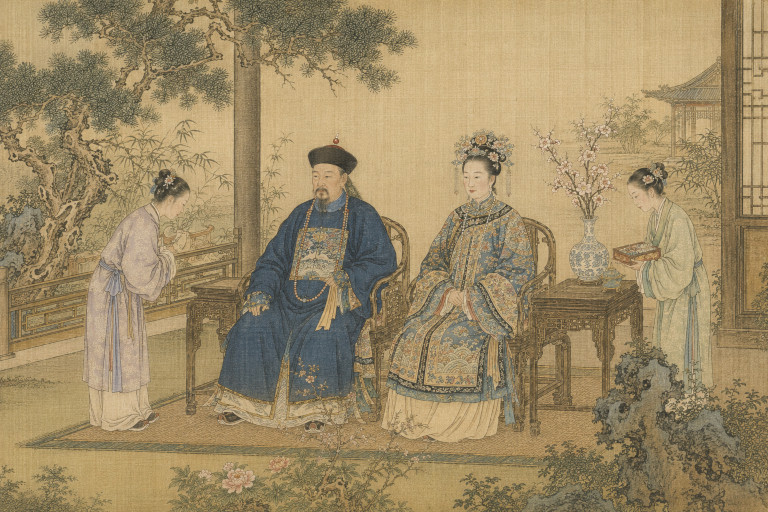
At first, Tao did not agree. But Huang herself also began to favor ending the engagement and was determined to marry into the Wu family. In the end, her father proposed that a servant girl raised in their household marry Tao in Huang’s place. Tao said nothing more and accepted the arrangement. Later, when Tao became an important court minister, this former servant girl was honored as a first-rank titled lady.
As for Huang, after she married into the Wu family, misfortune soon followed. Her husband encroached on another person’s land and was killed in the resulting conflict. Her father-in-law also died not long afterward. Left in a tragic situation, Huang had no one to rely on. Seeing her alone and helpless, the Wu family’s relatives seized all of her husband’s property and farmland.
When Tao Shu learned what had happened to Huang, he did not stand aside because she had once broken their engagement. Instead, he immediately sent her a large sum of silver. After receiving the money, Huang was filled with guilt and regret. She wept bitterly every day while holding the silver, but could not bring herself to spend it.
Unfortunately, not long afterward, the silver was stolen by thieves. Overcome by grief and despair, Huang hanged herself. After her death, Tao continued to care for her family.
Translated article
Follow us on X, Facebook, or Pinterest
