
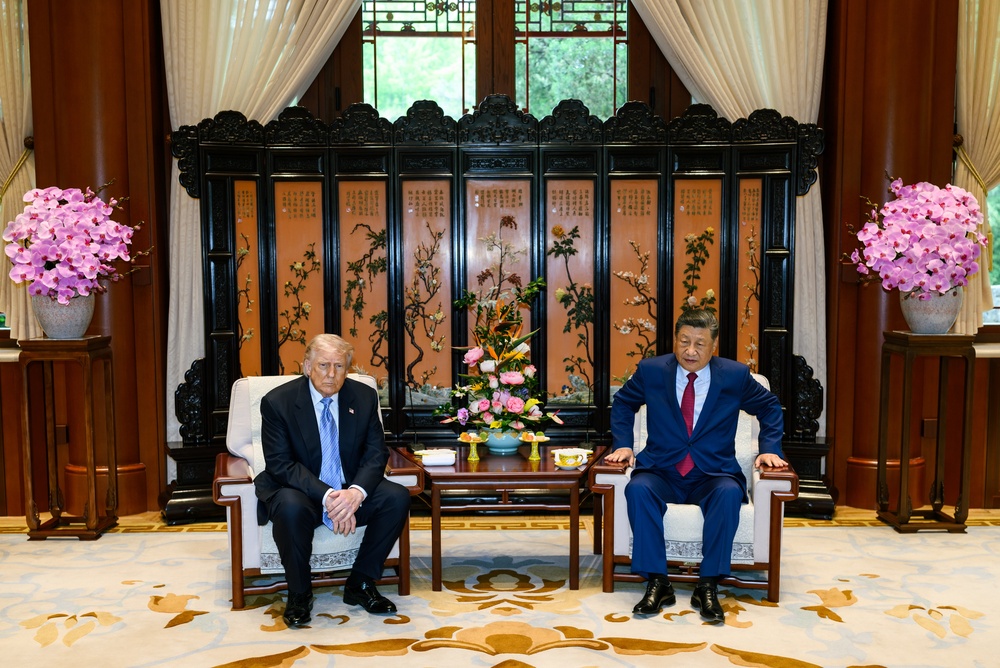
On May 15, 2026, President Donald Trump returned to the United States after two days of meetings with Chinese leader Xi Jinping in Beijing. The two sides discussed trade, Taiwan, Iran, and other points of tension. Yet for many observers, another question hung over the summit: Could Trump secure the freedom of Jimmy Lai Chee-ying, the imprisoned Hong Kong publisher and democracy advocate?
Before the trip, 106 members of Congress from both parties urged Trump to raise Jimmy Lai’s case directly with Xi. Trump did so, but left Beijing without an agreement for his release. Speaking to reporters aboard Air Force One, Trump said Xi had told him that Jimmy Lai’s case was “a tough one.” Trump acknowledged that he did not feel optimistic. Xi’s reported promise of serious consideration concerned detained pastor Ezra Jin Mingri, not Jimmy Lai.
Why is his release so difficult?
To the Chinese Communist Party, Jimmy Lai is not merely an elderly businessman or journalist. He has become a symbol of resistance to Beijing’s control over Hong Kong. Releasing him could therefore be seen as undermining the political narrative constructed around his prosecution.
The 855-page verdict against Jimmy Lai does more than examine his individual conduct. It presents his journalism, international contacts, and support for Hong Kong’s democracy movement as part of a campaign involving foreign forces. Chinese and Hong Kong officials maintain that the case was a legitimate national security prosecution. Critics, however, argue that it criminalized peaceful political advocacy and journalism.
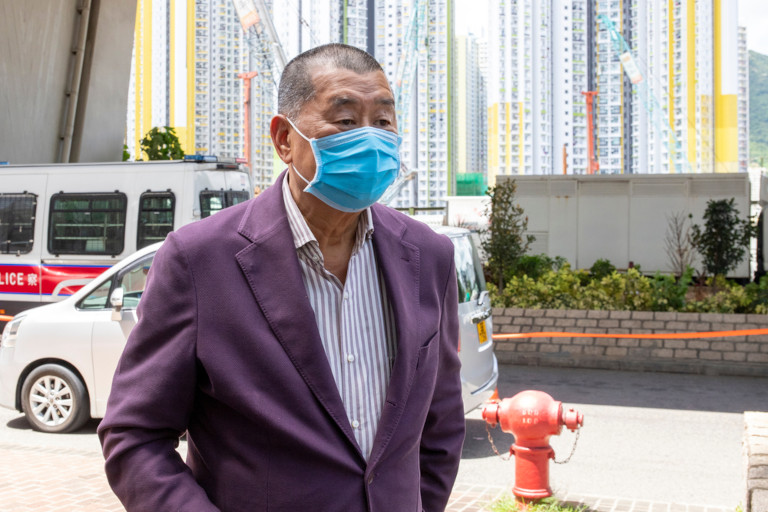
In December 2025, Jimmy Lai was convicted of two counts of conspiracy to collude with foreign forces and one count of conspiracy to publish seditious material. On February 9, 2026, Hong Kong’s High Court sentenced him to 20 years in prison. At 78, and reportedly in declining health after years in custody, the sentence could keep him imprisoned for the rest of his life.
Who, then, is the man whose release Xi reportedly described as “a tough one”? His story begins not in a newsroom or political organization, but in the poverty of postwar Guangdong.
One Hong Kong dollar
Jimmy Lai was born in Guangdong in 1947. His father, who worked in the freight business, left for Hong Kong shortly before the Communist Party took control of Guangzhou in 1949 and eventually disappeared from the family’s life. His mother was later sent to a labor camp because of the family’s alleged counterrevolutionary background.
According to accounts of Jimmy Lai’s childhood, the children were largely left to survive on their own. They sold scrap metal and sometimes resorted to stealing food and other necessities. Lai also earned small tips by carrying luggage for travelers at the Guangzhou train station.
One day, a traveler from Hong Kong gave him a piece of chocolate instead of money. Jimmy Lai later recalled being astonished by its sweetness. If something so delicious came from Hong Kong, he reasoned, Hong Kong must be a place of extraordinary abundance.
In 1960, at the age of 12, Jimmy Lai stowed away aboard a boat bound for the British colony. He arrived with only one Hong Kong dollar in his pocket. The following day, he began working as a laborer in a glove factory in Sham Shui Po, earning 60 Hong Kong dollars a month. He sent half of his wages home to help support his family.
While working at a wig factory in Hung Hom, Jimmy Lai met a retired English teacher employed as a warehouse keeper. With the teacher’s help and an English dictionary, he began educating himself. His language skills improved, and he eventually rose to become a sales manager.
During the Hong Kong stock market crash of 1973, Jimmy Lai reportedly invested the 7,000 Hong Kong dollars he had saved. Within about a year, that investment had grown to 250,000 Hong Kong dollars, providing the capital he needed to begin building his own business.
Building Giordano
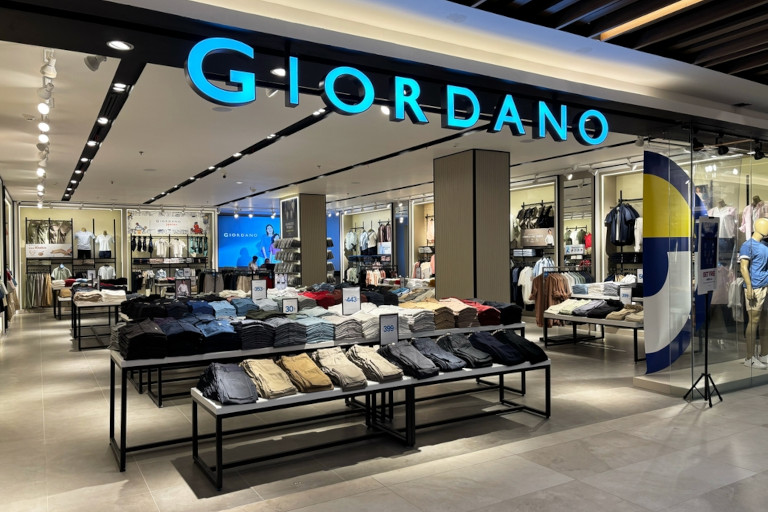
In 1981, 33-year-old Jimmy Lai founded Giordano, an affordable casual clothing chain. Drawing inspiration from the clean, minimalist presentation of American brands such as Gap, he positioned Giordano as an accessible, modern retailer for Asian consumers.
The company grew into an international brand, expanding across Asia and into mainland China. Jimmy Lai had risen from child laborer to one of Hong Kong’s most successful entrepreneurs. At that stage of his life, however, politics was not his primary concern. He concentrated on opening stores, increasing sales, and expanding the business.
The events of June 4, 1989, changed his direction.
Jimmy Lai later said that the Tiananmen Square crackdown was “like a mother’s call in the darkness” that opened his heart. When Hong Kong democracy leader Martin Lee asked for help producing T-shirts bearing slogans supporting the student movement, Jimmy Lai financed 200,000 Giordano shirts. Hong Kong residents wore them as they marched in solidarity with the students on hunger strike in Beijing.
It was no longer simply an act of charity. It was a public political declaration.
Twenty-eight insults and the price of defiance
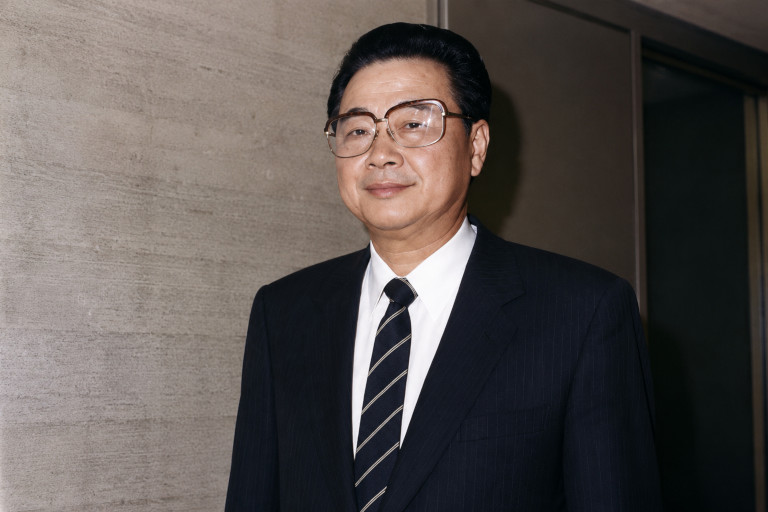
In July 1994, Jimmy Lai’s Next Magazine published an open letter attacking Li Peng, the Chinese premier closely associated with the decision to impose martial law during the 1989 protests.
The Chinese title used wangbadan, a crude insult sometimes translated literally as “son of a turtle egg.” Jimmy Lai used the expression 28 times in the article.
“Li Peng, you are a national disgrace,” the letter began. “No, you are a supreme national disgrace.”
It went on to lament that a civilization with 5,000 years of history could have produced “a son of a turtle egg like you.”
Pressure on Giordano’s mainland operations soon followed. Jimmy Lai eventually sold his shares in the company at a substantial discount, losing control of the business that had made his fortune.
He later explained why he believed compromise would not have protected him:
“As a businessman, you cannot resist this regime. Once China’s leaders coerce you, they can coerce you forever. Once they have put you in their pocket, they will keep squeezing you.”
Jimmy Lai decided that rather than remain silent to protect his commercial interests, he would use the press to speak openly.
Choosing the press
Using money from the sale of his Giordano shares, he founded Apple Daily, which began publication in June 1995. The newspaper combined bold headlines and tabloid-style presentation with investigations, political commentary, and an openly pro-democracy editorial position.
Its popularity gave Jimmy Lai a powerful public voice, but it also made him a prominent target of Beijing and its supporters in Hong Kong.
Over the following decades, he supported Hong Kong’s democracy movement, including the 2014 Umbrella Movement and the mass protests that began in 2019. He remained in Hong Kong even as political pressure mounted and the danger of prosecution became increasingly clear.
After Beijing imposed the National Security Law on Hong Kong in 2020, Jimmy Lai was arrested. Authorities later froze assets connected to Apple Daily and arrested senior members of its staff. Unable to continue operating, the newspaper published its final edition in June 2021.
His involvement in the democracy movement was not limited to publishing. Following the 1989 crackdown, he also helped support Operation Yellowbird, the clandestine effort that moved wanted Chinese democracy activists through Hong Kong and onward to safety overseas.
One of those rescued was Guangzhou student leader Liu Junguo, who later became known as Arthur Liu. After reaching the United States, Liu became an immigration lawyer. He is also the father of American figure skater Alysa Liu, who won Olympic gold in 2026.
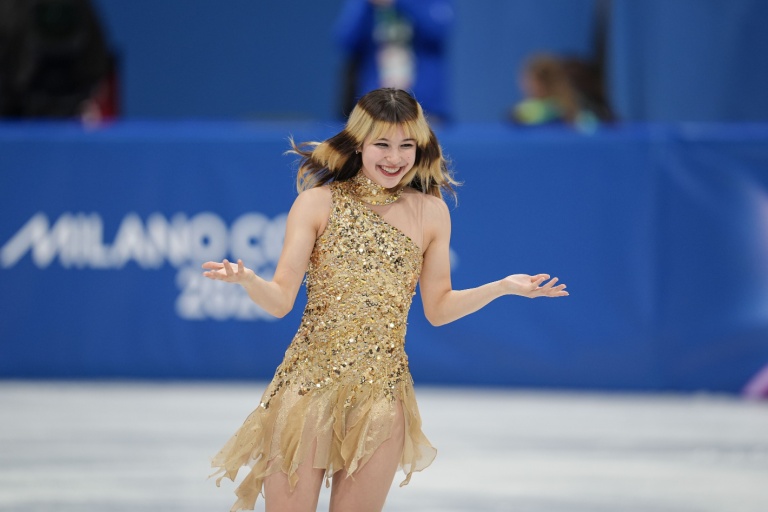
Arthur Liu has described Jimmy Lai as an important force behind the rescue network that allowed him and other activists to escape. The connection between Lai and the Liu family shows that his decisions had consequences far beyond his newspapers or political statements. They changed the course of individual lives and, in some cases, of the generations that followed.
More than a bargaining chip
To the United States, Jimmy Lai’s release may appear to be a humanitarian objective and a difficult item on a much larger diplomatic agenda. For his family, it is an urgent effort to save an aging man whose health has deteriorated during years of imprisonment.
For Beijing, however, his release carries a different meaning. The authorities have portrayed him as a foreign-backed instigator who endangered national security. Allowing him to leave prison could weaken the narrative used to convict him and to justify the broader suppression of Hong Kong’s democracy movement.
Yet reducing Jimmy Lai to a bargaining chip between Washington and Beijing also misses the central meaning of his life.
He arrived in Hong Kong as a penniless 12-year-old and built one of Asia’s best-known clothing companies. He could have protected his wealth by remaining silent. Instead, after witnessing the events of June 4, he chose to risk his business, his newspapers, and ultimately his freedom.
Whatever happens in future negotiations, Jimmy Lai’s significance does not depend on his value to Washington or the political cost of releasing him to Beijing. It comes from the choice he made when silence would have been safer and far more profitable.
That is why Jimmy Lai’s case remains “a tough one” for Xi Jinping. The dispute is not simply about the fate of one elderly prisoner. It concerns the history of Hong Kong’s democracy movement, the destruction of its once-vibrant free press, and whether the Chinese Communist Party can compel permanent silence from those it has chosen to condemn.
Translated by Eva
Follow us on X, Facebook, or Pinterest
