
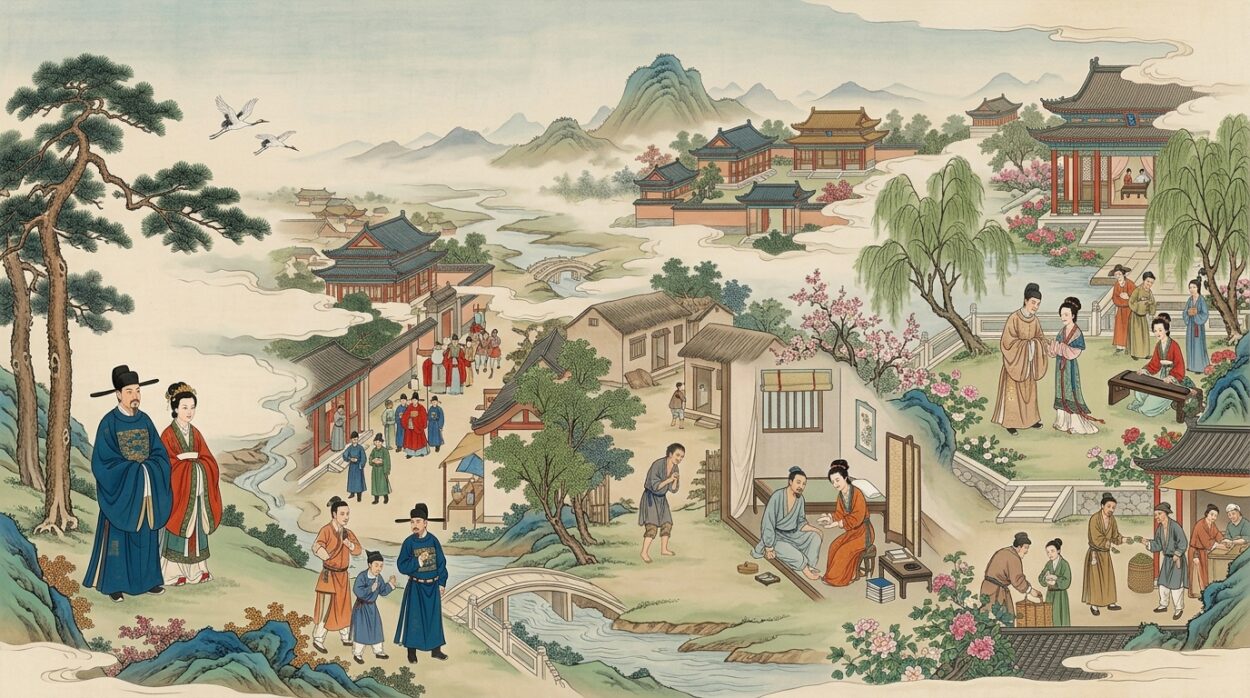
We live in an age of remarkable material abundance, yet emotional security feels increasingly fragile. Modern relationships are sometimes approached like business arrangements: negotiations over money and property, agreements about premarital assets, careful assessments of financial risk — and, when hardship arrives, a cold reality often sets in: “everyone looks after themselves.” It is little wonder that many people approach marriage with hesitation. We may complain that human relationships have grown increasingly cold and even wonder whether love can truly withstand hardship.
Yet if we look back more than a thousand years, to the flourishing Tang Dynasty and the world portrayed in The Tale of Li Wa, recorded in Taiping Guangji, we encounter a very different understanding of love and marriage. It is a story not of two people asking what they can gain from one another, but of two people who, through hardship and adversity, gradually learn to lift each other up. The story suggests that the ancient ideal of marriage was not merely about sharing prosperity. It was about responsibility, loyalty, dignity, and helping one another rise again when life brings us down.
When splendor falls away, character is revealed
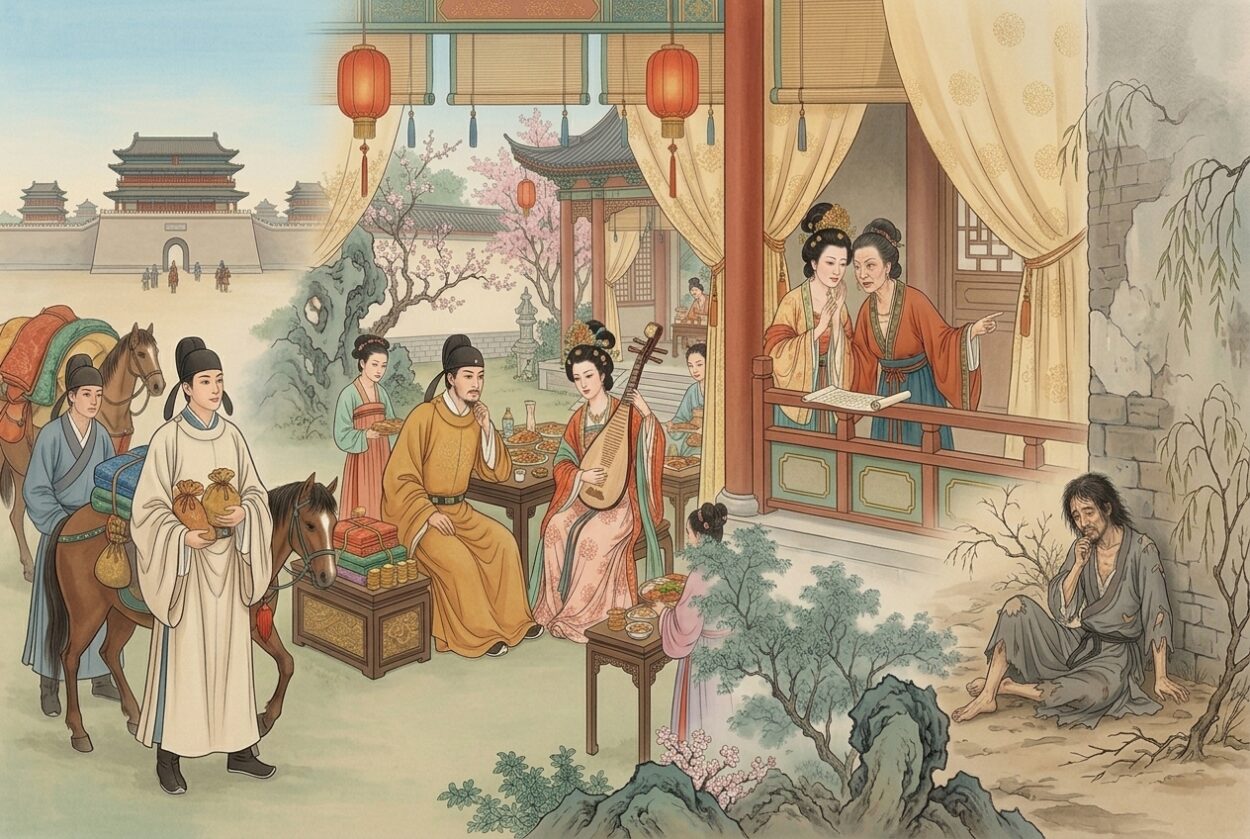
Zheng was a young man from a prominent family in Xingyang. He traveled to Chang’an to sit for the imperial examinations, carrying a considerable fortune with him. There, in the Pingkang district, he met Li Wa, a famous courtesan known for her beauty, intelligence, and artistic accomplishments. Captivated by her charm and swept up in the pleasures of the city, Zheng gradually squandered his family’s entire fortune. Once the money was gone, Li Wa and the madam of the establishment devised a scheme to abandon him. Zheng fell ill and was left destitute on the streets. With no money and nowhere to turn, he eventually found work at a funeral establishment, earning a living by singing elegies at funerals. Ironically, Zheng’s voice was so beautiful that he became famous enough to win the leading elegy-singing competition between the eastern and western districts of Chang’an. But his success brought him no happiness. Eventually, word of his situation reached his father, the governor of Changzhou.
In the Tang Dynasty, family reputation and social standing carried enormous weight. To see the son of a distinguished household reduced to singing at funerals was considered a profound disgrace. Upon hearing this, his father was furious. He beat Zheng severely with a riding crop and abandoned him at a burial ground. Though Zheng survived, his legs were left crippled. Covered in filth and suffering from a terrible odor, he became a beggar, wandering the freezing streets of Chang’an.
In the midst of hardship, redemption begins
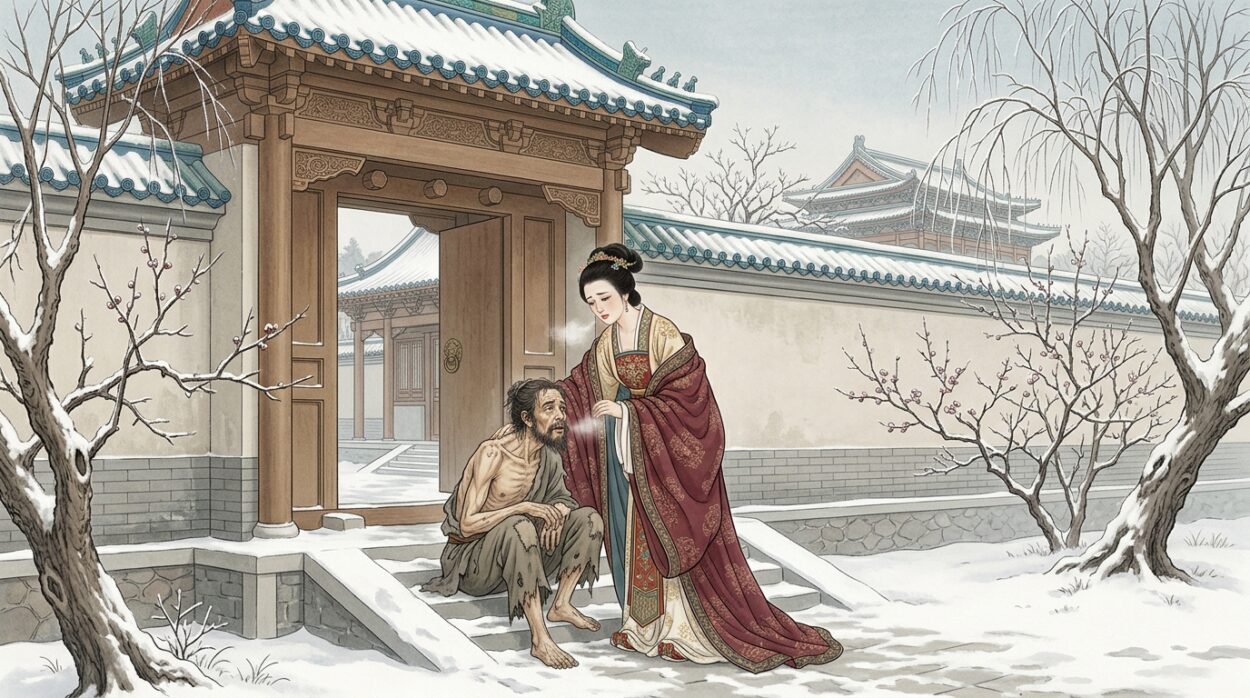
Then, one bitter winter day, he happened to beg outside Li Wa’s door. As he cried out in misery, Li Wa recognized his voice. She rushed downstairs. Before her stood the elegant young man she had once known, now scarcely recognizable — a skeletal, destitute beggar, broken by illness and suffering. In that moment, something awakened in her heart. Li Wa felt deep regret for her actions and compassion for the man standing before her. She removed her own fine robe, wrapped it around Zheng’s filthy, freezing body, and held him close. With tears in her eyes, she said: “It was I who brought you to this.” Li Wa rescued Zheng, spending her own fortune to secure his freedom. She rented a house outside the city and devoted herself to nursing him back to health, providing him with the best food and medicine she could afford. As his health and dignity gradually returned, Li Wa decided to help him rebuild his life. “You are still young,” she told him. “Your talents are still with you. You cannot allow yourself to remain like this for the rest of your life.”
She spent her remaining savings to purchase an entire cartload of books for the imperial examinations at Chang’an’s eastern market. For the next several years, she withdrew from social life and devoted herself to helping Zheng study. She read with him, encouraged him, and urged him to persevere. Eventually, Zheng succeeded. He passed the examinations with distinction, coming in first in the imperial court examination, and was appointed to an official position as a military aide at Jianmen. After years of humiliation and hardship, he had rebuilt his life. Li Wa had used her sincerity, her savings, and her own strength to help him weather the storm and find his way toward a better future. And Zheng did not betray that trust. He overcame the wounds of both body and spirit and, through his own determination, rose again.
True devotion asks for nothing in return
Perhaps the most moving part of the story came after Zheng finally achieved success. Filled with joy, he prepared to bring Li Wa into his new life and share his prosperity with her. But Li Wa calmly told him: “Now it is time for me to leave.” Zheng was stunned. He refused to accept it and even threatened to take his own life if she left. But Li Wa remained firm. She knew that she had once been a courtesan of the Pingkang district. If her past became known to the imperial court and the powerful families of the time, it could seriously damage Zheng’s future career. She explained that she had rescued him and helped him rebuild his life partly to make amends for the harm she had once caused him, and partly because she wanted to see him regain his future.
She had not done it so that she could use his success to secure a comfortable life for herself or claim the title of an official’s wife. Her decision revealed a remarkable kind of love — one without demands or emotional bargaining. She loved Zheng, but she did not treat that love as ownership. Nor did she say, “I sacrificed so much for you, therefore you owe me the rest of your life.” She understood something profound: Love is not possession. Sometimes, love means helping another person become whole, even when that requires stepping aside to protect the dignity and future of the person you love. Her selflessness deeply moved Zheng’s father, a man who had once cared greatly about family status and social standing. When he learned that Li Wa had spent her own fortune to save his son and had devoted years to helping him rebuild his future, his prejudice gave way. He personally arranged their marriage and welcomed Li Wa into the family. She was eventually honored by the imperial court with the title “Lady of Xingyang County.”
Love means helping each other grow stronger
Written more than a thousand years ago during the Tang Dynasty, The Tale of Li Wa remains strikingly relevant because it presents a very different understanding of what it means to stand beside another person. In an age that often encourages people to maximize their individual interests, relationships can easily become exercises in calculation: What will marriage cost me? What are the risks if it fails? What does the other person own? How much does he or she earn? In all this calculation, it is easy to lose sight of the foundations of a lasting marriage: responsibility, trust, respect, and the willingness to stand together when life becomes difficult. There is another kind of calculation that can be just as damaging: “After everything I’ve done for you, how could you treat me this way?”
\When sacrifices become bargaining chips, and kindness becomes a debt to be repaid, love can quietly turn into resentment and control. A husband and wife should not be like vines clinging to one another for support. They should be companions who stand shoulder to shoulder, helping each other become stronger and better. A good marriage can help a person broken by hardship regain confidence and find the strength to contribute meaningfully to the world. A troubled marriage, by contrast, can gradually wear down even someone who once possessed great ambition.
Real commitment endures through life’s storms
The greatest marriages do not merely provide comfort in good times. They give each person the strength to rise when life brings them down. The ancient ideal of “husband and wife treating one another with respect” meant more than courtesy. It meant recognizing the dignity of the person beside you and honoring the commitment that binds two lives together. The deepest meaning of marriage is not found in sharing prosperity when everything is going well. It is found in covering one another when the storm comes, helping each other rise after a fall, and, after weathering life’s hardships together, still being able to look at one another with openness, gratitude, and respect.
When modern relationships leave us uncertain about what love and marriage should mean, it may be worth returning to The Tale of Li Wa. More than a thousand years ago, in the heart of the Tang Dynasty, a woman and a scholar lived through hardship, regret, sacrifice, and renewal — and left behind a story that still reminds us of the quiet power of two people who do not merely love each other, but help one another become better human beings.
Translated by Katy Liu and reviewed by Tatiana Denning
Follow us on X, Facebook, or Pinterest
