
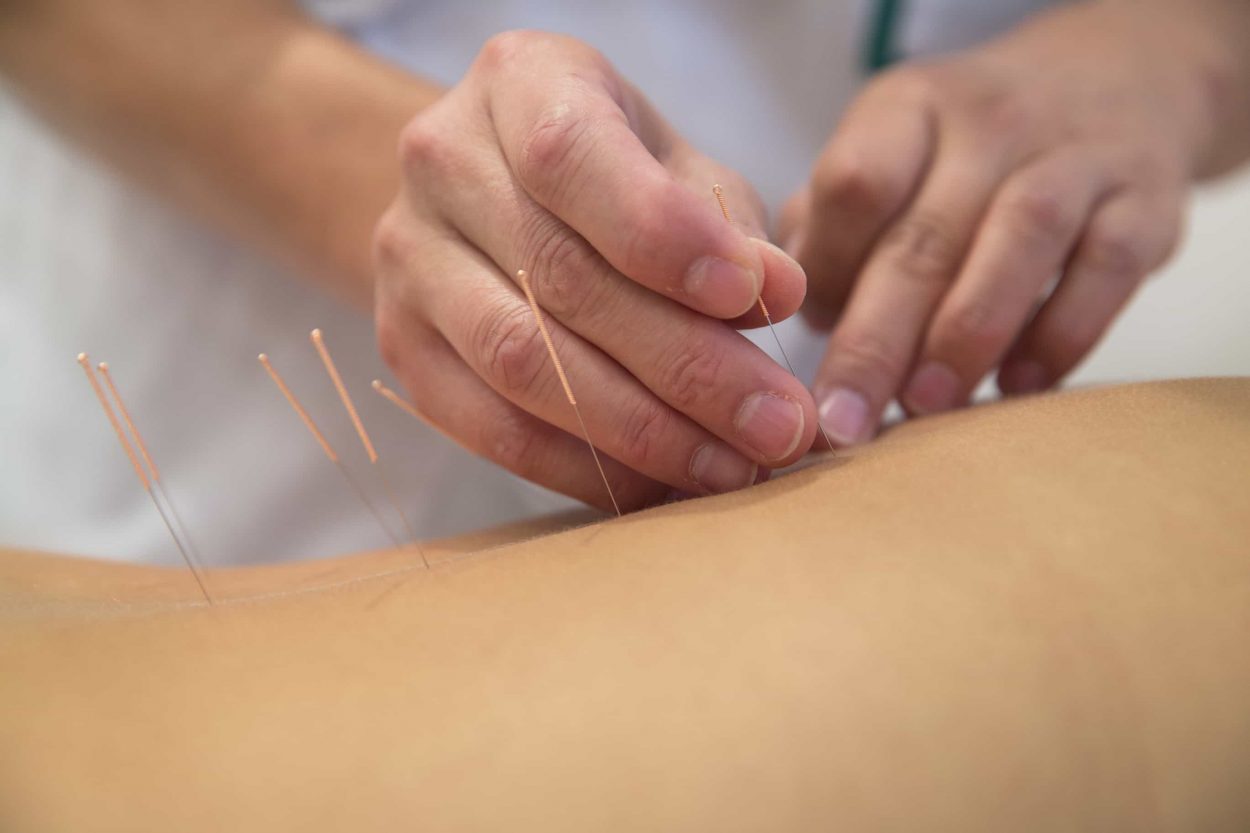
The needle goes in. It does not hurt, exactly. Twenty minutes later, the practitioner returns, removes the needles, and you pay at the front desk. The whole visit took half an hour. Nobody looked at your tongue. Nobody held your wrist. Nobody asked how you had been sleeping. You have just paid for acupuncture. Whether you actually received it is a different question.
Knowing how to find a good acupuncturist starts with understanding what you are hiring someone to do. In traditional Chinese medicine (TCM), the needle is not the treatment. The needle is the last step of a long diagnostic process, and the diagnosis is where the skill lives. A practitioner who skips it is performing a technique, not practicing a medicine. The good news is that you do not need years of study to tell the difference. Learning how to choose an acupuncturist takes three things. You need a license lookup that runs about five minutes, a short list of questions, and a sense of what the opening minutes of a real consultation should look like. This guide walks you through all three. It also covers what acupuncture costs in 2026, what insurance actually pays for, and what the research actually does and does not support.
What you are actually hiring
Traditional Chinese medicine describes a network of pathways running through the body, called meridians (经络, jīngluò). Along these pathways, a vital energy known as qi (气) is understood to circulate. When that circulation is steady and unobstructed, the tradition holds, the body functions well. When stress, injury, cold, or emotional strain obstruct it, symptoms follow. Acupuncture points sit at specific places along these pathways. Inserting fine needles at chosen points is intended to restore movement where movement has stalled. If you want a fuller picture of this framework, Nspirement has explored the meridian system Chinese medicine describes in its own right.
However, here is the part that matters when you are choosing a practitioner. Any reasonably trained person can put a needle into a point on a chart. Deciding which points, at what depth, in what order, for this particular body on this particular day, requires reading the patient first. Two people walking in with the same shoulder pain may leave with entirely different treatments, because in the logic of Chinese medicine, they do not have the same condition.
That reading is the expertise. It is also the thing you can watch for. Therefore, you are not hiring a needle technician. You are hiring a diagnostician who works inside a system refined for roughly 2,000 years, and whose training you have every right to verify. Nspirement covers more traditional Chinese health practices for readers who want to understand the tradition more deeply.
Start with the license: How to verify an acupuncturist
Credentials are the fastest filter available to you, and most people never use them.
Decoding the letters after the name
L.Ac. Licensed Acupuncturist: Practitioner holds a state license to practice acupuncture as their profession, not as an add-on to another one.
Dipl. Ac. Diplomate in Acupuncture: A national board certification from the National Certification Commission for Acupuncture and Oriental Medicine (NCCAOM). Earning it takes three things: graduating from a program accredited by the Accreditation Commission for Acupuncture and Herbal Medicine (ACAOM), completing a Clean Needle Technique course, and passing three board examinations. Those exams cover foundational theory, point location, and biomedicine.
Dipl. O.M. Diplomate in Oriental Medicine: The NCCAOM designation for practitioners who have also passed the Chinese herbology examination. Some states require it where herbal prescribing falls within the scope of practice.
According to the NCCAOM, sitting for certification requires well over 1,900 hours of coursework, and certification must be renewed every four years through continuing education. These are not weekend credentials.

How to check a license in five minutes
Forty-seven states and the District of Columbia have an acupuncture practice act. Only Alabama, Oklahoma, and South Dakota have none. Of the states that regulate the profession, 22 require NCCAOM board certification to issue a license, and 26 more use NCCAOM examinations as part of their licensing requirements.
To verify someone:
- Search your state’s acupuncture or health professions board for its public license registry, and look up the practitioner by name.
- While you are there, check whether the record shows any disciplinary action. State boards publish this, and it is the single piece of information no clinic website will ever volunteer.
- Confirm national certification through the NCCAOM, or find a licensed practitioner through the Council of Colleges of Acupuncture and Herbal Medicine directory.
If a practitioner is vague about their license or reluctant to tell you where you can look it up, you already have your answer.
Acupuncture and dry needling are not the same thing
This is the distinction that costs patients the most and gets explained the least. Dry needling uses a similar thin needle, inserted into tight bands of muscle to release tension. Physical therapists, chiropractors, and other clinicians offer it in many states. It may well help your sore shoulder. What it is not is Chinese medicine, and the training gap between the two is not small. Here is how dry needling vs. acupuncture compares on training and scope:
| Factor | Licensed acupuncturist (L.Ac.) | Dry needling practitioner |
|---|---|---|
| Training hours | Roughly 1,905 to 4,000 | Roughly 24 to 100 |
| Duration | Three to four years, master’s or doctoral level | Often a weekend or short course |
| National board exam | Yes (NCCAOM) | Frequently none |
| Regulation | Licensed in 47 states and D.C. | Not uniformly regulated |
| Approach | Whole-system diagnosis, then treatment | Localized muscle tension |
There is a middle category worth knowing about. Physicians, dentists, and chiropractors in many states may practice a limited form of acupuncture after roughly 100 to 300 hours of abbreviated training. That is far more than a dry needling weekend and far less than a licensed acupuncturist’s degree. Nevertheless, none of this makes dry needling illegitimate. It makes it a different service. The problem arises when a clinic sells it under the older, more traditional-sounding name, and the patient never learns which one they received.
The first ten minutes: How to recognize a real diagnostician
Credentials tell you what someone studied. The opening minutes of a consultation tell you whether they practice it. A practitioner trained in the full system will do three things before reaching for a needle.
They will look at your tongue
In TCM, the practitioner reads your tongue for its color, shape, moisture, cracks, and coating. A thin white coating counts as normal. A pale tongue body is traditionally associated with a deficiency of qi or blood, while a red one is associated with heat. The coating is understood to reflect the state of digestion. It takes about four seconds, and it is not optional. If nobody asks to see your tongue, nobody is using this framework.
They will take your pulse slowly
This is not the ten-second beat count a nurse takes. In Chinese medicine, the practitioner places three fingers on the radial artery of each wrist, at positions called cun (寸), guan (关), and chi (尺), and reads each at three depths of pressure. Twelve readings in total, on both wrists. They are feeling for quality, not speed: whether the pulse is wiry or slippery, thin or floating, choppy or deep. Classical texts describe 28 distinct pulse qualities, and practitioners are trained to use them as a map of where qi has stagnated. Watch the clock. A practitioner doing this properly will hold your wrists for the better part of a minute and will be quiet while doing it.
They will ask you questions that seem unrelated
You came about your shoulder. They will ask about your sleep, your appetite, and your digestion. They will want to know whether you run hot or cold, whether you sweat at night, how your energy moves through the day, and how you have been feeling emotionally. This is a recognized diagnostic framework, traditionally called the Ten Questions (十问, shí wèn). It is not small talk, and it is not the practitioner padding the appointment. For example, a fixed stabbing pain and a wandering dull ache point toward different diagnoses and different treatments, and the only way to tell them apart is to ask.
A caution, in fairness. Doing all three does not guarantee a skilled practitioner. Someone can read your pulse beautifully and still be the wrong fit for you. But the absence of all three is genuinely informative. If a practitioner glances at your shoulder, inserts needles, and leaves, you are receiving dry needling under a more traditional name, whatever the sign on the door says.

Questions to ask an acupuncturist before you book
Most clinics will answer these over the phone, and how they answer tells you nearly as much as what they answer.
- Are you licensed in this state, and are you NCCAOM board-certified? A confident practitioner answers instantly and tells you where to verify it.
- How long have you practiced, and how many patients with my condition have you treated? Experience with your specific complaint matters more than years in general.
- What style do you practice? Chinese, Japanese, Korean, and Five Element approaches differ in needle depth, number of needles, and emphasis. Japanese style tends toward finer needles and shallower insertion, which is worth knowing if you are needle-shy. Ask them whether they use adjunct methods, such as moxibustion (艾灸, àijiǔ), cupping, or electroacupuncture.
- How will you diagnose me on the first visit? Listen for tongue and pulse.
- Roughly how many treatments before we will know whether this is working, and how will we know? A good answer includes a checkpoint. A bad answer is open-ended.
- What do you charge, and do you bill insurance?
- Do you use single-use sterile needles? The correct answer is yes, always, and you should see them opened in front of you.
Tell your practitioner about your full medical history, including any medication you take. Acupuncture has real contraindications. Take extra care if you use blood thinners or have a bleeding disorder, and note that electroacupuncture is generally avoided in people with a pacemaker. Certain points are avoided during pregnancy. A practitioner who does not ask about any of this before needling has skipped a step. For any serious or persistent condition, speak with your physician before starting acupuncture, and keep them informed, along with whichever acupuncturist you choose.
Red flags worth walking away from
- A treatment room that is visibly unclean.
- No verifiable license, or evasiveness about credentials.
- Needles that do not come from a sealed single-use package or have no visible sharps disposal container.
- A promise to cure a serious disease. No responsible practitioner in any tradition makes one.
- Any suggestion that you stop a medication your physician prescribed.
- The same point protocol for every patient, regardless of presentation. In this medicine, that is a contradiction in terms.
- Pressure to prepay for a large package of sessions before a single treatment has been evaluated.
- Irritation at your questions. You are the patient. Ask them.
What acupuncture costs, and what insurance covers
Private practice and community acupuncture
In private practice, expect to pay roughly $75 to $150 per session. Initial visits run about $80 to $150 because they include the long intake described above, and some clinics add a separate consultation fee of $25 to $50. Follow-up visits typically fall between $60 and $100.
Community acupuncture is the option most readers have never heard of. Patients are treated together in a quiet room of reclining chairs, usually with points on the arms, legs, and head, and clinics charge on a sliding scale of roughly $15 to $50. The model began in Portland, Oregon, in 2002, when acupuncturists Lisa Rohleder and Skip Van Meter set out to make the medicine affordable to people on ordinary incomes. It now runs through a cooperative of clinics nationwide. Moreover, group treatment sits closer to how acupuncture has long been practiced in China than the private room does. Affordability, in this case, is not a compromise on tradition.
Medicare and private insurance in 2026
Medicare Part B covers acupuncture for chronic low back pain only: pain lasting 12 weeks or longer, with no identified cause, and not associated with surgery or pregnancy. Coverage runs to 12 treatments in 90 days, with 8 additional sessions if you show improvement, for a maximum of 20 in a 12-month period. After the Part B deductible, which is $283 in 2026, you pay 20% of the approved amount. If improvement is not demonstrated, coverage stops.
One detail catches many patients out: Medicare cannot pay a licensed acupuncturist directly. The treatment must be furnished by, or under the appropriate supervision of, a physician, nurse practitioner, or physician assistant. Ask the clinic how they handle this before your first visit, not after. Full terms are on Medicare’s acupuncture coverage page. Additionally, private coverage has broadened considerably. Among adults who use acupuncture, the share with insurance coverage for it rose from 41.1% in 2010 and 2011 to 50.2% in 2018 and 2019. Most plans that cover acupuncture allow 12 to 30 visits per year, most commonly 20 or 26.

What the evidence actually says
A good acupuncturist will tell you this part themselves, without being asked. It is a reasonable test of character. According to the National Center for Complementary and Integrative Health (NCCIH) at the National Institutes of Health, the strength of the evidence varies sharply by condition:
- Reasonably strong: Chronic back and neck pain, osteoarthritis of the knee, migraine prevention, and postoperative pain, where acupuncture has been associated with reduced opioid use.
- More moderate: Seasonal allergies, chemotherapy-induced nausea and vomiting, stress incontinence, and fibromyalgia.
- Limited or inconclusive: Smoking cessation, infertility, carpal tunnel syndrome, and depression. The NCCIH notes that most of the depression studies were of low or very low quality.
You can read their full assessment of effectiveness and safety before your first appointment.
On safety, the record is reassuring, with one condition attached. The Food and Drug Administration regulates acupuncture needles as medical devices and requires that they be sterile and labeled for single use. Serious adverse events, including infection and organ injury, are rare, and the NCCIH associates them with improperly delivered treatment. Minor effects such as bruising, fatigue, or a brief flare of symptoms are likewise uncommon. Historical cases of infection transmitted by acupuncture trace back to reused, inadequately sterilized needles. That is precisely why the single-use standard exists, and precisely why you should watch the packet being opened.
Acupuncture use among American adults more than doubled between 2002 and 2022, rising from 1.0% to 2.2%. Meanwhile, the science has grown more interesting rather than less. Nspirement has looked at what fascia research suggests about the anatomy of qi, and at how traditional and Western medicine approach the same ailment.
How many treatments will you need?
There is no honest universal number, and you should be wary of anyone who offers one. Acute complaints sometimes respond within a handful of sessions. Chronic conditions, the kind that take years to settle in, generally require a course of treatment rather than a single visit. As a practical reference point, Medicare authorizes up to 20 sessions a year, and most private plans allow 12 to 30, which tells you something about what the field considers a reasonable trial.
However, what matters is not the number but the checkpoint. A good practitioner will tell you at the outset roughly how many treatments they expect and what improvement they will be watching for. They will also name the point at which the two of you sit down and decide whether to continue. If nothing has shifted after a fair trial, they should say so. Between visits, a good acupuncturist will also give you something to do. Advice on sleep, food, warmth, and movement is part of the tradition, not an afterthought. Some practitioners will show you how to work relevant points yourself, and Nspirement has covered massaging acupuncture points at home for readers who want to begin there.
Summary: What to look for
Learning how to find a good acupuncturist comes down to four moves, none of which require you to understand Chinese medicine.
- Check the license against your state board, not the clinic’s own website.
- Know that acupuncture and dry needling are different training methods that use similar needles.
- Watch the first ten minutes for the tongue, the pulse, and the questions that seem to have nothing to do with why you came.
- Ask about cost and about the point at which you will both know whether the treatment is working.
There is something quietly fitting in this. A tradition that spent two millennia teaching practitioners to read the body carefully asks only that you read the practitioner with the same care. The good ones will not mind. They will recognize the attention, and most of them will be glad you asked. The medicine is real, and the people who have given years of their lives to studying it are not hard to find. You simply have to know what you are looking at.
Follow us on X, Facebook, or Pinterest
